The call usually goes something like this. The concrete tiles have been patched twice, the ridge pointing is cracking again, and the homeowner has started wondering whether it’s time to stop fixing the old roof and put Colorbond on instead. Then comes the question everyone wants answered first: what’s the Colorbond roof replacement cost going to be?
The honest answer is that it depends on a handful of things we can measure on your roof, and most of them can’t be seen from the street. This guide walks through each one, so when a quote lands in your inbox you can tell what you’re paying for and spot what’s missing.
A per square metre figure won’t tell you much
Search online and you’ll find plenty of per square metre rates for Colorbond. They aren’t wrong, exactly. They just usually cover the sheet and the fixing, and very little else.
A real re-roof has a lot more going on. Old tiles have to come off and go somewhere. Battens may need replacing. Gutters, flashings, scaffolding and insulation all show up on the final bill. Two quotes can use the same rate and still end up thousands apart, depending on what each one leaves out. That’s why we don’t put a flat price on this page. We’d rather explain what moves the number and then measure your actual roof.
Eight things that decide what you’ll pay
The roof is bigger than the house
Roof area isn’t floor area. Eaves overhang every wall, and the steeper the pitch, the more surface there is to cover. A home that’s modest on the plan can carry a surprisingly large roof, and that’s the figure the sheeting gets ordered against.
Shape matters more than people expect
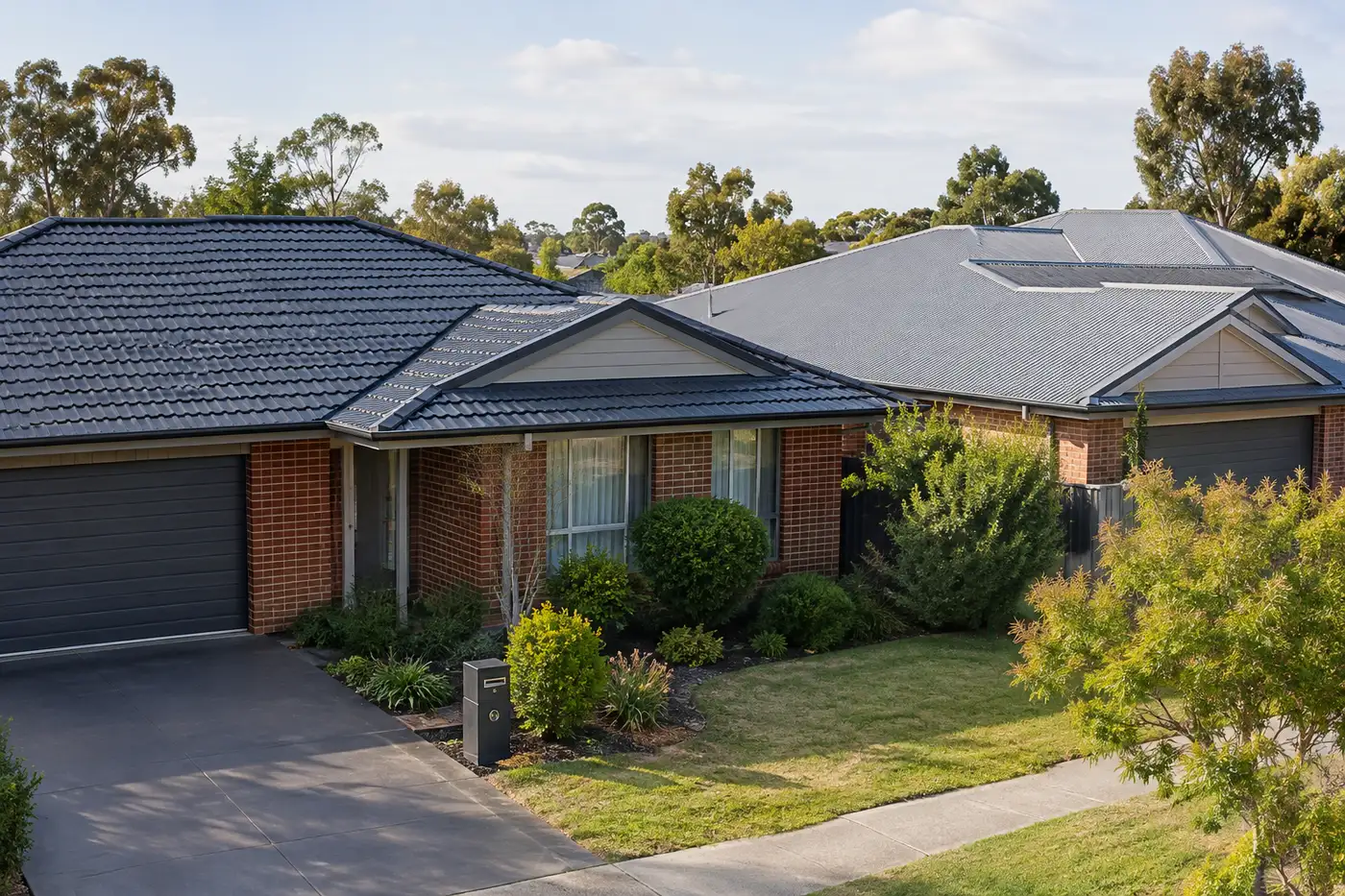
A plain gable roof is the cheapest to sheet, because the long runs need very little cutting. Hip roofs, and anything with several valleys, take more labour. Every hip has to be cut and capped. Every valley needs its own flashing, and the sheets on either side have to be trimmed to suit. Plenty of homes around Narre Warren and Berwick have hips, valleys and a garage roof joining the main roof at an odd angle. It adds up.
What’s coming off: tile, old metal or asbestos
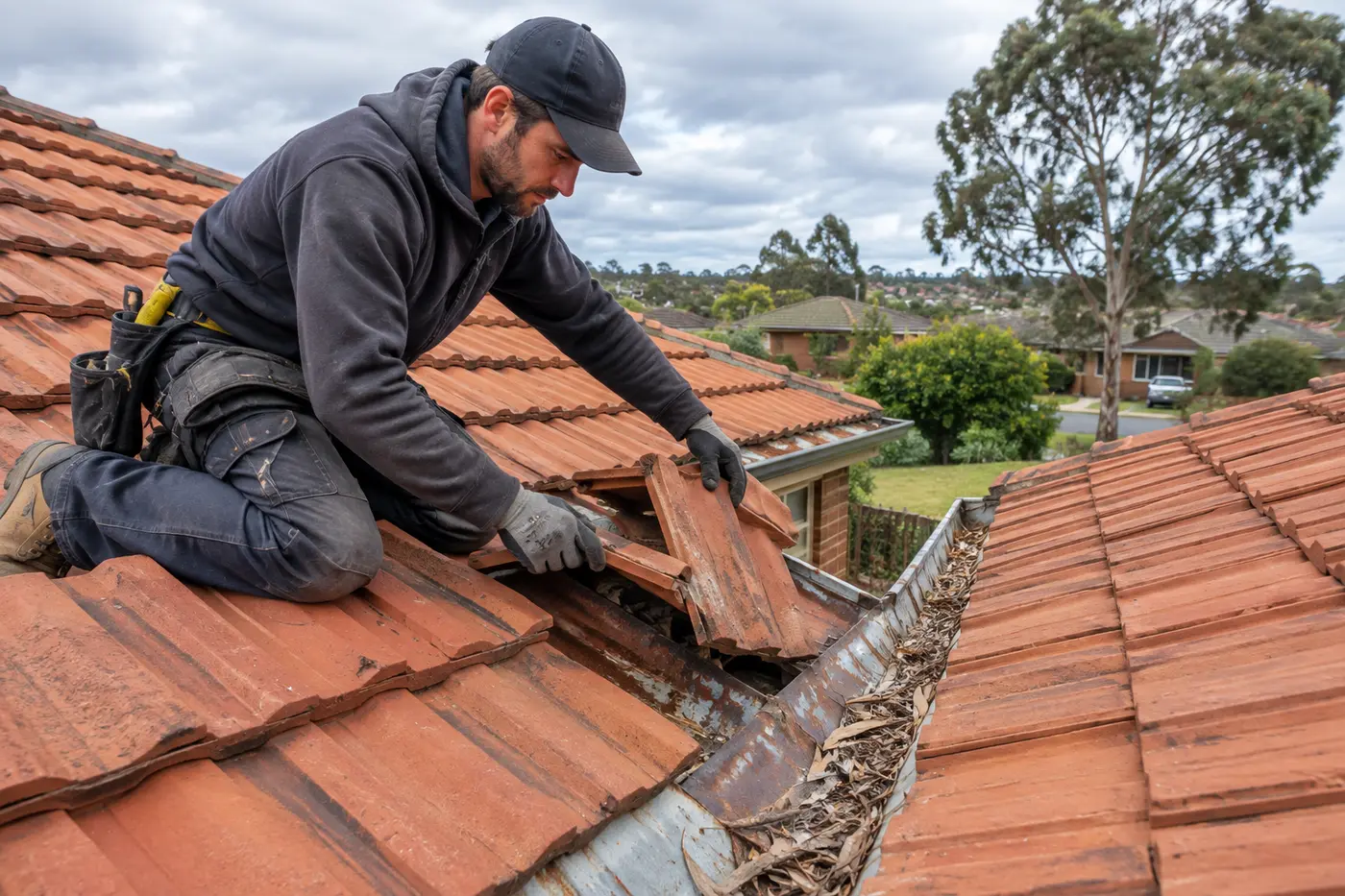
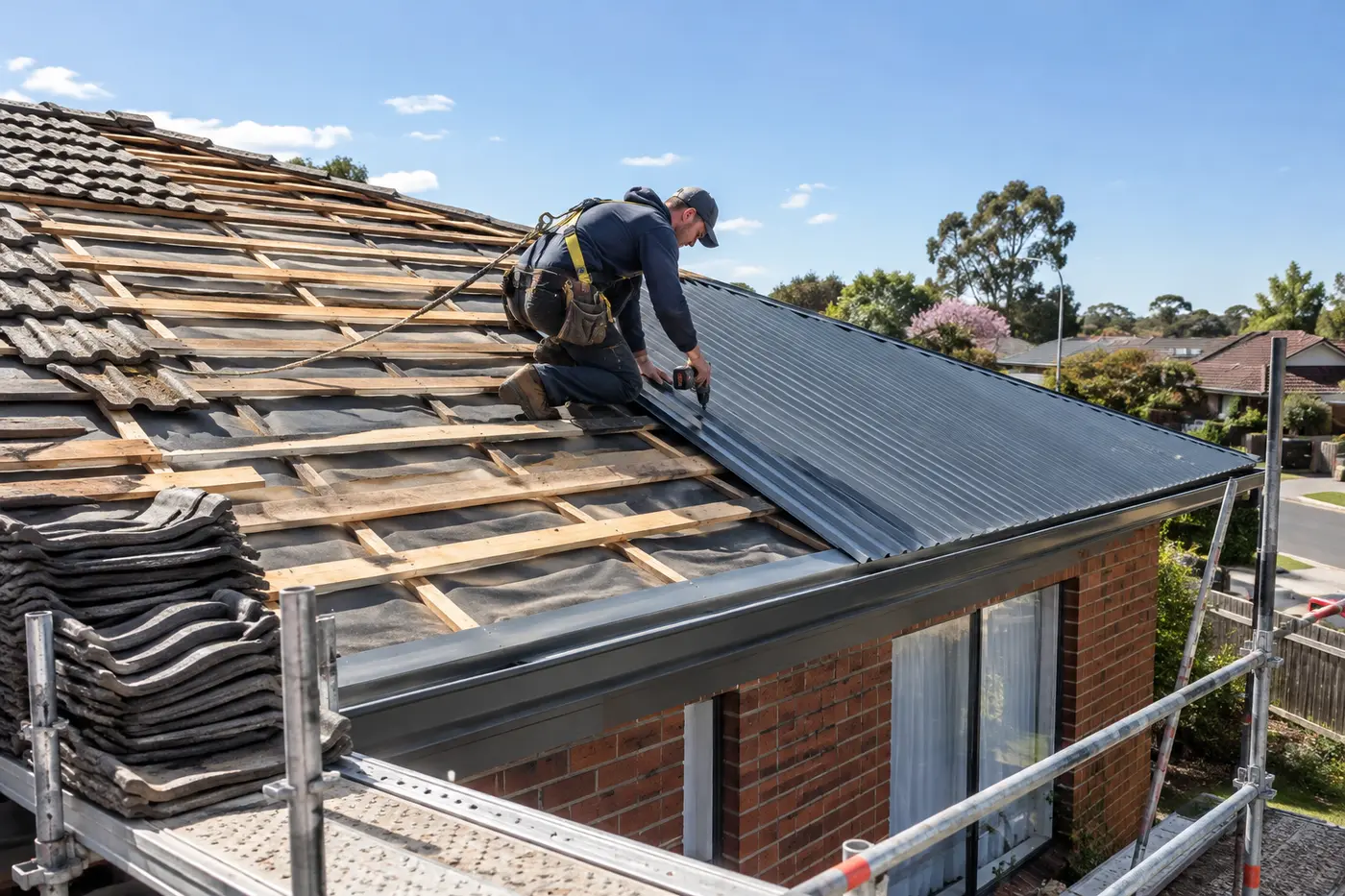
Going from an old metal roof to new Colorbond is the simplest job, since there’s not much to strip and very little weight to cart away. Tile to Colorbond takes more work. Every tile is lifted by hand, carried down and disposed of, and that labour plus the tip fees is a real part of the cost.
If your home has an asbestos cement roof, which some older homes in the south east still do, it has to be removed by a licensed asbestos removalist before the new roof goes on. That’s a separate cost, and any quote that skips over it isn’t telling you the full story.
Height, access and safety gear
A two-storey home needs scaffolding or edge protection right around the roof, and that’s a cost whether the job takes a few days or longer. Access counts too. On newer estates where houses sit close to the boundary, sheets and old tiles often have to be moved by hand down a narrow side path, and that takes time.
The battens and frame underneath
Battens are the timber or steel strips the roofing fixes to. Tile battens are spaced to suit tiles, and metal sheeting usually needs a different layout, so on a tile to Colorbond job it’s common to add or replace battens. Once the tiles are off we can also see the frame properly. Most frames are fine. Colorbond is much lighter than tile, so the structure is carrying less load afterwards. But if we find rotten timber or sagging, it should be fixed before it gets covered up again.
Insulation blanket or sarking
A metal roof without anything under it can be noisy in heavy rain and prone to condensation dripping onto the ceiling. Most Colorbond replacements we see go in with an insulation blanket or sarking under the sheets. It’s an extra line on the quote, but leaving it out to save money is usually a false economy.
Gutters, fascia, downpipes and flashings
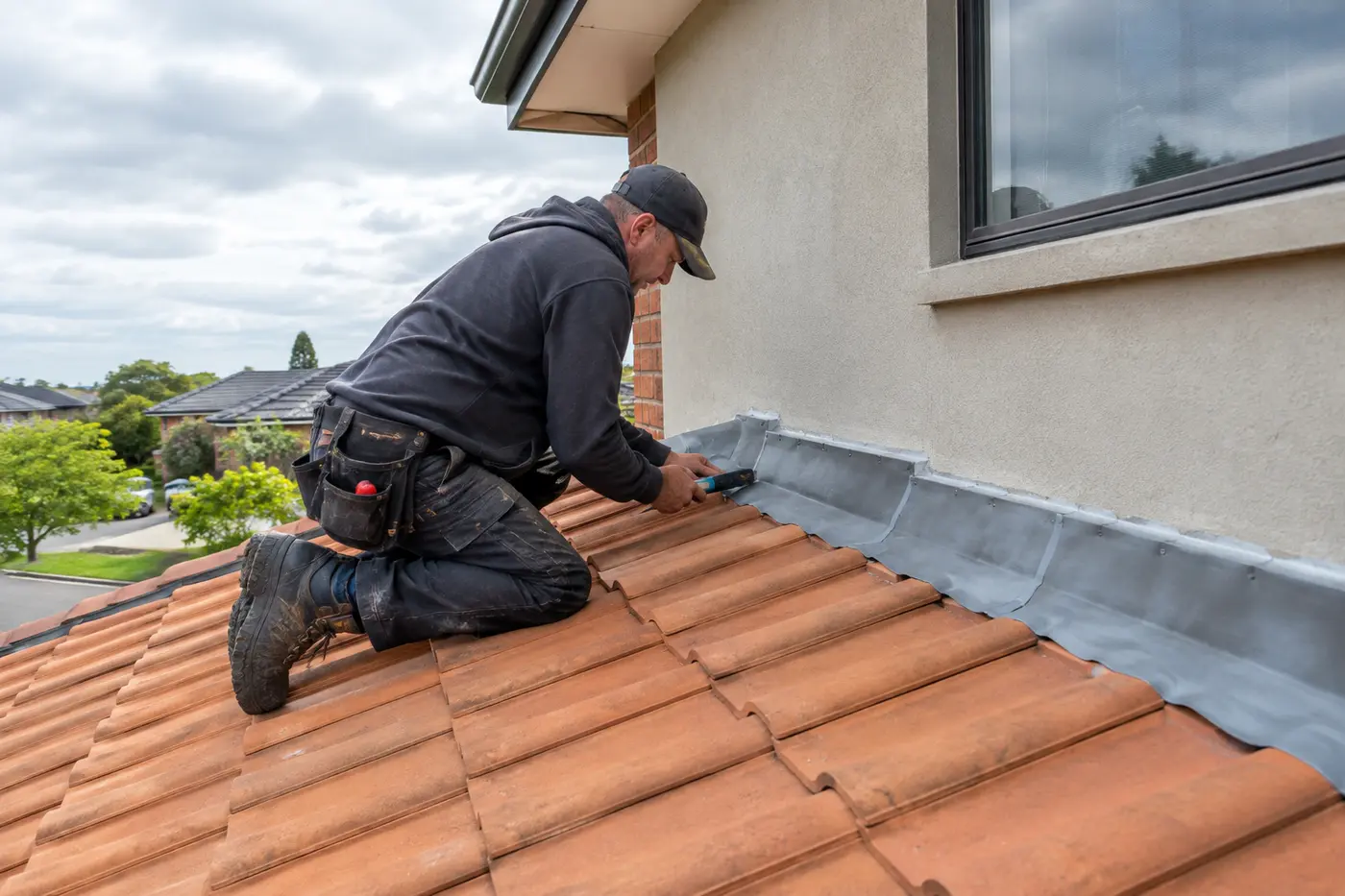
With scaffolding up and the roof edge exposed, it’s the cheapest time you’ll ever have to replace tired gutters and fascia. Many people bundle them in. Others keep their existing gutters if they’re in good shape. Either can be the right call, but the quote should say clearly which one you’re getting. Flashings around chimneys, walls and skylights are almost always replaced, because old flashings rarely suit a new metal profile.
Solar panels and other roof clutter
This one catches people out. Solar panels have to come off before the roof can be replaced, and they need to be reinstalled by a qualified solar installer afterwards. The same goes for evaporative coolers, antennas and some skylights. Ask early so you can line up the trades and include the cost in your budget.
Choosing your sheet, colour and finish
Corrugated is the classic profile and usually the most economical. Flatter, more modern profiles cost more per metre. Colorbond colours are generally priced alike, while plain Zincalume (the unpainted silver finish) can come in a little cheaper. Colorbond Ultra is designed for harsh coastal sites near breaking surf. Most homes around Narre Warren don’t need it, but it’s worth confirming for your address. If you’re still deciding between metal and tiles at all, our guide comparing Colorbond and tile roofs covers the trade-offs in more detail.
Once you’re set on metal, our new roof and re-roofing service covers the full job, from stripping the old roof through to the final flashings and clean-up.
A fair quote spells these out
When you’re comparing quotes, line them up against this list. If a line is missing, ask about it before you sign anything.
- Removal and disposal of the old roof
- Batten work: reuse, add or replace
- Sheet profile, colour and finish
- Insulation blanket or sarking
- Ridge, hip and barge capping, plus all flashings
- Gutters, fascia and downpipes, if included
- Scaffolding or edge protection
- Any permit or certificate needed for your job
- Warranty terms, in writing
- Site clean-up and removal of offcuts and screws
It’s also fair to ask how the crew will keep your home weathertight if rain comes through mid-job. In Melbourne, it often does.
Sometimes the cheaper answer is not replacing at all
Replacement costs a lot more than restoration, and plenty of tile roofs don’t need it. If the tiles are mostly sound and the problems are cracked pointing, a few broken tiles and a faded surface, a restoration can buy years more life for a fraction of the cost. We’ve written about how to tell the two apart in our roof restoration vs replacement guide.
Replacement starts to make sense when tiles are failing across the whole roof, leaks keep coming back after repairs, the battens or frame are deteriorating, or you simply want the lighter, lower-maintenance roof that Colorbond gives you. We’ll tell you plainly which side of that line your roof sits on.
Getting a real number for your home
Our inspections and quotes are free. We get up on the roof, check the tiles, battens, flashings and gutters, and show you photos of what we find, so the quote is based on your roof rather than a rate off a website. Our work carries a 10 year warranty on workmanship and products.
If you’re weighing up a new roof, book a free inspection through our Colorbond re-roofing team and Cam will give you an itemised quote you can actually compare.
Straight answers on Colorbond replacement costs
How much does a new Colorbond roof cost?
It depends on roof area, shape, what’s being removed, access, battens, insulation and whether gutters are included. Online per square metre rates usually cover only the sheet and fixing, so they tend to undersell the real total. An itemised quote based on your roof is the only number worth budgeting on.
What is the most expensive part of replacing a roof?
On tile to Colorbond jobs, the steel itself often isn’t the biggest line. The labour of stripping and disposing of the tiles, the batten work and the scaffolding or edge protection on taller homes can together add up to more than the sheeting. Asbestos removal, where it applies, can be a large cost of its own.
Is it cheaper to repair or replace a roof?
Repairing or restoring is almost always cheaper upfront. If the tiles and frame are sound, a restoration is usually the better value. Replacement earns its cost when the roof keeps failing after repairs, or when the tiles, battens or frame are past saving.
Can you replace a tile roof with Colorbond?
Yes, and it’s one of the most common re-roofing jobs we see. Colorbond is much lighter than tile, so the existing frame usually handles it well. Expect some batten work, though, because metal sheeting fixes to a different layout than tiles do.
What is the lifespan of a Colorbond roof?
A properly installed Colorbond roof lasts a long time with very little maintenance, especially inland where salt air isn’t a factor. The manufacturer’s warranty depends on how far your home is from the coast and from heavy industry, so check it for your address. Keeping gutters clear and rinsing sheltered areas that rain doesn’t reach both help it last.