The call usually comes after a heavy downpour. A brown ring has appeared on the ceiling, and it sits near an inside corner of the house, often in a hallway or above a bedroom wardrobe. When we get up on the roof, the stain lines up almost exactly with a valley. Most of the roof valley repair work we do around Narre Warren starts like this: a leak that only shows up in big rain, in a spot that seems random until you see what is directly above it.
This guide explains what a valley does, why it fails, what the repair options are, and when patching is a waste of money.
A valley carries more water than any other part of your roof
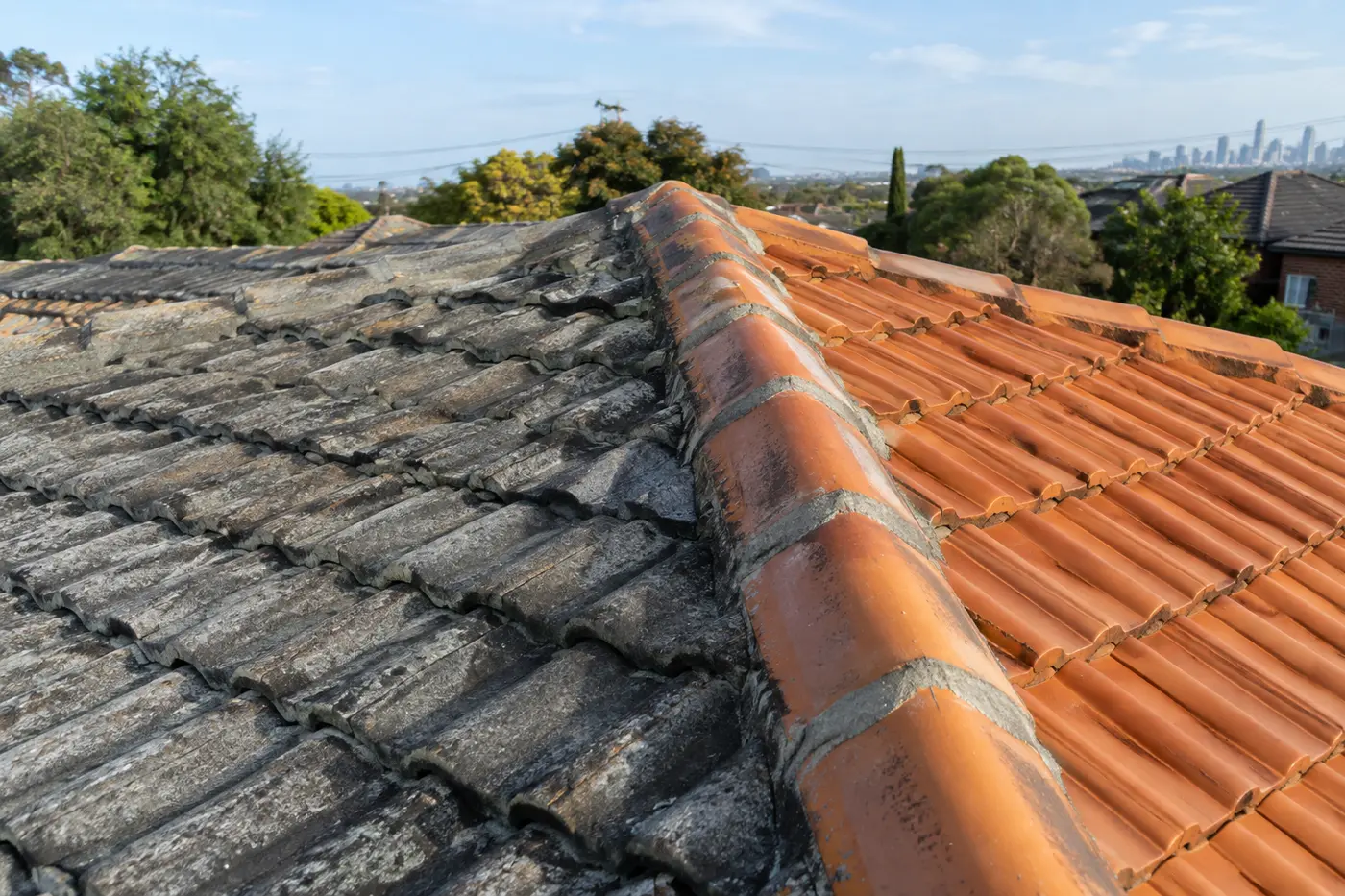
A roof valley is the internal fold where two roof slopes meet, like the crease of an open book. Hips point up. Valleys point down. Every L shaped or T shaped house has at least one, and plenty of homes in Narre Warren, Berwick and Hallam have several.
Because the valley sits at the low point between two slopes, rain from both sides runs into it and down to the gutter. In a downpour it works like a small creek. That is why valleys tend to leak first, and why a problem there can look fine in light rain and then let water in during a storm.
On a tiled roof, the valley is a long metal channel called a valley iron. It sits under the tiles, and the tiles on each side are cut on an angle so they overhang the channel. Those cut tiles are held in place with bedding (a mortar base) and finished with pointing (the coloured sealing layer on top). On a metal roof, the valley is a folded steel flashing that the roof sheets sit over.
Most valley leaks come from one of four causes
The valley iron has rusted through
Older homes often have galvanised valley irons. Over the years the zinc coating wears off, especially where leaves sit and hold moisture against the metal. Rust starts as orange staining, then pinholes, then gaps you could push a finger through. Once the metal is perforated, there is no reliable way to make it watertight again. It needs replacing.
Leaves and debris are damming the channel
This one surprises people, because the valley itself can be in good condition. A build up of gum leaves, seed pods or moss creates a small dam. Water backs up behind it, spills over the raised edges of the valley iron and runs onto the timber underneath. Homes near established trees are the usual suspects. Sometimes the whole fix is a clean, plus clearing the gutter at the bottom so the valley can drain.
The cut tiles have shifted or the bedding has cracked
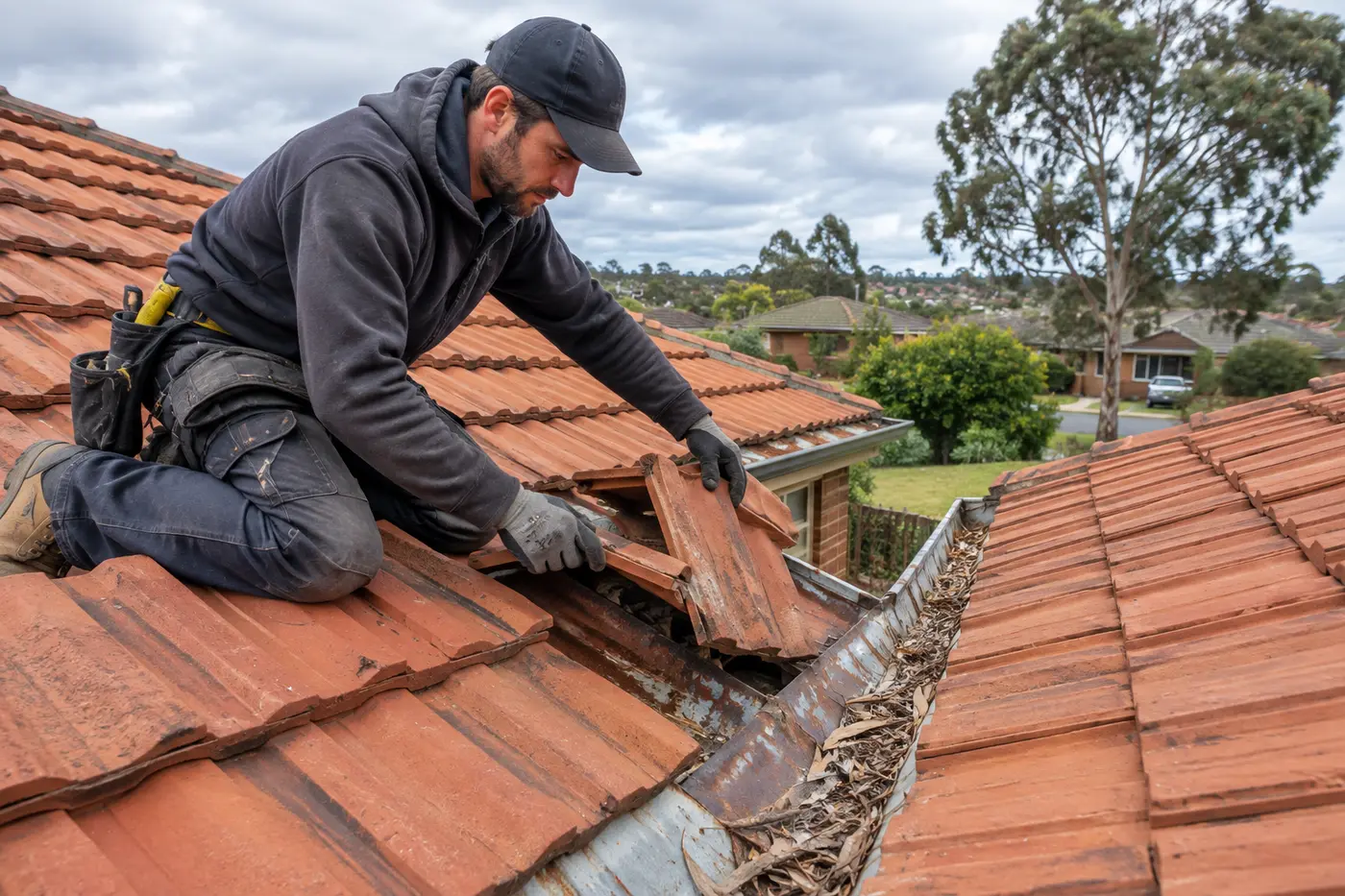
The tiles along a valley are cut, so they do not lock together like the rest of the roof. They rely on the bedding and pointing to stay put. When that mortar cracks or comes loose, tiles slide out of line and wind can drive rain sideways under them. If you can see cracked or missing mortar along a valley from the ground, it is worth a closer look. Our post on what repointing involves and when a roof needs it covers that mortar in more detail.
The valley was too narrow or poorly installed
Some valleys were simply built wrong. The tiles are cut too close, which leaves the channel too narrow to carry storm water, or the valley iron is too small for the size of the roof. These leak on and off for years, and patching does not fix them. Only rebuilding the valley properly does.
Signs you can check from the ground
You do not need to climb up to spot most valley problems, and we would rather you didn’t. Walk around the house with the roof in view and look for these:
- ceiling stains near an internal corner, or ones that only appear after heavy rain
- orange or brown rust streaks running down from a valley
- leaves or plant growth piled in the valley
- gutters overflowing at the bottom of a valley in a storm
- cut tiles along the valley that look crooked
- gaps or crumbling mortar where the tiles meet the valley
If you see a stain inside, check the matching spot outside. Water often travels along a rafter before it drips, so the stain may sit a little away from the valley itself. Our guide to tracking down why a roof is leaking goes through the other common sources if the valley turns out to be fine.
Patch, repoint or replace: which repair actually fits
There are really three levels of roof valley repair, and the right one depends on what we find.
Clean and clear. If the valley iron is sound and the leak was caused by debris, we clear the valley and the gutter below it and check the tiles are sitting properly. This is the cheapest outcome, and more common than people expect.
Reset and repoint. If the metal is fine but the cut tiles have moved, we lift and realign them, rebed where needed and repoint with a flexible pointing compound. Flexible pointing moves slightly with the roof as it heats and cools, so it holds up better than old rigid mortar.
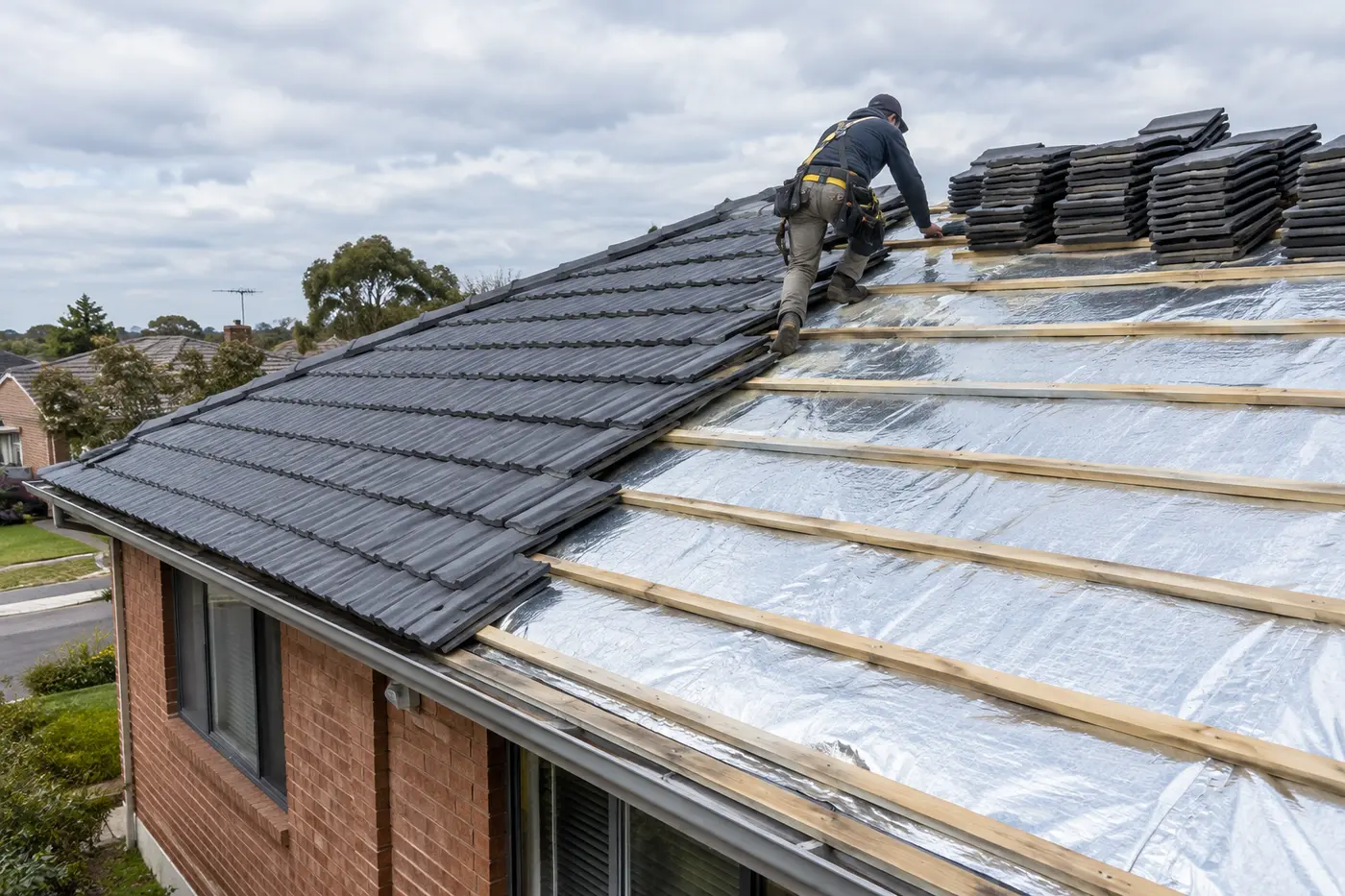
Full valley replacement. If the iron is rusted through or the valley is too narrow, we remove the tiles along both sides, pull out the old iron and fit a new one. Then we relay the tiles with the correct gap, rebed and repoint them. A new Colorbond valley iron resists rust far better than the old galvanised steel it replaces. You can see how we handle it on our roof valley replacement service page.
What we avoid is the quick fix you sometimes see: a layer of cement or a bead of silicone smeared over a rusted valley. It might stop the drip for a season. But it also traps water against the metal, speeds up the rust and makes the eventual proper repair bigger. If someone offers to seal a perforated valley, ask them what happens to the steel underneath.
Metal roofs have valleys too
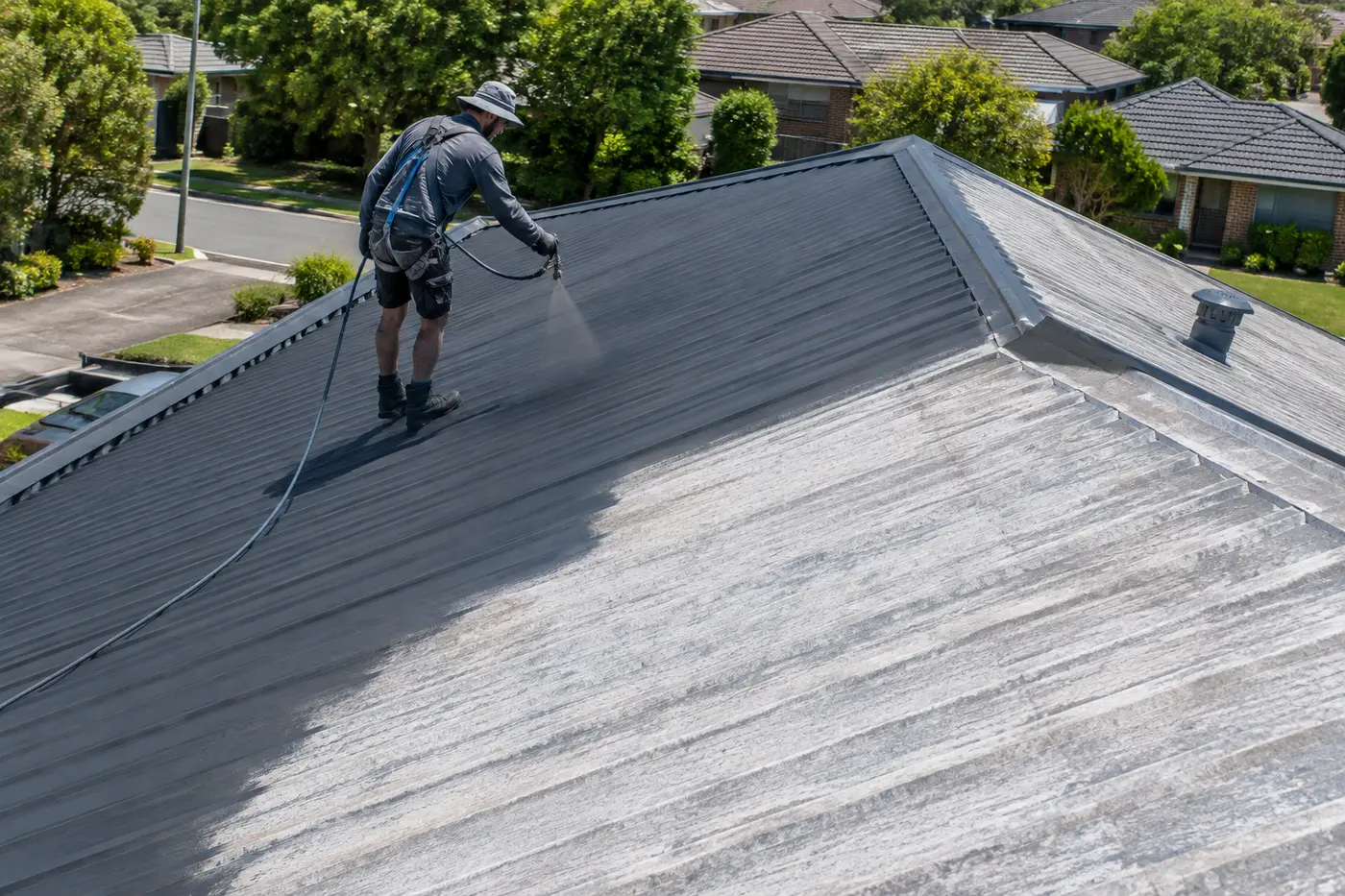
Colorbond and older tin roofs use a folded valley flashing instead of a valley iron. The causes are much the same: debris, rust at cut edges and laps, and the occasional poor install. The main difference is access. On a metal roof the sheets have to be unscrewed and lifted to reach the flashing, so we check the fixings and nearby sheets while they are up. If the rest of the roof is tired, a valley job is a good moment to talk about whether a wider repair or a restoration makes more sense.
What decides the cost of fixing a valley
We don’t publish a flat price for valleys because the jobs vary so much. A clean and repoint on one short valley is a small job. Replacing three long valleys on a steep two storey roof is a much bigger one. The things that move the price are:
- how many valleys need work, and how long they are
- whether the iron needs replacing or just the tiles and pointing
- roof pitch and height, which affect the safety setup
- how many cut tiles are broken and need replacing
- any water damage to battens or timber underneath
Our inspections and quotes are free, and our work carries a 10 year warranty on workmanship and products. When we inspect, we take photos of what we find so you can see the valley for yourself before deciding anything.
A valley leak gets worse with every storm
A valley leak rarely fixes itself. Each heavy rain sends more water onto the timber and plaster, and a small stain can turn into a sagging ceiling or rotting battens. If you have spotted one of the signs above, call Cam and the team on (03) 8738 2128 or book a free inspection through our valley repair and replacement page. We will tell you straight whether it needs a clean, a repoint or a new valley.
Common questions about roof valley repair
How much does it cost to repair a valley on a roof?
It depends on the fix. Clearing debris or repointing the cut tiles costs far less than replacing the valley iron, which means lifting and relaying every tile along it. Length, roof height and any timber damage also affect the price, so an on site inspection is the only way to get a real figure.
How long do roof valleys last?
Longer when they are kept clear. Galvanised valley irons on older homes are often the first part of the roof to rust through, because leaves hold moisture against the metal. A new Colorbond valley installed with the right gap and kept free of debris should comfortably outlast the old galvanised type.
What is the valley on a roof called?
It is simply called a valley. On a tiled roof, the metal channel underneath is called a valley iron or valley tray. On a metal roof it is usually called a valley flashing or valley gutter.
How do you seal a roof valley?
A sound valley should not need sealant, because it works by carrying water away rather than by being glued shut. The seal comes from the tiles overlapping the iron correctly and from good bedding and flexible pointing along the cut tiles. Sealant or cement over a rusted valley is a short term patch that usually makes the rust worse.
Why does my roof valley only leak in heavy rain?
In light rain the valley copes. In a downpour it has to carry water from two slopes at once, so any narrowing, debris or blocked gutter below makes the water rise and spill over the edges of the valley iron. That is why so many valley leaks only show up in storms.
Can I fix a roof valley myself?
Clearing leaves from a gutter you can safely reach from a ladder is one thing. Lifting cut tiles, replacing valley iron and repointing on a pitched roof is work for a licensed roofer, partly for safety and partly because a poor valley repair tends to leak again in the next big storm.