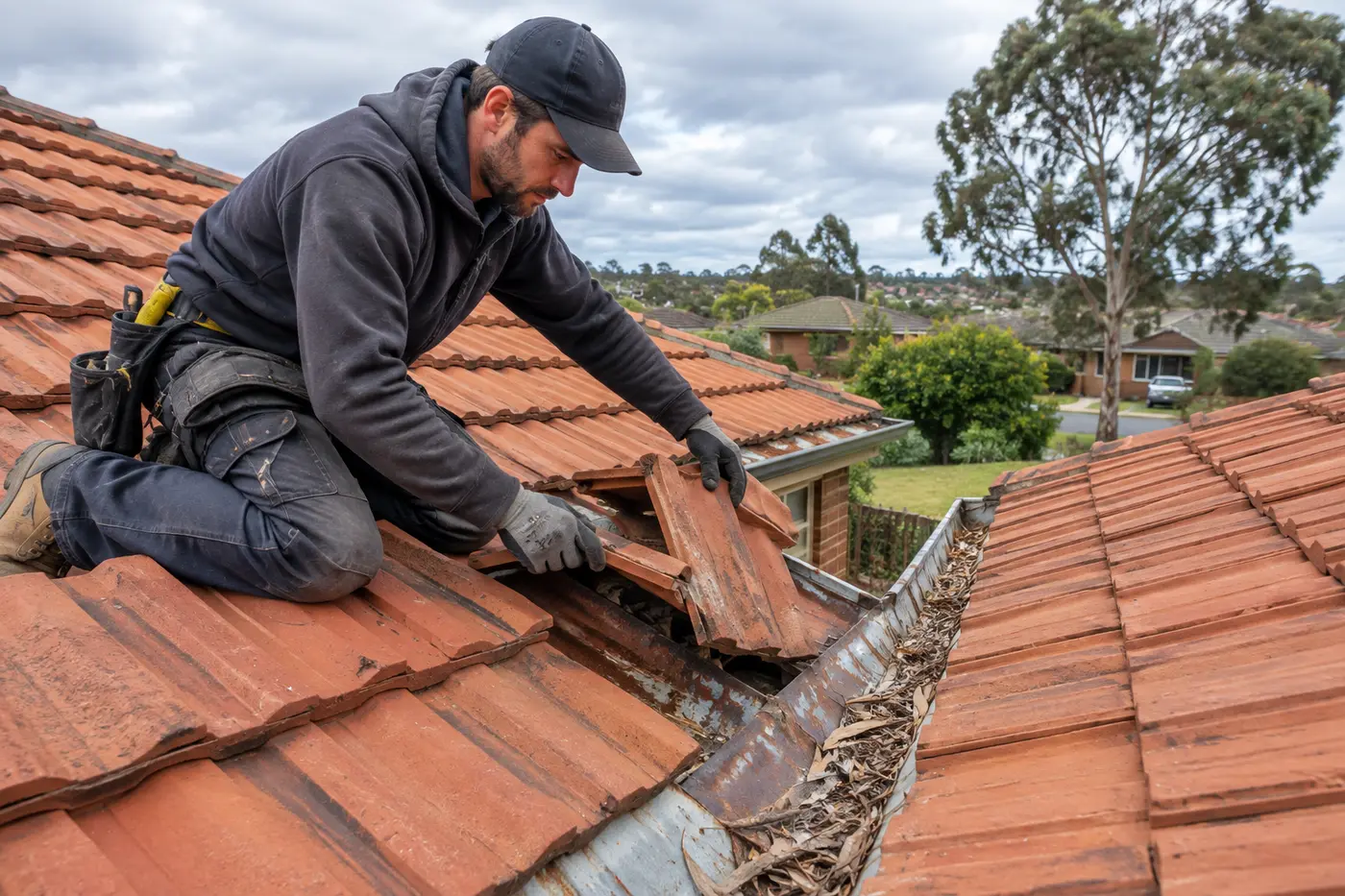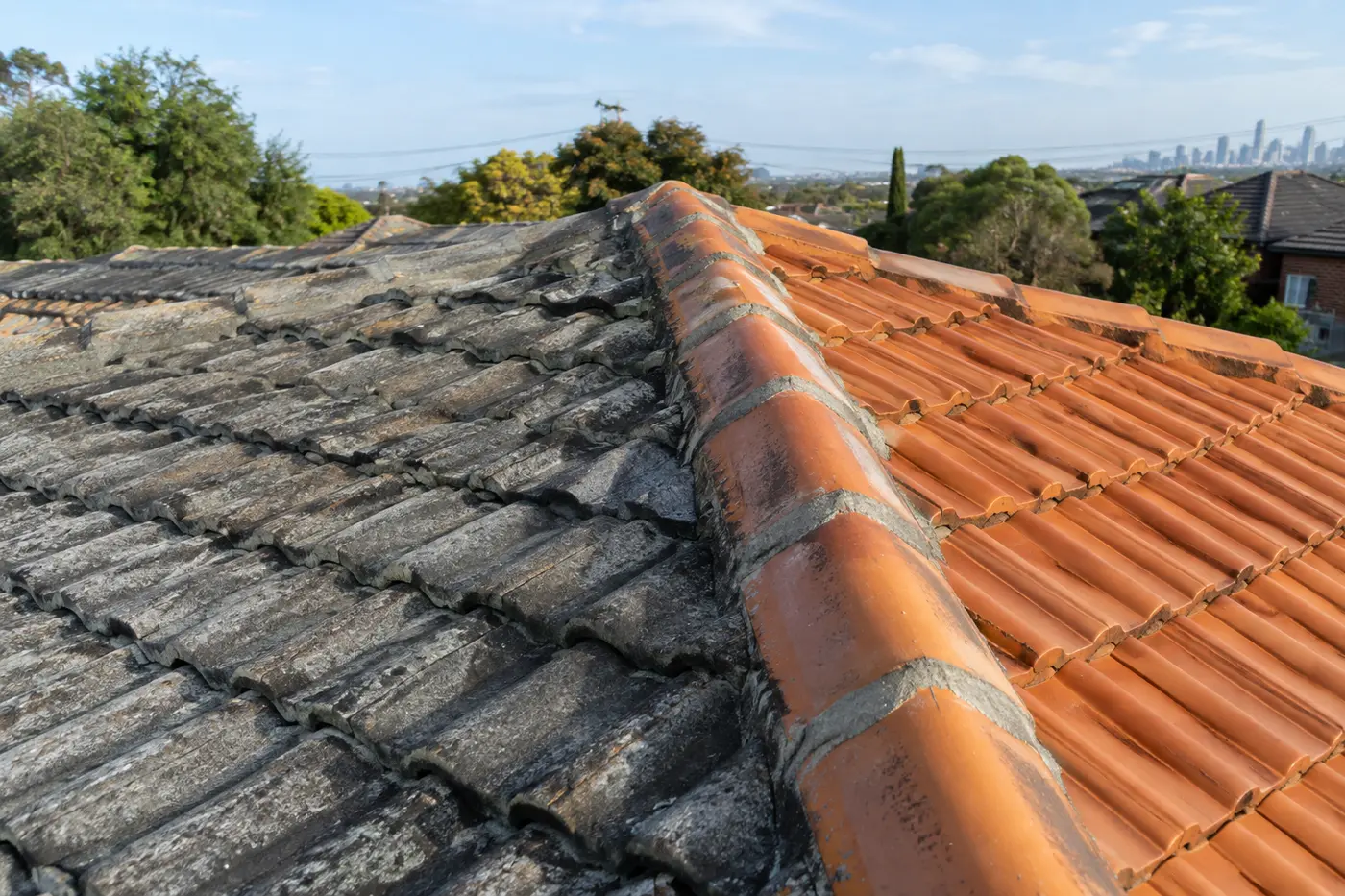
The call usually goes something like this. The tiles on a 1980s or 90s home in Narre Warren have faded, there are a few cracked ones near the gutter, the ridge capping is looking tired, and the owner has a neighbour two doors down who just went to Colorbond. So the question lands on us: should we restore the tiles, or rip them off and go metal? Colorbond vs tile roof is one of the most common decisions we help people make, and the honest answer is that both are good roofs. The right one depends on your house, not on what the neighbours did.
We work on both every week, restoring tile roofs and fitting and repairing Colorbond, so we have no reason to push you one way. Here is how we actually weigh it up.
Most of the decision comes down to the roof you already have
If you are building new, you are picking from a blank page. Most people reading this are not. They have a tile roof that is showing its age, and the real choice is between keeping that roof and bringing it back to good condition, or replacing the whole covering with steel.
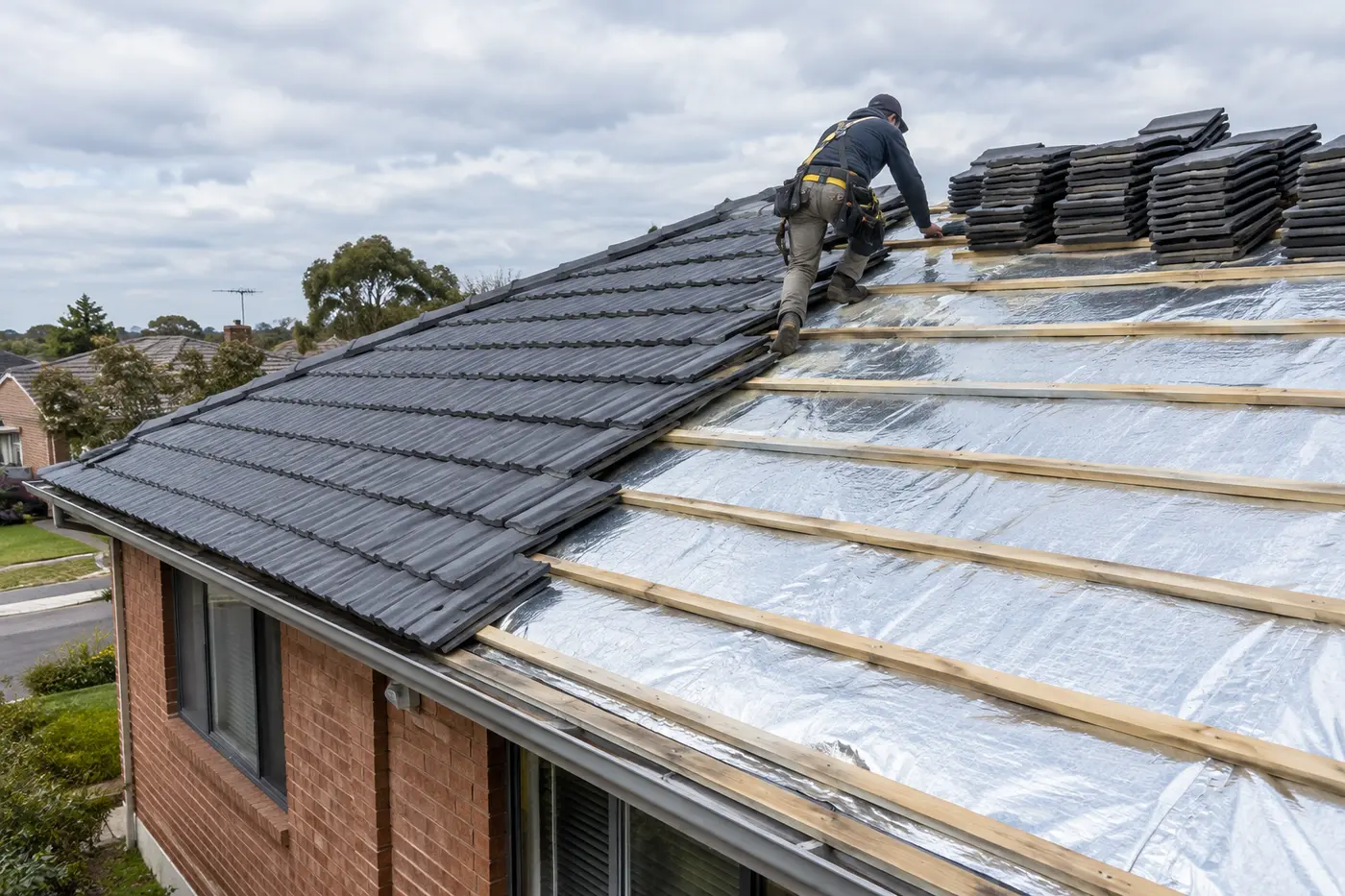
That changes the maths a lot. A restoration works with what is already up there: clean, replace broken tiles, rebed and repoint the ridges, then coat. A switch to Colorbond means stripping every tile, checking the battens and frame, then fitting new sheets, flashings and capping. One is a refresh. The other is a new roof.
So the first thing we look at on an inspection is simple. Is the tile roof fundamentally sound? If the tiles are mostly intact and the timber underneath is fine, restoring is usually the sensible path. If the roof has a low pitch that has leaked for years, or the tiles are breaking faster than anyone can replace them, steel starts to make a lot more sense. We cover that wider call in our guide to when restoring beats replacing.
Where tiles still win
Tiles get written off a bit unfairly these days. They have real strengths.
They are quiet. Heavy tiles soak up the sound of rain and hail. Colorbond can be made quiet too, but that depends on the insulation blanket under the sheets being done properly. An old tile roof has no blanket, so one has to be added during the changeover.
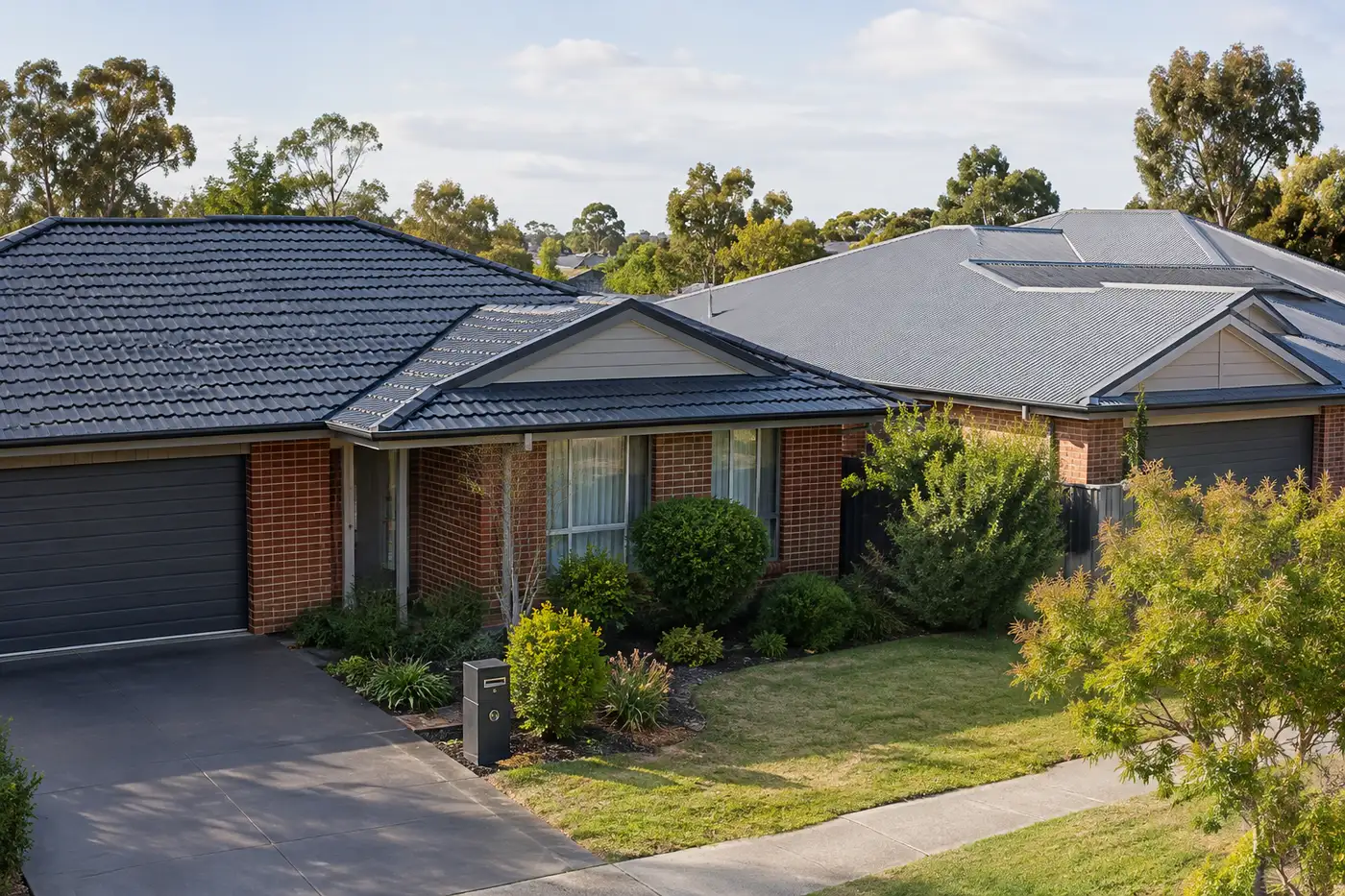
They suit the street. Plenty of homes around Narre Warren, Berwick and Narre Warren South were designed around a tiled roof. Brick veneer with terracotta or concrete tiles just looks right on those houses, and some buyers prefer it.
They can be fixed one piece at a time. A cracked tile is a small repair. You swap the tile and move on. A badly damaged Colorbond sheet usually means replacing the full length of that sheet.
You keep what you paid for. If the roof is sound, a restoration protects something you already own instead of sending it to the tip.
The trade off is upkeep. Tile roofs need their ridge capping looked after, moss and lichen cleared, and the odd broken tile replaced. Concrete tiles in particular lose their surface coating over time and start soaking up water, which is why they eventually need a recoat. If you are not sure what your tiles are made of, our post on terracotta and concrete tiles explains how to tell and why it matters for maintenance.
Where Colorbond pulls ahead
Steel has its own set of advantages, and on the right house they are hard to argue with.
It is far lighter. Taking tiles off and putting steel on removes a lot of weight from the frame. On an older house with a tired frame or sagging sections, that matters.
It handles low pitches. Tiles need a reasonably steep roof to shed water. On flatter sections, like a back extension tied into the main roof, wind driven rain can push back up under the tiles. Long Colorbond sheets run water off cleanly at much lower angles. A lot of the leak calls we get from extensions trace back to exactly this.
There is less to maintain. No mortar on the ridges to crack, no individual tiles to slip. A Colorbond roof still needs its gutters kept clear, its screws and flashings checked, and a wash now and then, but there are fewer things to go wrong.
It is non combustible. Out towards Harkaway, Narre Warren North and the hills, where bushfire is a genuine consideration, that counts for something.
The downsides are real too: rain noise without good insulation, scratches that can rust if they are left, and a price that reflects a full new roof rather than a refresh. Colorbond is not maintenance free. It is lower maintenance, and that gap is worth keeping in mind.
Cost is not as simple as cheap versus dear
We do not quote prices without seeing the roof, because size, pitch, access and condition move the number too much for a general figure to be useful. But we can tell you how the comparison usually shakes out.
Restoring an existing tile roof is almost always the cheaper of the two, because you are not paying for a new roofing material or the labour of stripping the old one. Switching to Colorbond costs more upfront since it is a full replacement: removal and disposal of the tiles, new battens where needed, an insulation blanket, sheets, flashings, ridge capping and often new gutters while the roof edge is open.
Where Colorbond can claw some of that back is over the long run. If a tile roof is already failing and needs patching every winter, the cheaper option on paper keeps costing you. If you want to see what goes into a restoration price, our roof restoration cost guide breaks it down.
A quick way to tell which camp you are in
Restoring the tiles is usually the better call when:
- most tiles are intact and the battens and frame are sound
- the problems are ridge capping, faded colour, moss and a handful of cracked tiles
- you like the look and the roof pitch suits tiles
- budget matters more right now than the next few decades
Going to Colorbond tends to make sense when:
- a low pitch section has leaked repeatedly despite repairs
- tiles are brittle and breaking across large areas
- the frame is struggling with the weight
- you live in a bushfire prone pocket or simply want the lightest, simplest roof you can get
Some homes end up with both. We often restore the main tiled roof and recommend steel on a flat extension at the back, which solves the leak without replacing a roof that is otherwise fine.
If steel is looking like the right fit, our Colorbond and metal roofing service covers how we strip, insulate and fit a new steel roof on an existing home.
Get the roof looked at before you decide
This choice is far easier with someone actually standing on your roof. We do free inspections and quotes, and we will tell you straight if your tiles have plenty of life left in them or if you would be throwing good money after bad. Whichever way you go, our work comes with a 10 Year Warranty on workmanship and products. Give Cam and the crew a call on (03) 8738 2128, Monday to Sunday from 7am to 6pm, or read more about switching to a steel roof and what the job involves.
Colorbond vs tile roof: common questions
Are roof tiles better than Colorbond?
Neither is better across the board. Tiles are quieter, can be repaired one piece at a time and suit many established homes. Colorbond is lighter, copes with low pitches and needs less ongoing upkeep. The best choice depends on your roof’s pitch, condition and frame.
What is cheaper, a tin or tile roof?
For an existing home with a sound tile roof, restoring the tiles is almost always cheaper than replacing them with steel. On a brand new build the gap depends heavily on the design. For a real figure on your home, the roof needs to be measured and inspected.
Is there a downside to having a metal roof?
Yes, a few. Rain and hail are louder unless a proper insulation blanket goes under the sheets. Scratches and cut edges can rust if they are not treated, and a dented sheet usually has to be replaced along its full length rather than patched.
Can you replace a tile roof with Colorbond?
Yes, and it is a common job. The tiles are stripped, the battens and frame are checked and adjusted for steel, then insulation, sheets, flashings and capping go on. Because steel is lighter, the frame carries less load afterwards.
Is a Colorbond roof hotter than tiles?
Not necessarily. Lighter Colorbond colours reflect a lot of heat, and steel cools quickly once the sun goes down. Tiles absorb heat slowly and release it into the evening. In both cases, ceiling insulation and roof space ventilation make a bigger difference than the roofing material alone.
Do I need council approval to change from tiles to Colorbond?
It depends on your property. Heritage overlays and some estate covenants restrict roof materials and colours, so check with the City of Casey and any estate rules that apply before you commit. We can talk you through what to ask.