One of the first questions we ask when someone rings about a tired tiled roof is what the tiles are made of. A surprising number of people don’t know, and there’s no reason they should. From the street, an old concrete roof and an old terracotta roof can look much the same: a bit faded, a bit patchy, some lichen on the shady side. Up close, though, the two age in different ways and need different work. This guide covers terracotta vs concrete roof tiles from the point of view of the people who clean, repair and restore them across Narre Warren and the south east.
You can usually tell which tiles you have in two minutes
The quickest check is a broken edge or a spare tile. Plenty of homes have a few left over in the garage or under the house from when the roof went on.
Look at the cross section. Concrete tiles are grey and gritty inside, like a footpath, with the colour sitting only on the surface. Terracotta is fired clay, so it’s the same orange, red or brown right through. Concrete tiles also tend to be thicker and heavier, with a rougher, sandier face once the original finish has worn off.
If the surface is shiny and almost glassy, you’re looking at glazed terracotta. Unglazed terracotta has a matt, earthy look. That difference matters later, because it decides whether painting is even an option.
Most of the tiled roofs we work on in Narre Warren South and the newer estates are concrete. Terracotta turns up more on older brick homes, and on houses where the first owners paid extra for it.
Concrete fades on the surface, terracotta holds its colour
This is the biggest visible difference between the two, and it’s behind most of the calls we get.
A concrete tile gets its colour from a surface finish applied at the factory. Years of sun break that finish down. The tiles go chalky, the colour washes out, and the bare concrete underneath starts to show. Bare concrete is porous, which means it soaks up water and gives moss and lichen an easy place to take hold. Once that starts, the roof looks older than the house and the surface keeps breaking down.
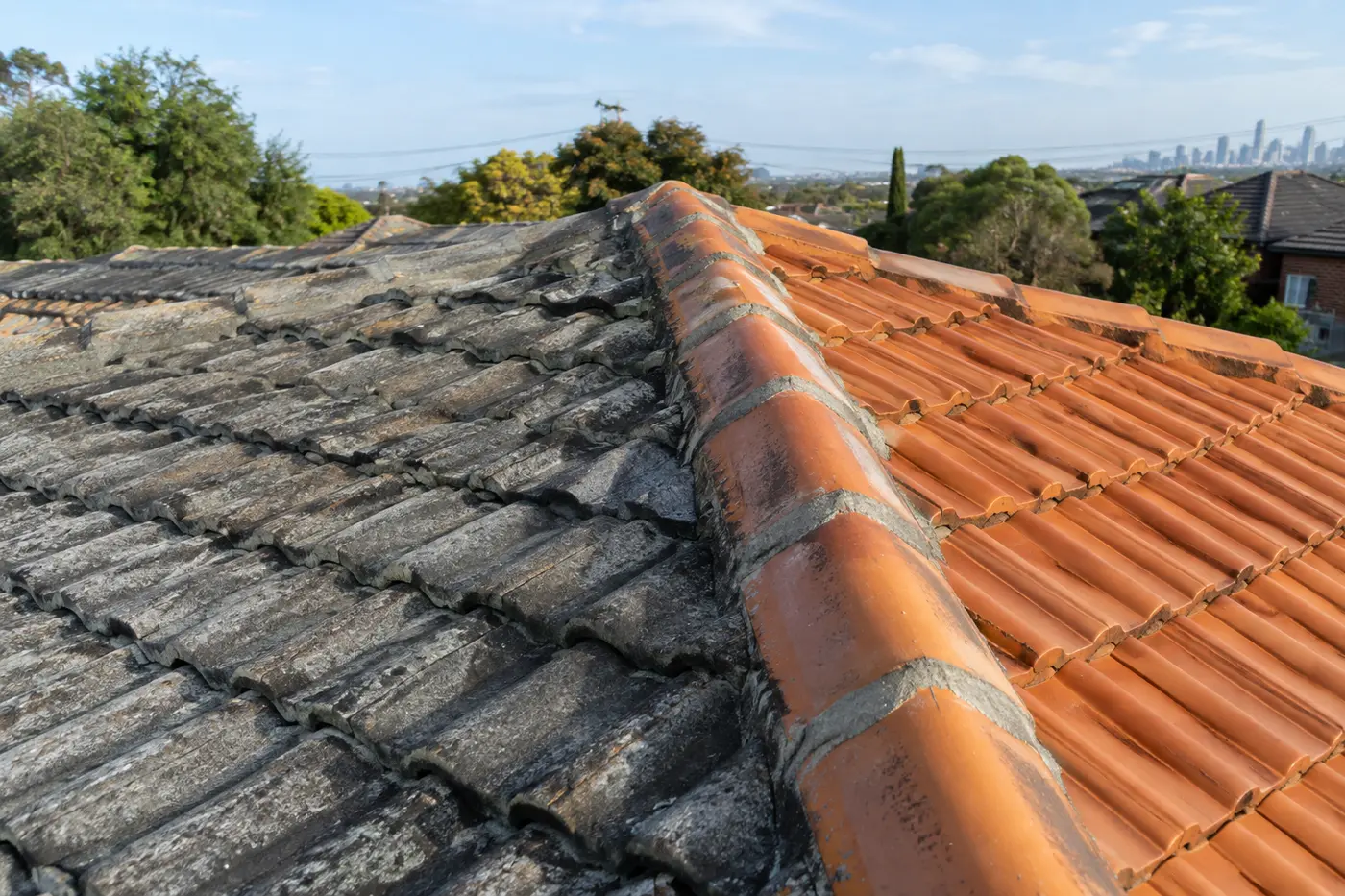
Terracotta behaves differently. Because the colour goes all the way through the clay, it doesn’t chalk off the way concrete does. Glazed terracotta in particular can look much the same after decades as it did when it was laid, give or take a clean. Unglazed terracotta can weather and darken, and it still grows lichen in shady spots. But it can’t lose a factory finish it never had.
Concrete wears down, terracotta is more likely to crack
Neither tile is weak. They just fail in different ways.
Concrete is thick and fairly forgiving under foot, so it copes with being walked on reasonably well. Its problem is slow surface wear. Left long enough, a heavily weathered concrete tile gets rough, holds more water and grows more lichen.
Terracotta has a hard surface, but it’s more brittle. A heavy footstep in the wrong spot, a dropped tool, an antenna installer who doesn’t know where to stand, or a falling branch can crack a clay tile that a concrete one would have shrugged off. Hail can do the same. Those cracks are often hairline and hard to see from the ground, and they let water through to the timbers below. We cover what to do about them in our guide to dealing with cracked roof tiles.
A single cracked tile of either type can usually be swapped out. The catch on older roofs is finding a match, since some profiles and colours are no longer made. If a match is going to be hard to find, we’ll tell you up front.
Both types share the same weak spot along the ridges
This one surprises people. On a lot of older tiled roofs, the tiles themselves aren’t the main problem at all.
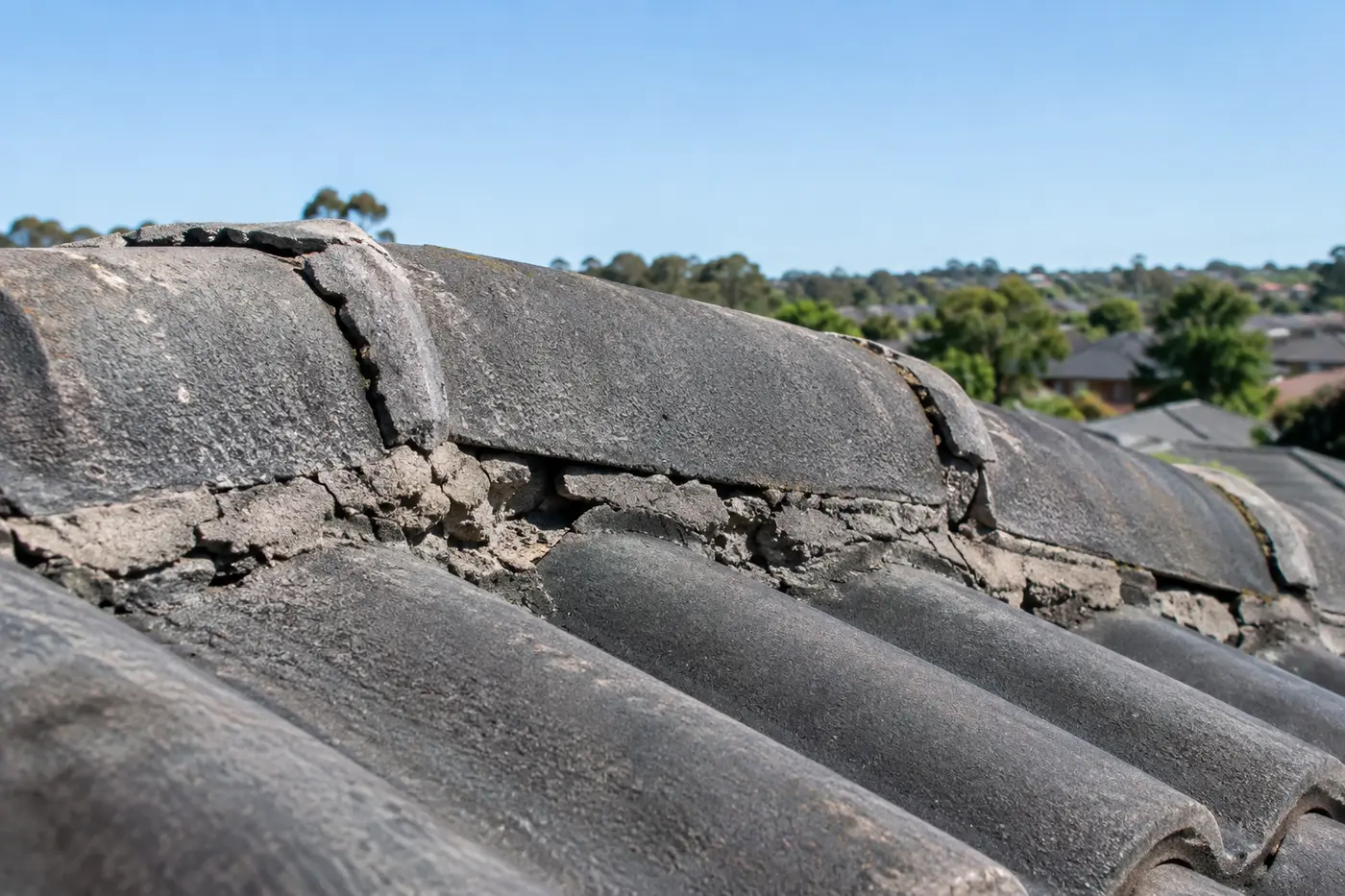
The ridge capping (the row of curved tiles along the peaks and hips) sits on a bed of mortar, with a layer of pointing over the top to seal it. That bedding and pointing cracks and breaks away over time on concrete and terracotta roofs alike. When it goes, ridge caps loosen and water finds its way in during heavy rain.
So whichever tile you have, the ridges get the same attention during a restoration. Our post on when a roof needs repointing walks through how that’s fixed.
Restoring each roof is a different job
This is where the tile type really changes what we recommend.
Concrete tile roofs
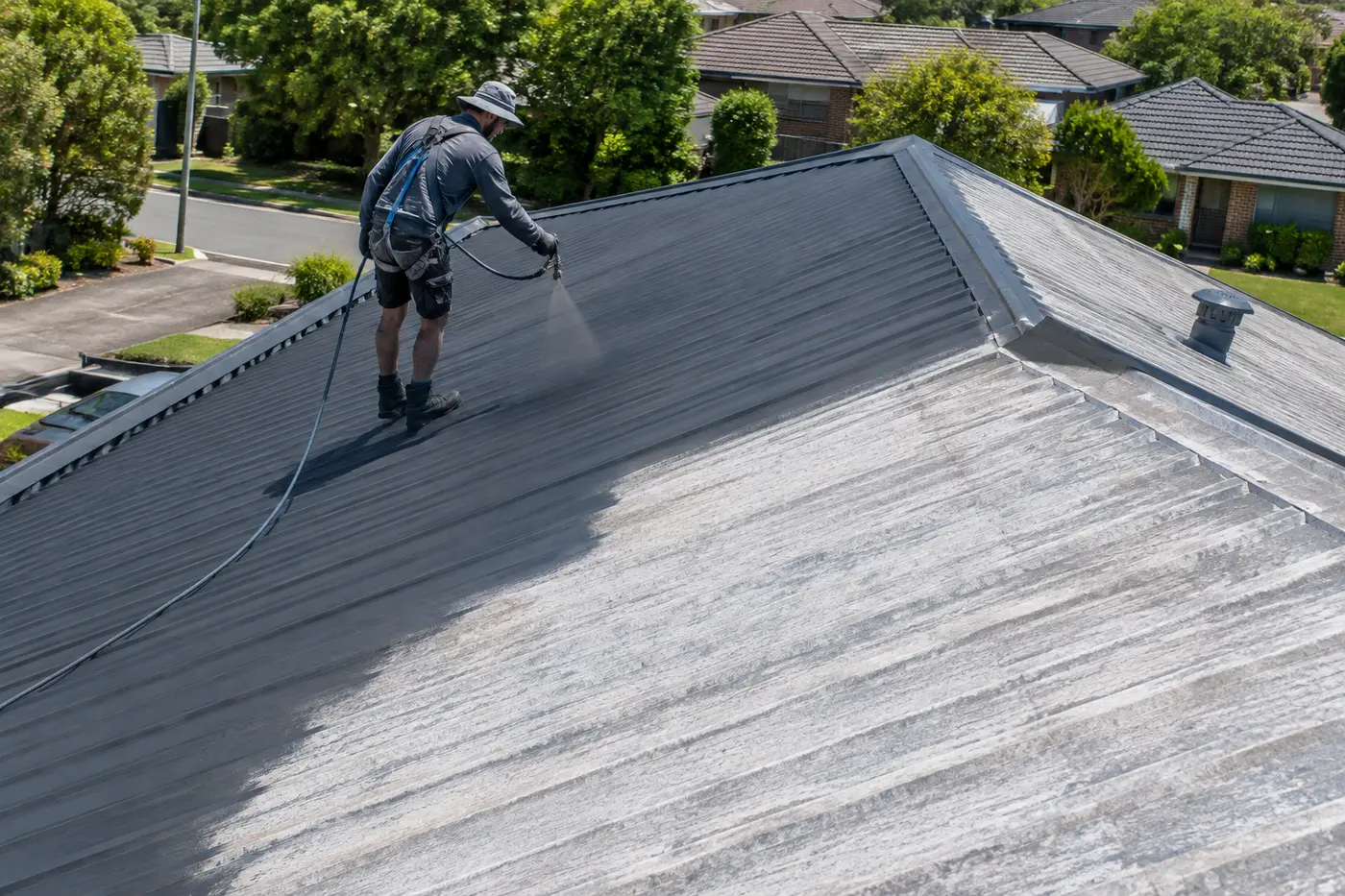
A typical concrete restoration runs in this order: a thorough clean to lift moss, lichen and loose surface material, replacement of any broken tiles, rebedding and repointing of the ridges where needed, then a coating system over the whole roof. The coating puts back the protective surface the sun has worn away. It’s also your chance to change colour, which is why so many faded concrete roofs end up in charcoal or a modern grey.
Skip the coating on a badly weathered concrete roof and you’re usually back to the same tired look before long, because the bare surface keeps soaking up water and growing lichen.
Terracotta tile roofs
Terracotta usually needs less. A careful clean, cracked tiles replaced, and the ridges rebedded and repointed is often the whole job. The clay keeps its colour, so there’s no worn finish to put back.
Glazed terracotta generally isn’t worth painting. Paint doesn’t grip the glaze well, and you’d be covering a surface that was never going to fade. Unglazed terracotta can be coated if you want a colour change, but think it through first. Once a clay roof is painted, it will need recoating down the track like any other painted roof.
Either way, our tile and metal roof restoration service starts with an inspection, so we can tell you which of these steps your roof actually needs instead of quoting the full list by default.
Picking tiles for a new roof or an extension
If you’re building, re-roofing or adding an extension, the comparison shifts a little.
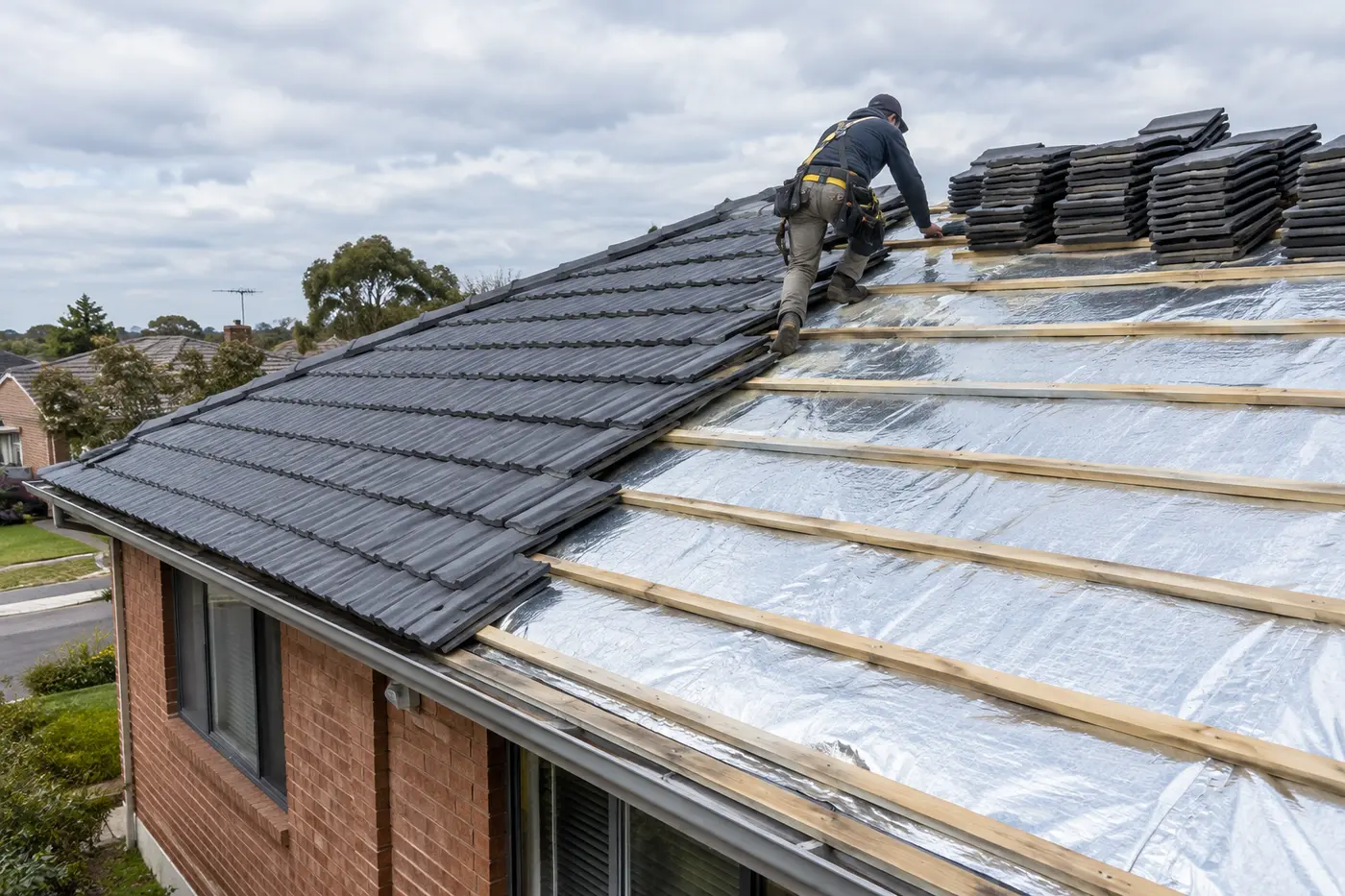
Concrete is usually the cheaper tile to buy and lay, and it comes in a wide range of colours and profiles. It’s also heavier, so the roof frame has to be designed to carry it. Terracotta generally costs more up front but keeps its colour for the life of the tile, which suits people who don’t want to think about recoating later.
Extensions add one more consideration. Matching the new section to the existing roof often matters more than which material is better on paper. A terracotta extension on a concrete house, or the other way round, can look patchy for years. We’d always try to match the existing tile first.
Some owners also look at swapping tiles for Colorbond when a roof is past saving. That’s a bigger decision with its own trade offs, and one we’re happy to talk through on site.
The short version, side by side
| Concrete tiles | Terracotta tiles | |
|---|---|---|
| What they’re made of | Cement and sand, colour on the surface | Fired clay, colour all the way through |
| How they age | Surface fades, goes chalky and porous | Holds colour, glazed tiles barely change |
| Most common damage | Surface wear, moss and lichen | Cracks from foot traffic, impact or hail |
| Weight | Heavier | Lighter |
| Usual restoration | Clean, repair, repoint, then coat | Clean, repair, repoint, often no coating |
| Can it be painted? | Yes, and it usually should be once worn | Unglazed can be, glazed generally isn’t worth it |
Common questions about terracotta and concrete roof tiles
Which is better, terracotta or concrete roof tiles?
Neither wins outright. Terracotta keeps its colour and needs less upkeep over time, while concrete is usually cheaper and handles foot traffic better. For an existing home, the better tile is almost always the one already on the roof, looked after properly.
Are terracotta roofs more expensive?
To buy and install, terracotta generally costs more than concrete. Over the life of the roof the gap can narrow, because terracotta doesn’t need the recoating a weathered concrete roof does. Restoring an existing terracotta roof is often a smaller job for the same reason.
What is the lifespan of a terracotta roof?
The clay tiles themselves last a very long time if they aren’t cracked. In practice, the life of a terracotta roof usually comes down to the ridge bedding, pointing, flashings and any broken tiles. Keep those in good order and the roof can stay sound for decades.
What are the disadvantages of terracotta roof tiles?
They’re more brittle than concrete, so they can crack under a heavy footstep, a falling branch or hail. They also cost more up front, and matching an old profile or colour can be tricky when a tile needs replacing.
Can you paint terracotta roof tiles?
Unglazed terracotta can be coated if you want a colour change, as long as it’s cleaned and prepared properly first. Glazed terracotta generally isn’t worth painting because paint doesn’t grip the glaze well. Keep in mind that a painted clay roof will need recoating later.
What are the best roof tiles for Melbourne homes?
Both concrete and terracotta handle Melbourne weather well when they’re laid and maintained properly. The bigger factors are matching your existing roof, your budget, the weight your frame can carry, and how much ongoing maintenance you’re comfortable with.
Not sure what’s on your roof?
We’re happy to take a look. Cam and the crew offer free inspections and quotes across Narre Warren and the surrounding suburbs, and we’ll tell you what your tiles are, what condition they’re in and what work is actually worth doing. Our work comes with a 10 Year Warranty on workmanship and products. Find out more about our roof restoration work in Narre Warren or call us on (03) 8738 2128.