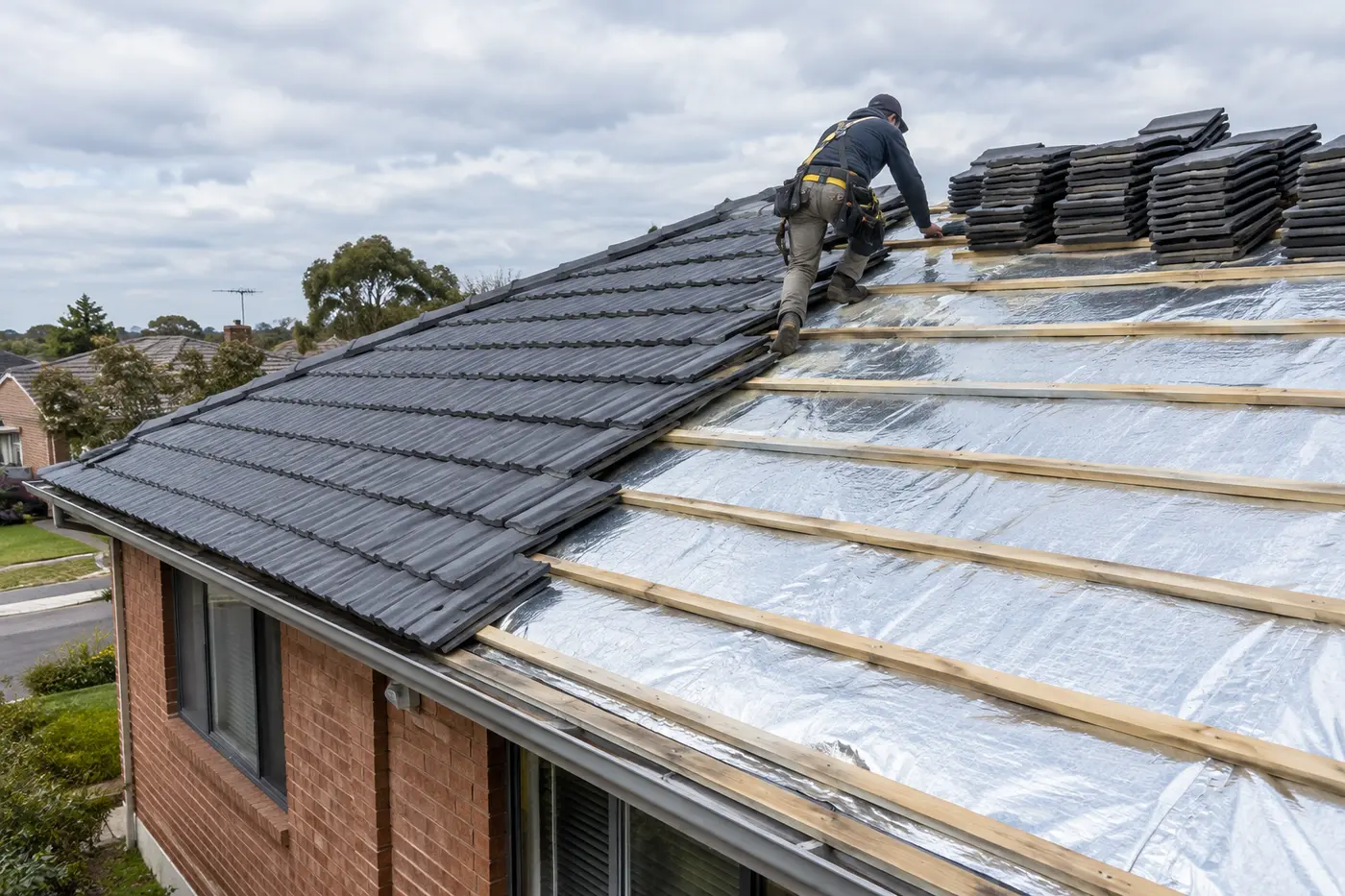
A common one for us: a homeowner rings after a big storm with a brown stain on the ceiling, but when we get up there, every tile is sitting where it should. The water blew in sideways, under the tiles, and there was nothing underneath to catch it. That “nothing” is the missing layer this post is about. If you’ve been asking what is roof sarking, and whether your place has it, here’s the plain version from a crew that spends most days on tile and metal roofs around Narre Warren.
Sarking is the second skin under your tiles or sheets
Sarking is a tough, flexible membrane laid over the roof frame before the tiles or metal sheets go on. Most of it is a woven or laminated sheet with a reflective foil face, so from inside the roof space it looks like a silver or grey blanket stretched across the rafters. You may also hear it called sisalation, which is really a brand name that stuck, a bit like calling every vacuum a Hoover.
It is not the roof. Tiles and sheets still do the main job of keeping weather out. Sarking is the backup, and like most backups, you only find out whether you needed it when something goes wrong.
What it actually does day to day
Tile roofs are not sealed surfaces. Each tile overlaps the next, and in normal rain that is enough. In strong wind, though, rain gets pushed up and under the laps, and fine dust and leaf litter find their way in too. Sarking catches that water and runs it down into the gutter instead of onto your ceiling.
It helps in a few other ways:
- The foil face reflects radiant heat, so the roof space runs cooler on hot January afternoons
- It cuts draughts and dust coming through gaps between tiles
- It gives some protection if a tile cracks and nobody notices for a while
- In bushfire areas, it helps stop embers getting into the roof cavity
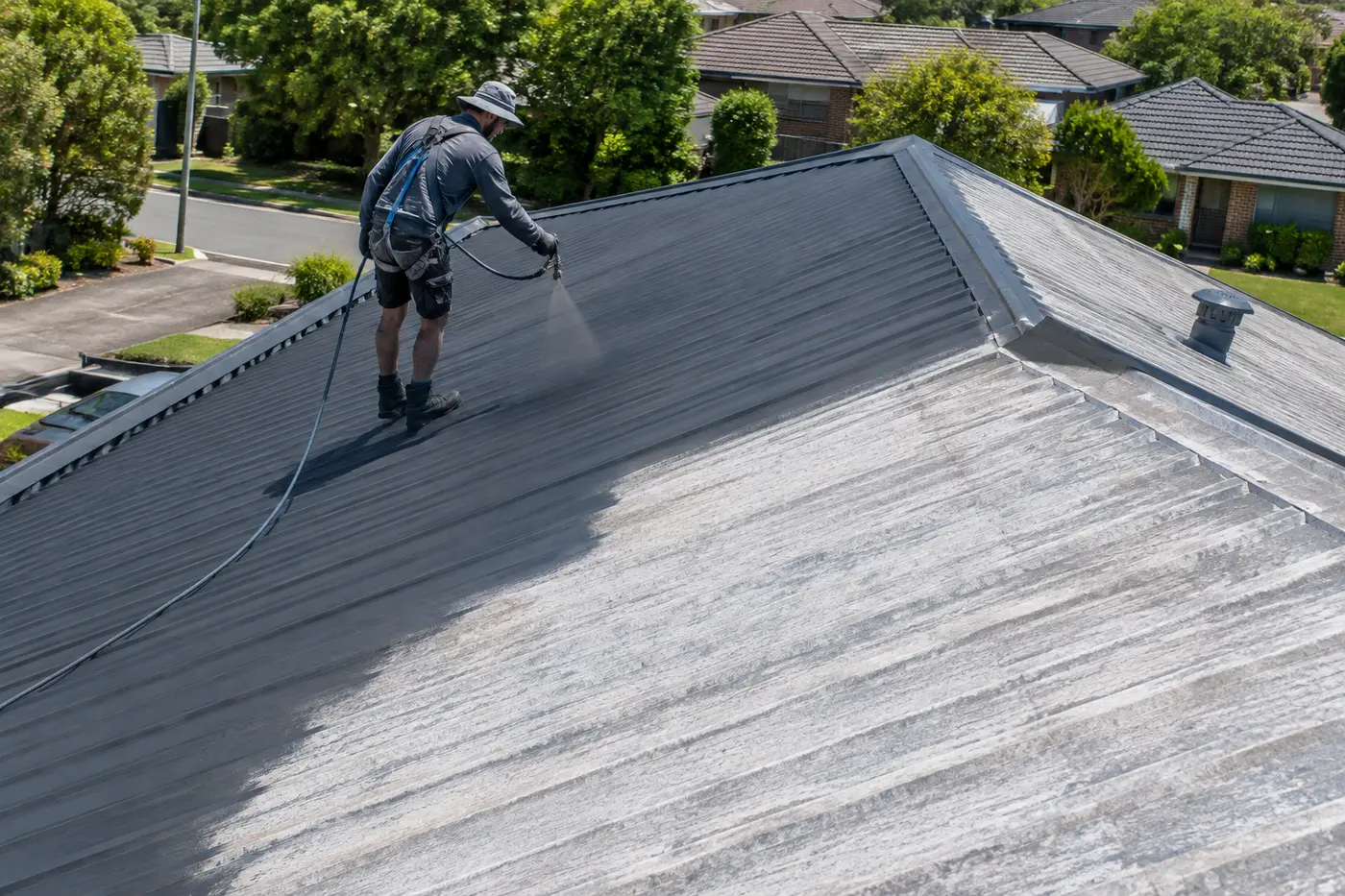
On a metal roof the reason is a bit different. Metal sheets cool quickly overnight, and moisture in the air can condense on the underside and drip into the ceiling. A foil layer, or a foil backed insulation blanket (often called anticon), helps control that condensation and also takes the edge off rain noise.
Plenty of older Narre Warren roofs don’t have any
Sarking only became common practice on houses over the last few decades. A lot of the concrete and terracotta tile roofs we get up on in the older streets of Narre Warren, Hallam and Endeavour Hills were laid straight onto battens, with nothing underneath. You can check yours in about two minutes. Pop your head up through the manhole with a torch and look at the underside of the roof. If you see the backs of the tiles and daylight through the gaps, there is no sarking. If you see a continuous foil or fabric sheet, there is.
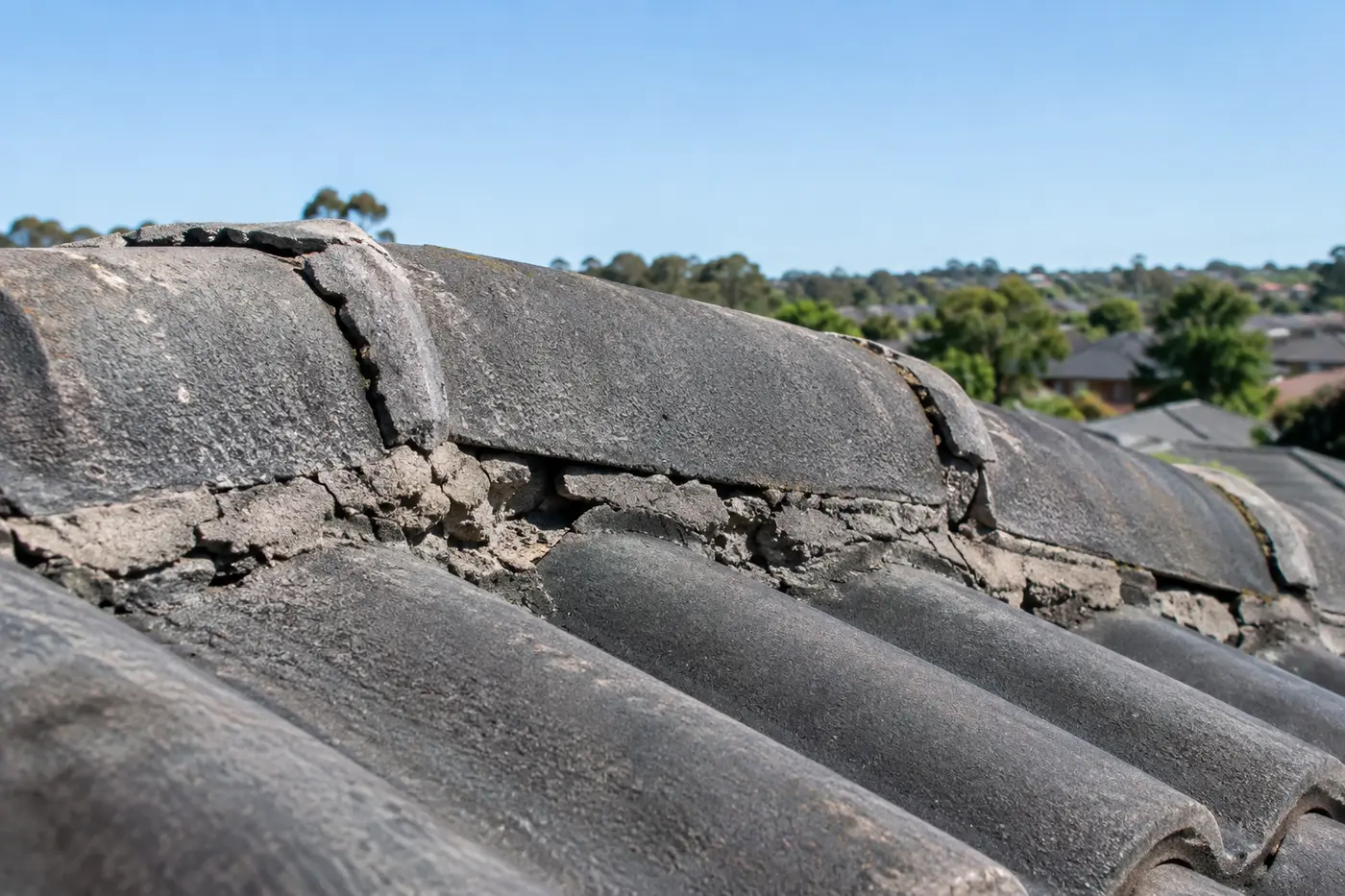
Having no sarking is not a fault in itself. Those roofs were built to the rules of their day, and a well maintained tile roof with good pointing can stay dry for a long time without it. It just means there is no margin for error when a tile slips or the wind drives rain in hard.
Do you legally need it?
For an existing home, generally no. There is no rule that makes you go back and add sarking to a roof that was built without it. The question comes up mainly with new roofs and re-roofs, where the requirement depends on things like the roof pitch, the tile profile, how exposed the site is to wind, and whether the property sits in a bushfire prone area. Some of the leafier blocks towards Narre Warren North and Harkaway do carry bushfire overlays, and those can change what is required under a new tiled roof.
If you are replacing a roof, your roofer and building surveyor should confirm what applies to your address before any work starts. It is not something to guess.
The best time to add sarking is when the roof is already open
Can you put sarking on an existing roof? Yes, but the right way to do it means taking the covering off. On a tile roof, the tiles and battens come off, the sarking is laid across the rafters with the right overlaps and a drape down into the gutter, then the battens and tiles go back on. On a metal roof, the sheets come off and the sarking or blanket goes on before new or reused sheets are fixed back down.
That is a lot of labour just to add a membrane, so we rarely recommend doing it on its own. It makes the most sense when the roof is being stripped anyway: a full re-roof, a tile to metal conversion, or a big section being rebuilt after damage. If you are weighing up those bigger options, our guide to choosing between restoring and replacing a roof covers how we make that call. The details of how we fit it are on our roof sarking installation page.
You will see products sold for fixing sarking from inside the roof space, stapled between the rafters. That can help a little with dust and heat, but it cannot shed water into the gutter the way properly laid sarking does, so it is not a fix for leaks.
Is it worth it on your roof?
Our honest take: if your roof is sound and only needs a restoration (cleaning, repointing, a few new tiles and a coating), sarking usually isn’t worth pulling everything apart for. Money spent keeping the tiles, pointing and flashings in good shape does more to keep water out day to day.
It becomes worth it when:
- You are re-roofing or converting from tiles to metal
- You keep getting leaks in wind driven rain even though the tiles look fine
- The roof space is dusty and the rooms under it bake in summer
- A new roof on your block has to meet bushfire requirements
If you have a leak right now, sarking is not the first thing to look at. Work out where the water is getting in first; our post on tracking down why a roof is leaking goes through the usual culprits we find.
Common questions about roof sarking
Is sarking mandatory in Australia?
Not across the board. Whether a new roof needs it depends on factors like roof pitch, wind exposure, the roofing material and bushfire ratings for the site. Existing homes are not required to add it after the fact.
Is roof sarking worth it?
On a new roof or a re-roof, usually yes, because the roof is already open and the extra cost is mostly the material and a bit of labour. On a sound existing roof, it rarely justifies stripping the tiles off just to fit it.
How much does it cost to install sarking on an existing roof?
Most of the cost is the labour of lifting the tiles or sheets and putting them back, so the price depends on your roof’s size, pitch, access and condition. That is why we price it after looking at the roof. Our inspections and quotes are free.
Is it possible to have a roof without sarking?
Yes. Many older tile roofs around Narre Warren have none and stay dry for years with good maintenance. The trade off is less protection from wind driven rain, dust and heat.
Do Colorbond roofs need sarking?
A metal roof usually needs something underneath to manage condensation, which is why most are laid over a foil blanket or sarking. Without it, moisture can form on the underside of the sheets on cold nights and drip into the ceiling.
Can you put sarking on an existing roof?
Yes, but doing it properly means removing the tiles or sheets, laying the sarking over the rafters, then relaying the roof. Stapling it up from inside the roof space is a much weaker option and won’t redirect water to the gutters.
Get a straight answer about your own roof
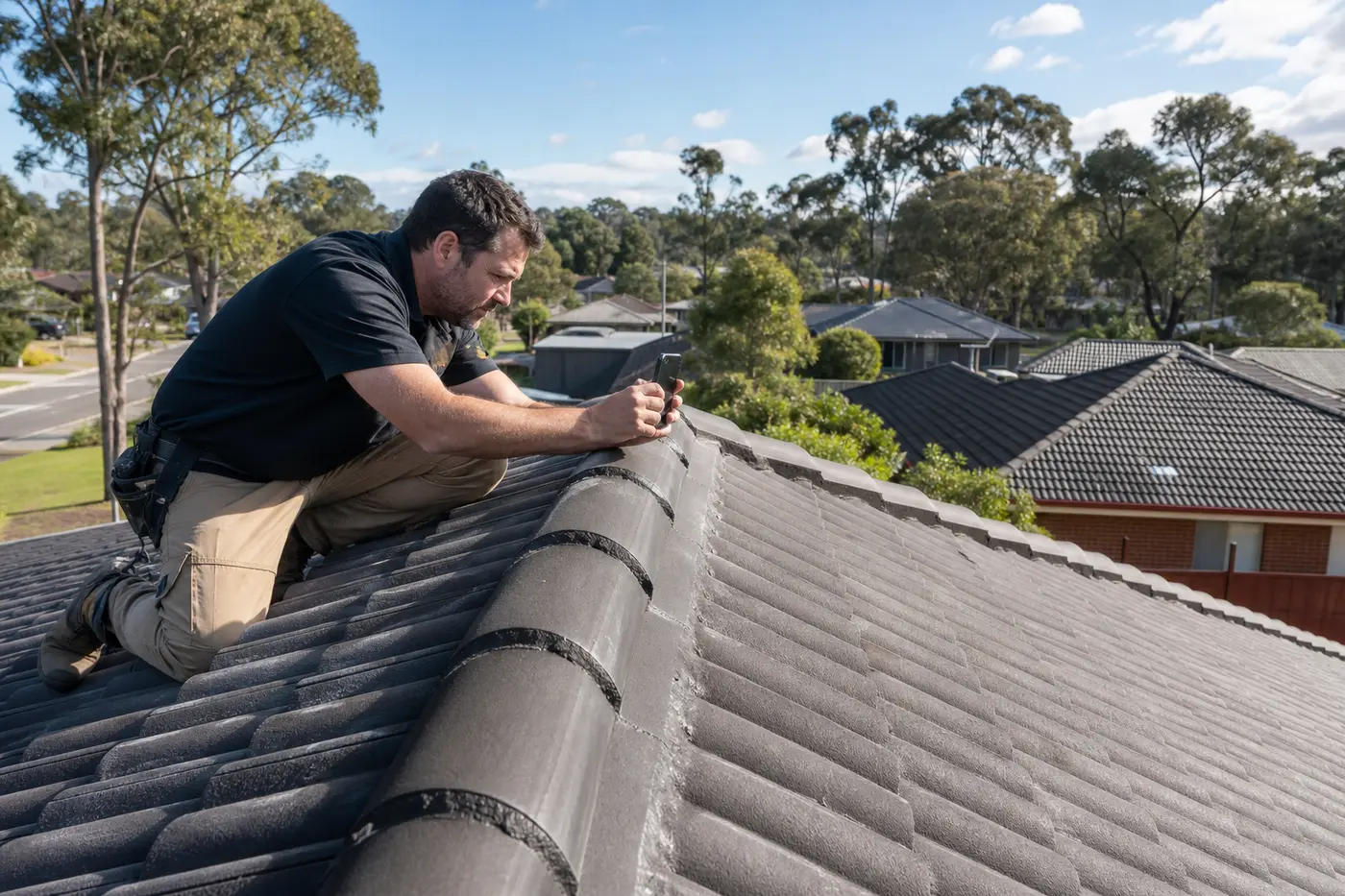
If you are not sure whether your roof has sarking, or whether it is worth adding during a re-roof, Cam and the crew can get up there and tell you what we see, with photos. Inspections and quotes are free, our work carries a 10 Year Warranty on workmanship and products, and we answer the phone 7am to 6pm, seven days, on (03) 8738 2128. You can read more about how we fit sarking under tile and metal roofs and book in from there.