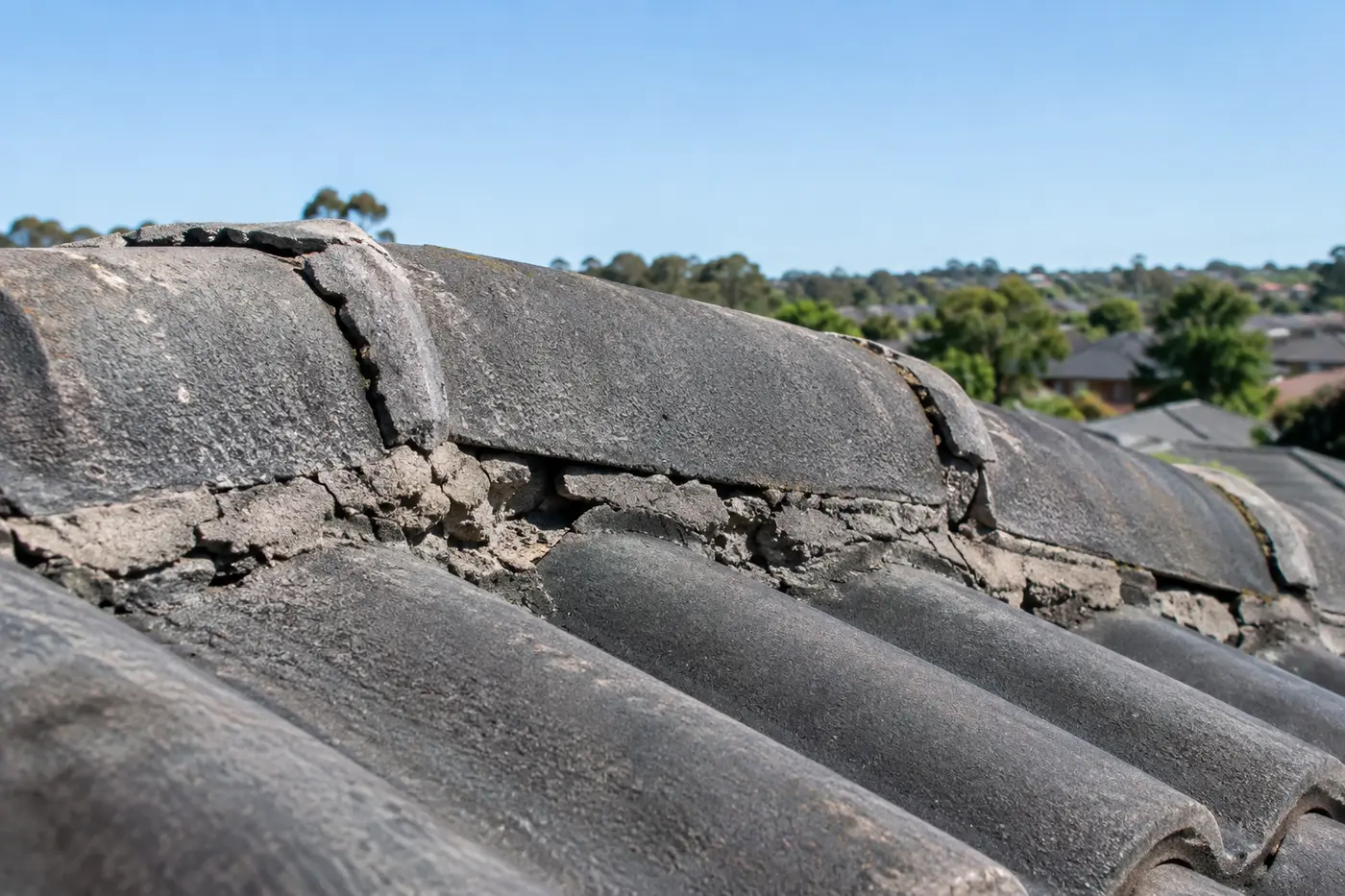
You are out in the backyard after a windy night and something catches your eye. A thin crack running along the mortar at the very top of the roof, or a little chunk of grey cement sitting in the gutter that was not there last month. That strip of mortar holding the top row of tiles in place is your ridge capping, and once it starts breaking up, ridge capping repairs are usually the first thing we suggest before water gets a chance to sneak in.
It is one of those parts of a roof nobody thinks about until it fails. We get called out to it constantly across Narre Warren and the surrounding suburbs, so here is what it actually is, how to spot trouble early, and what fixing it involves.
What ridge capping actually is
Ridge capping is the row of caps that sits over the join where two sides of the roof meet. You will see it running along the very top (the ridge) and down the sloping edges (the hips). On a tiled roof, those caps are set on a bed of mortar and then sealed with a pointing compound. On a metal roof, the capping is a folded sheet screwed down over the join.
Either way the job is the same. It seals the one line where the roof would otherwise be wide open to the weather. When the mortar and pointing are sound, rain runs straight off. When they crack, that seal is gone.
The signs we get called out for
Most people notice a problem one of a few ways. Sometimes it is obvious from the ground, sometimes it turns up as a stain on the ceiling months later. Keep an eye out for these:
- Cracked or crumbling mortar lines along the ridge and hips
- Loose caps that lift or rattle in strong wind
- Bits of grey cement showing up in your gutters or on the paving below
- Gaps you can see between the caps and the tiles when you look up
- Weeds, moss or grass sprouting from the joins
- Water stains on the ceiling, often near an internal wall that lines up with the roof ridge
The tricky part is that a cracked cap and a leaking ceiling can be months apart. Water gets under a small crack, tracks along the timber, and only shows up on the plaster once it has soaked through. By then the fix is bigger than it needed to be.
Repointing, rebedding, or full replacement
Not every ridge cap problem needs the same job, and a good roofer will tell you which one you are actually looking at. There are three levels.
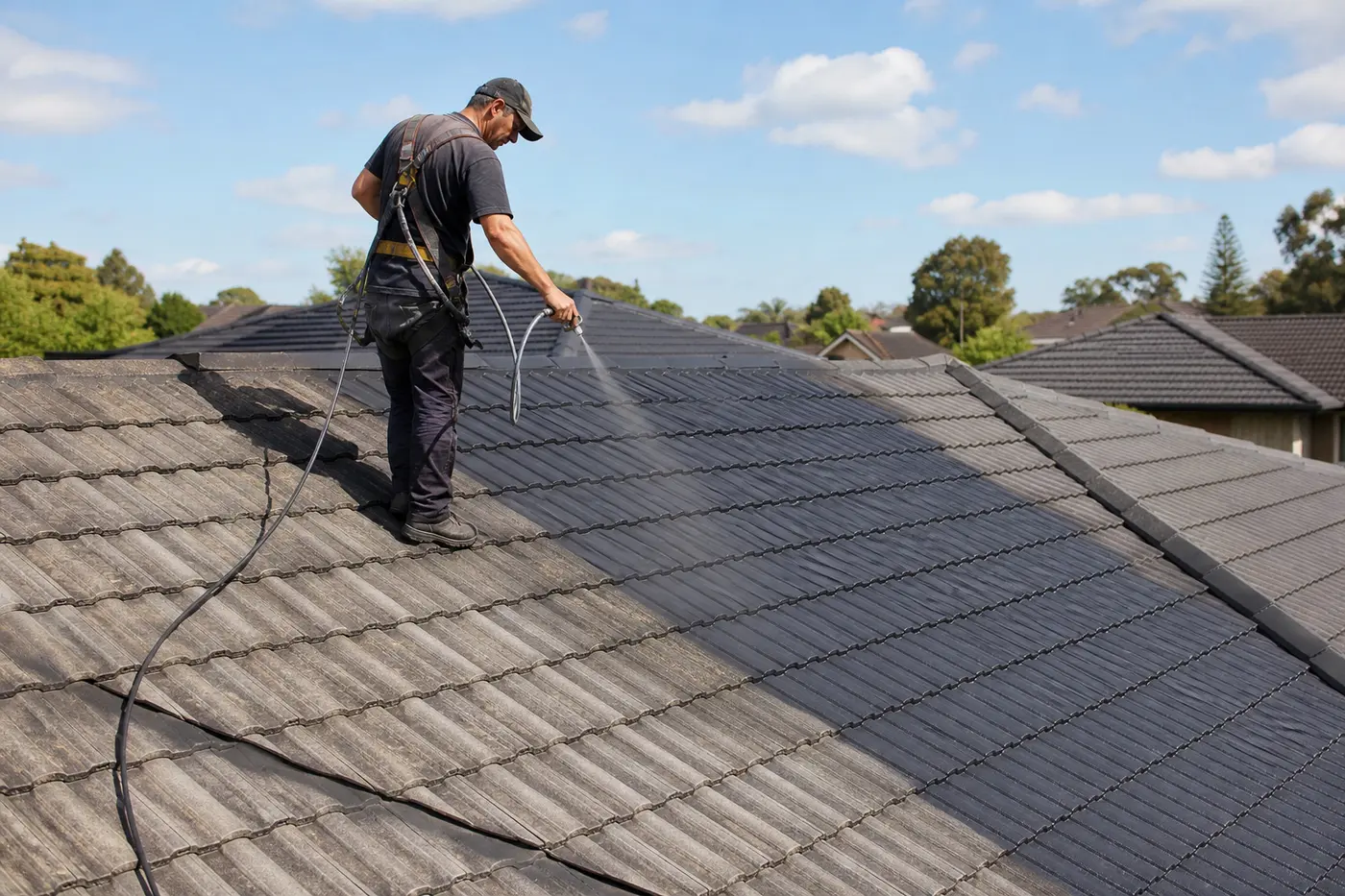
Repointing is the lightest. If the caps are still sitting straight and level but the surface pointing has cracked, we can apply fresh flexible pointing over the top. It flexes with the roof instead of going brittle like old sand and cement did. We go through this in more detail in our guide to roof repointing and when it is needed.
Rebedding is a step up. When the mortar bed underneath has broken down and the caps have started to move or sink, we lift them off, lay a fresh mortar bed, reset the caps, then point over the top. This is common on older roofs where the original bedding has simply worn out.
Replacement is for caps that are cracked, broken or missing, or where the whole ridge is being redone as part of a roof restoration. On a metal roof it means swapping the capping sheets themselves.
Why one cracked cap ends up inside your ceiling
People are often surprised how much damage a small crack can do. The ridge is the highest point of the roof and every bit of rain that lands above it drains past that line. A gap only a few millimetres wide is enough to let wind-driven rain track underneath, and once it is in the roof cavity it runs wherever gravity takes it.
That is why ridge capping shows up so often when we are chasing a leak. If you have a damp patch on the ceiling and cannot work out where it is coming from, the ridge is one of the first places we check. Our post on why roofs leak around Narre Warren covers the other usual suspects.
Should you try to fix it yourself?
We understand the temptation, especially for a single cracked cap. But this is not a job we would push anyone towards. The ridge is the highest, most exposed part of the roof, and getting to it means working on tiles that crack under foot if you step in the wrong spot. A slip up there is serious.
Then there is the material side. Old rigid mortar and modern flexible pointing behave very differently, and patching one over the other rarely holds. Done poorly, a DIY patch can trap water and make the leak worse than before. For anything beyond a look from the ground, it is worth having a licensed roofer take care of it.
What a repair looks like when we handle it
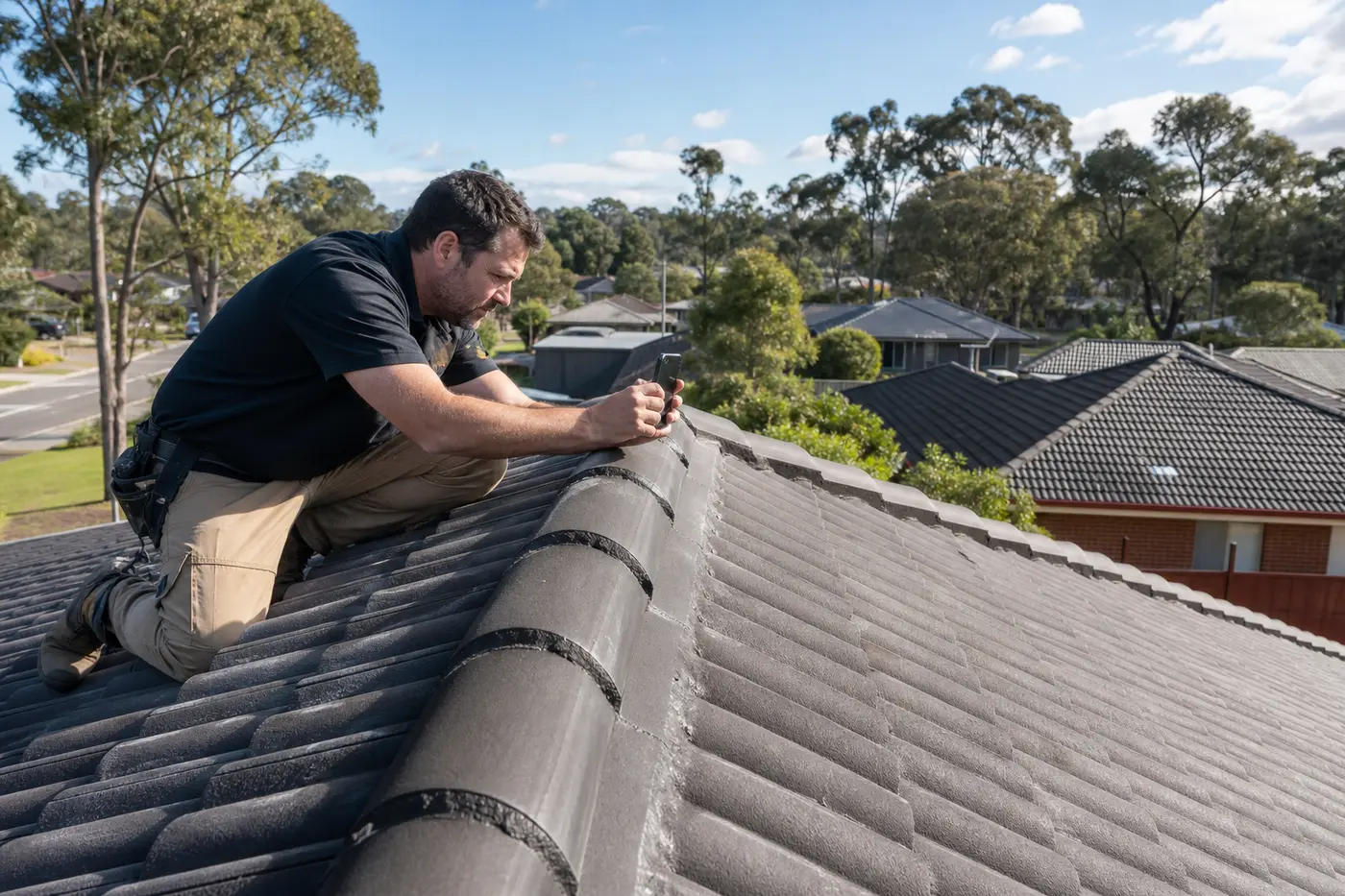
We start with a free inspection and take photos of what we find, so you can see the state of the ridge for yourself rather than taking our word for it. From there we talk you through whether it is a repoint, a rebed or a replacement, and give you a clear quote before anything starts. If you want the ridge sorted on its own or as part of a wider job, here is our ridge capping repair service in full.
The work is done to Australian Standards, and it comes with our 10 year warranty on workmanship and products. Cam and the crew have done a lot of these across local rooftops, so we know how the older estates and the newer builds around here tend to age.
Common questions about ridge capping
How much do ridge capping repairs cost?
It depends on the length of ridge and hip involved, how easy the roof is to get onto, and whether you need a repoint, a rebed or full replacement. A short repoint is a much smaller job than rebedding an entire roof. The honest answer is that we quote it after seeing it, and the inspection and quote are free.
How long should ridge capping last?
Good flexible pointing lasts a lot longer than the old rigid sand and cement, which tends to crack within a decade as the roof moves and heats. Quality matters more than age here. Our repointing work is backed by a 10 year warranty, which gives you a sense of how long we expect it to hold.
Why is my ridge cap leaking?
Almost always because the pointing or bedding has cracked and opened a gap. Rain gets driven under the cap, runs into the roof cavity and shows up as a stain some distance away. A quick inspection at the ridge usually finds it.
Can I repair ridge capping myself?
You can spot the warning signs yourself, but we would not recommend doing the repair. It means working at the highest point of the roof on tiles that break easily, and matching the right pointing to the existing bedding takes a bit of know-how. A bad patch can trap water and cause more damage.
What is the difference between repointing and rebedding?
Repointing renews the flexible seal on the surface while the caps stay where they are. Rebedding goes deeper, lifting the caps to replace the mortar bed underneath before pointing again. Rebedding is what you need once the caps have started to move or sink.
Do I need to replace all the ridge capping or just the bad sections?
Often just the affected sections, if the rest is still sound. But if the pointing across the whole roof is the same age and cracking in more than one spot, doing it all at once usually works out better than repeat call-outs. We will tell you plainly which situation you are in.
If you have spotted cracked mortar or a rattling cap up top, it is worth getting eyes on it before the next big storm. Reach out for a free inspection and quote on ridge capping repairs and we will let you know exactly what your roof needs.