You clear the gutter after a windy night and find a handful of grey, gritty crumbs sitting in the bottom of it. Or you notice a ridge cap along the top of the roof looks like it has shifted a fraction out of line. Those two small things are usually the first hint that your roof needs repointing, and it is one of the most common jobs we get called out for on older tile roofs around Narre Warren.
Most people have never heard the word until a roofer says it to them. So here is what roof repointing actually is, how to tell if yours needs doing, and where it sits next to a full roof restoration.
What repointing actually means
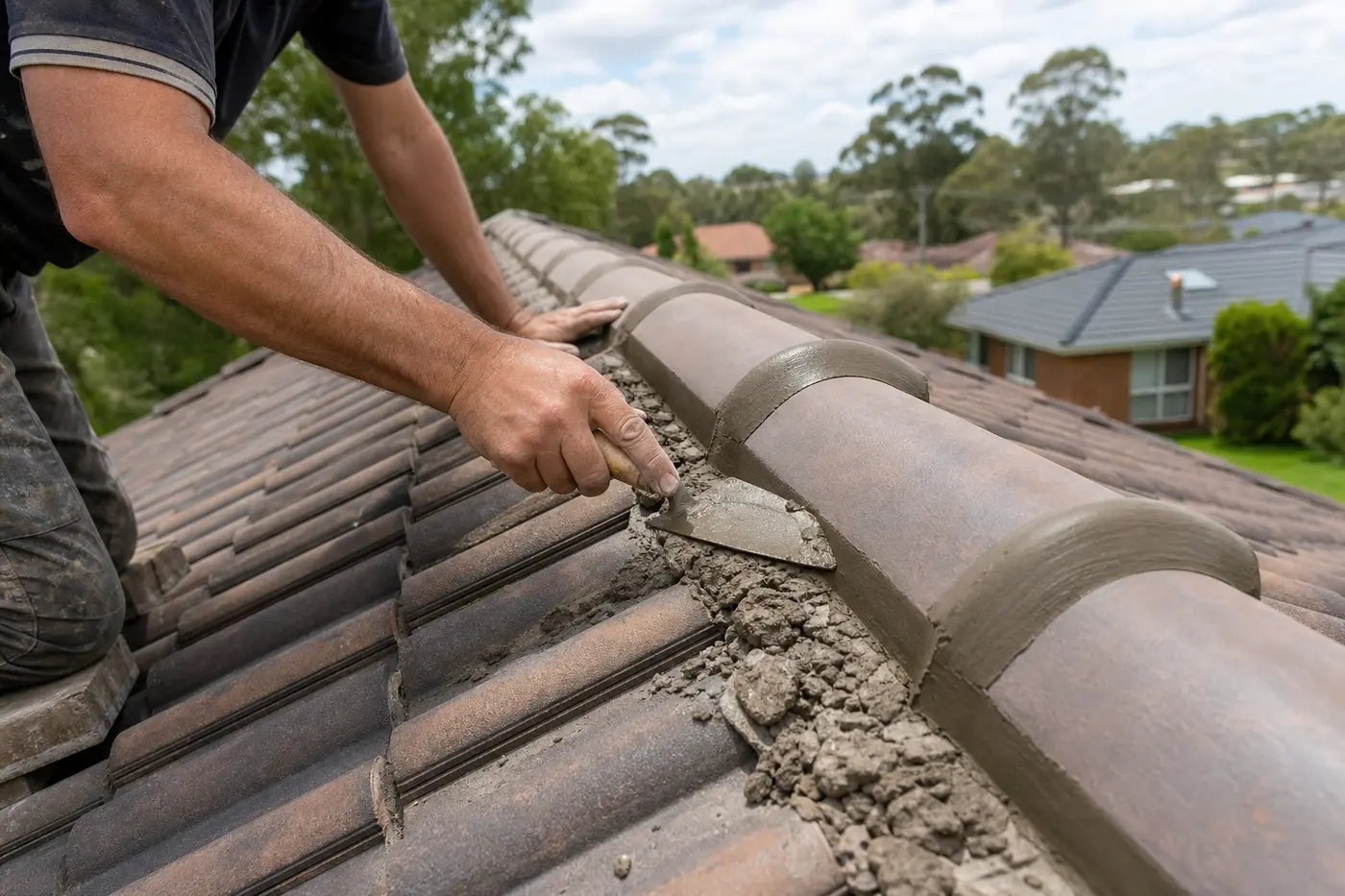
Look along the ridge of a tiled roof, the peak where two sides meet, and along the hips that run down the corners. Those capping tiles sit on a bed of mortar. Repointing is the job of removing the old, cracked pointing on top of that mortar and laying a fresh flexible compound in its place.
There is a related job worth knowing about too. Rebedding is when the whole mortar bed underneath the caps has failed and the caps have to be lifted off and re-set on fresh cement. Repointing is the layer on top. Plenty of roofs only need repointing. Some, usually the older or more neglected ones, need both. A quick look from a roofer will tell you which camp yours is in.
The modern flexible pointing we use is not the same as the rigid sand-and-cement mortar that was troweled on decades ago. It flexes a little as the roof heats and cools through a Melbourne summer, so it does not crack and drop out the way the old stuff does.
The signs we look for
You do not need to climb up there yourself, and honestly we would rather you did not. Most of these you can spot from the ground or from what ends up in the gutter.
- Crumbs of grey or sandy mortar collecting in the gutters or on the ground near the downpipes.
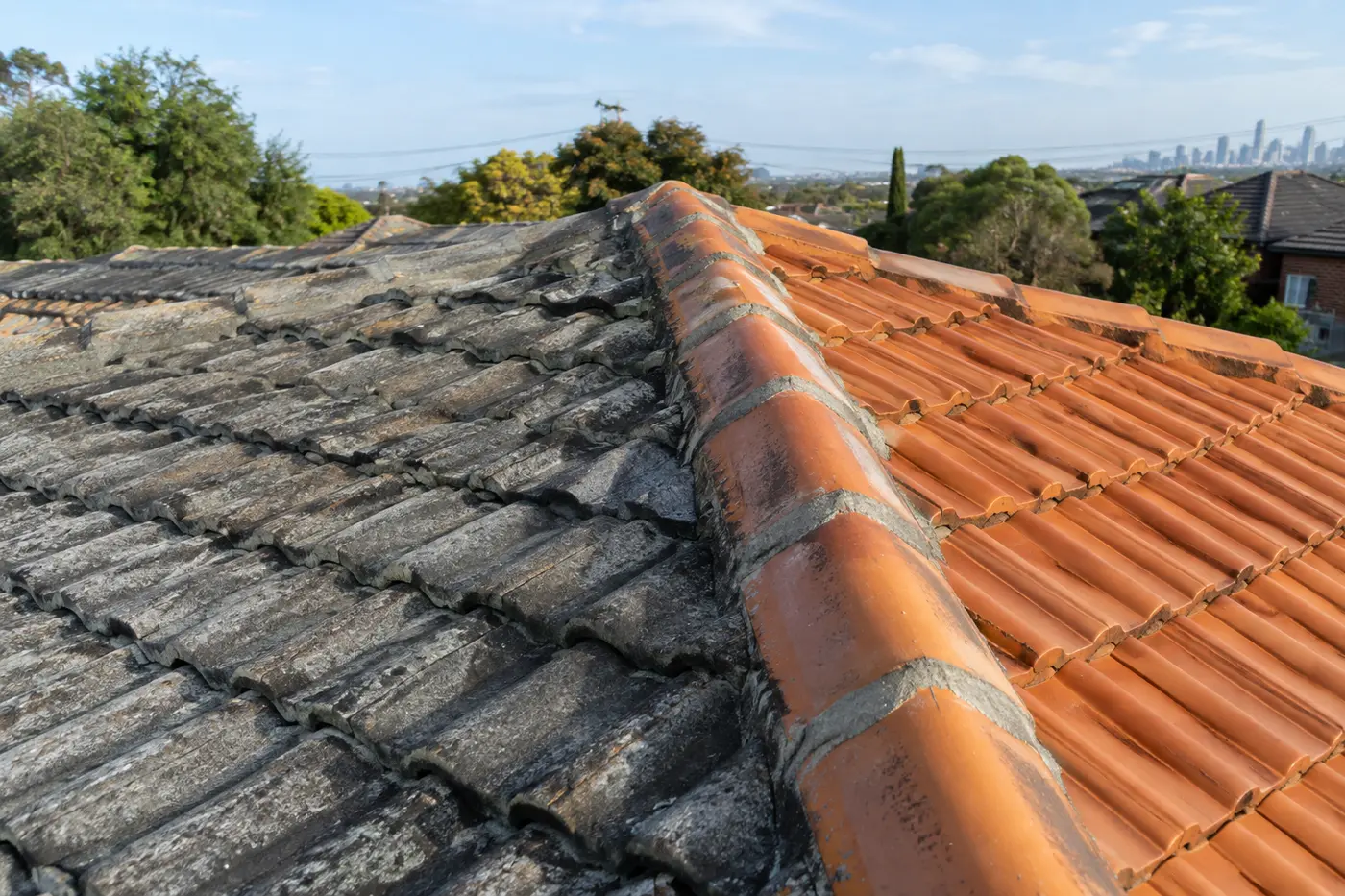
- Ridge or hip caps that look uneven, tilted, or slightly out of line with their neighbours.
- Visible cracks or gaps running along the mortar where the caps meet the tiles.
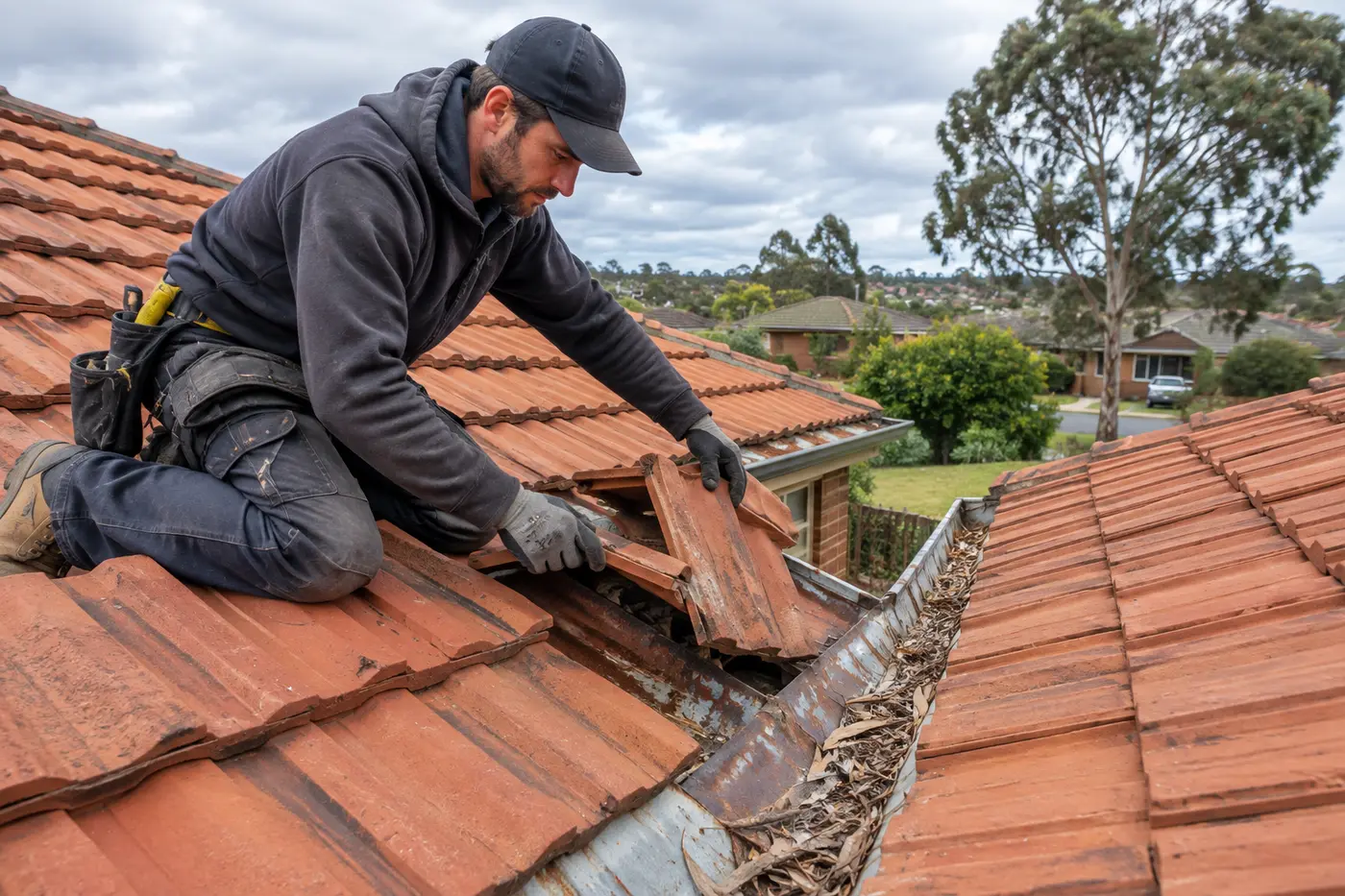
- A cap that rocks or lifts when touched (something we check during an inspection, not a job for a homeowner on a ladder).
- Damp patches or a small leak showing up inside near where a ridge line runs.
Cracked pointing is the sort of thing that looks minor and stays minor right up until the day it does not. Wind gets under a loose cap, water gets into the gap, and what was a cheap fix becomes a repair to the ceiling below.
What happens if you leave it
The pointing is doing a real job. It holds the capping tiles firm and keeps wind-driven rain out of the gap at the top of the roof. Once it fails, a cap can lift or blow off in a decent storm, and the roofs we see most exposed to that are the ones on the open, newer estates around Narre Warren South, Clyde and Berwick where there is not much to slow the wind down.
Water getting in through failed pointing is the quieter problem. It soaks the timber and insulation under the ridge, and by the time a stain shows on the ceiling the damage has usually been building for a while. Repointing on time is cheap insurance against both.
How the job runs, start to finish
On a straightforward tile roof the work is not dramatic, which is how it should be. We rake out the old pointing, clean up the surface, and check each cap is sitting properly on its bed as we go. If a bed has failed we flag it, because that cap needs rebedding first. Then fresh flexible pointing goes on along the full length of the ridges and hips and gets tooled to a clean finish.
Repointing often gets bundled in with ridge capping repairs and the broader restoration work, because once someone is safely up on the roof it makes sense to sort the caps in one visit rather than two. A typical repoint is a same-day job on most homes, though a big or steep roof takes longer.
Repointing, restoration, or a bit of both?
This is the question we get asked most, so here is the honest answer. If your tiles themselves are sound and it is only the pointing that has gone, a standalone repoint is all you need and there is no reason to pay for more. If the tiles are also faded, porous or growing moss, repointing is usually done as one stage inside a full restoration alongside cleaning, any tile replacement and recoating.
The only way to know for certain is to have someone actually look. We offer a free, no-obligation roof inspection, and we will tell you straight if all you need is the pointing seen to. You can read more about how we approach roof repointing in Narre Warren on our service page.
What it costs, roughly
Repointing is priced mostly on how many lineal metres of ridge and hip your roof has, plus access and how much of the old bedding has failed. A simple single-storey home with clean access sits at the lower end. A two-storey place with steep pitches and long hip lines costs more, because there is more to do and more setup to work safely.
Because it varies that much house to house, a fixed figure online would just mislead you. We would rather quote off your actual roof. If you want to see how repointing fits into the bigger picture of pricing, our Narre Warren roof restoration cost guide walks through what drives the numbers, and our workmanship and products carry a 10 year warranty either way.
Common questions about roof repointing
What is roof repointing?
It is the process of removing the old cracked mortar pointing along the ridge and hip caps of a tiled roof and replacing it with a fresh flexible compound. That pointing holds the caps in place and seals the top of the roof against rain. It is one of the most common maintenance jobs on older tile roofs.
What is the difference between rebedding and repointing?
Rebedding means lifting the capping tiles off and re-setting them on a fresh mortar bed, which is needed when the bed underneath has crumbled. Repointing is the flexible top layer applied over that bed. Some roofs only need repointing, while more worn roofs need rebedding first and then repointing.
How long does roof repointing last?
Modern flexible pointing lasts far longer than the old rigid cement because it moves with the roof instead of cracking. On a properly prepared roof you can expect many years of service from it. The exact life depends on the product, the prep work and how exposed your roof is to weather.
Does my roof need repointing or a full restoration?
If only the pointing has failed and the tiles are still in good shape, a standalone repoint is enough. If the tiles are faded, porous or covered in moss, repointing is usually done as one part of a full restoration. A roof inspection is the only reliable way to know which one your roof needs.
How often should ridge capping be repointed?
There is no fixed schedule, because it depends on the age of the roof and the original mortar. Roofs pointed with old rigid cement tend to need attention sooner than those done with modern flexible compound. The practical answer is to have it checked whenever you notice mortar in the gutters or caps that look out of line.
Can I repoint the roof myself?
We would not recommend it. Working on a pitched roof is genuinely dangerous, and doing the pointing badly can trap water rather than keep it out. It is a job worth leaving to someone who is set up to work safely up there and knows how the caps should sit.