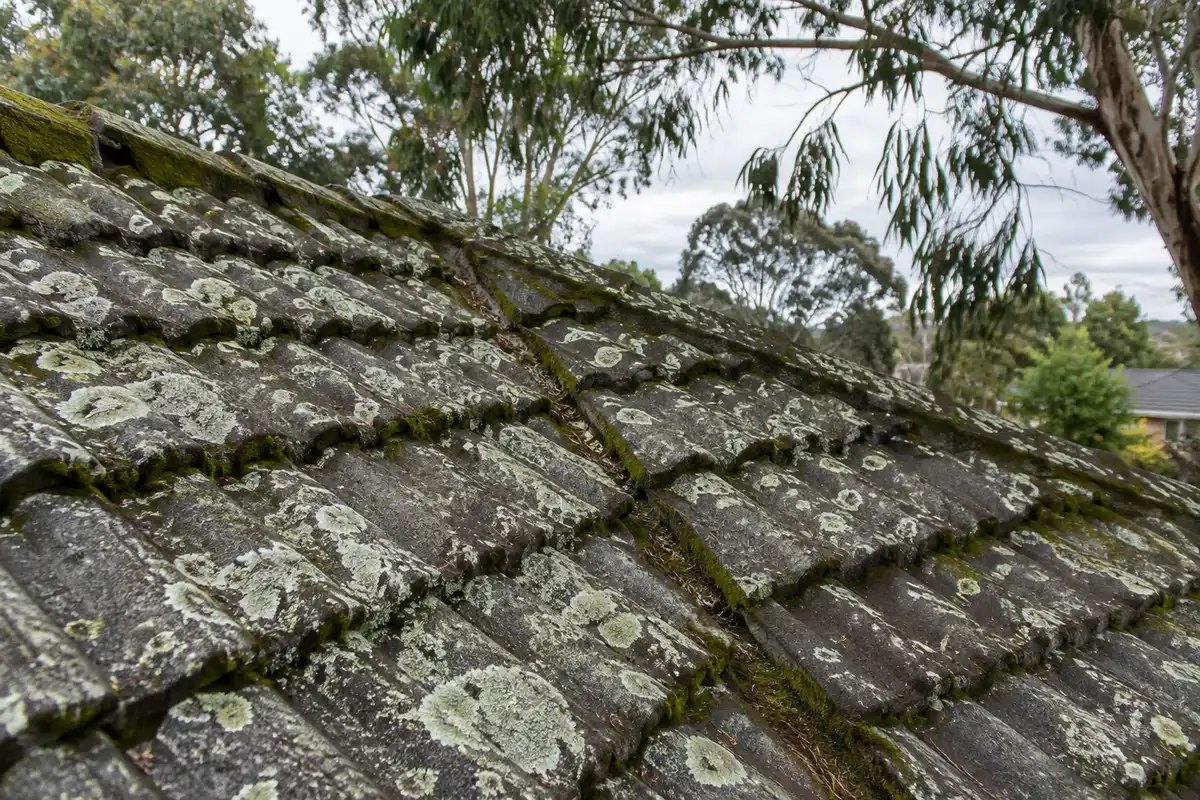
You are hanging washing out the back and you notice it: the shady side of the roof has gone patchy and grey-green, with flat, crusty rosettes spreading across the tiles and a soft green fringe building up along the bottom row. Most people’s first question is whether lichen on a roof actually matters or just looks untidy. The honest answer is that it does slow, quiet damage, and the moss that usually comes with it can cause real problems in valleys and gutters. Here is what we see on roofs around Narre Warren, what we would and would not try yourself, and when it is worth getting someone up there.
That crusty growth is lichen, and it is more than dirt
Lichen is not a plant. It is a partnership between a fungus and an alga living together as one organism. The fungus grips the surface and holds water. The alga makes food from sunlight. Together they can live on a bare concrete tile with almost nothing else to go on, which is why it turns up on roofs that otherwise look clean.
It usually arrives with two neighbours. Moss is the soft green cushion that builds up in joints, along the ridge and at the bottom edge of tiles. Algae shows up as black or dark streaks running down the roof. All three like the same conditions, and on most of the roofs we look at you will find at least two of them sharing the same shady face.
Why the shady side of your roof gets it first
In Melbourne the south-facing side of a roof gets the least direct sun, so it stays damp longest after rain and dew. That is where lichen and moss settle in first. Add an overhanging tree and the effect doubles: more shade, leaf litter sitting in the valleys, and drips off the branches long after the rain has stopped.
We see this a lot in the leafier parts of our patch, out through Narre Warren North and Harkaway and up toward the hills, where big trees sit close to the house. Plenty of homes in the flatter estates have it too, usually on older concrete tile roofs. Once the original surface coating on a concrete tile wears away, the tile becomes rough and porous. That texture gives lichen something to hold onto and keeps moisture in for it.
Metal roofs get it less, because the smooth surface sheds water faster. It still happens on low pitch sections, around lapped joints and anywhere debris collects.
Lichen does slow damage. Moss does faster damage
Lichen anchors itself into the surface of the tile and holds water against it. Over years, that constant dampness and the mild acids lichen produces wear the tile surface down. The tile gets more porous, soaks up more water, and grows more lichen. It is a slow loop, and it rarely causes a leak on its own, but it shortens the life of the tile surface and makes any later restoration harder.
Moss is the one that causes leaks. It grows thick, holds water like a sponge, and breaks off in clumps that wash down into valleys and gutters. Once a valley is choked, rainwater in a heavy downpour has nowhere to go and can spill sideways under the tiles and into the roof space. If you have moss on the roof, check the gutters at the same time, because that is usually where it ends up. Our guide to clearing blocked gutters and knowing when they need replacing covers that side of it.
On a metal roof, the risk is moisture and debris sitting against the coating for long periods. That is how corrosion gets started at laps and fixings.
What we would and would not try yourself
We get asked about DIY lichen removal all the time, and some of it is fine. Some of it ends up costing people more than a professional clean would have.
Household bleach. Diluted chlorine bleach will kill lichen. The problem is everything else it touches on the way down: garden beds, lawn, and the runoff through your gutters and downpipes. It is also not something we would put on a Colorbond or other painted metal roof. If you do use it on tiles, keep it weak and protect the garden below.
Spray on, leave it treatments. These products work, but slowly. The lichen dies over weeks to months, and the dead growth stays stuck to the tile until wind and rain wear it away. For light growth on a roof you can safely reach, they are a reasonable option. For heavy growth you are still left with a stained, worn tile surface underneath.
A hired pressure washer. This is the one we would steer you away from. On older concrete tiles, too much pressure strips the surface off along with the lichen, and blasting upward can drive water under the tiles and into the ceiling. Terracotta can handle more, but it is still easy to do damage.
Walking the roof. Concrete and terracotta tiles crack if you stand on them in the wrong spot, and a wet, mossy roof is slippery. A cracked tile you cannot see from the ground becomes next winter’s leak. If you have already been up there, our post on what to do about cracked roof tiles is worth a read. If you are not comfortable on a ladder, the honest advice is to leave it.
How we clean lichen off without damaging the roof
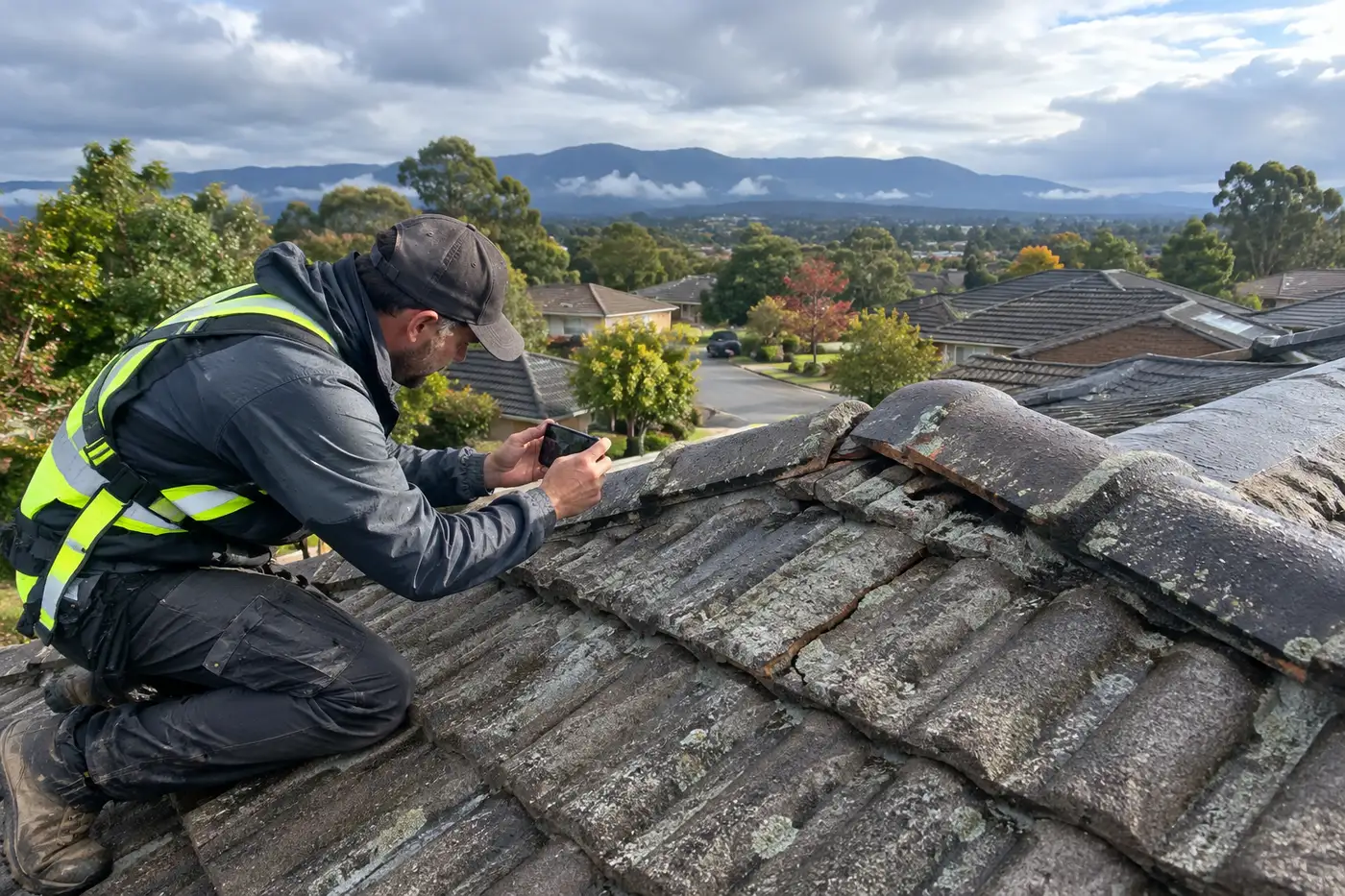
The job always starts with a look at the whole roof, not just the green bits. We check the tiles, the pointing along the ridge (the flexible mortar that holds the ridge caps in place), the valleys and the gutters, and we take photos so you can see what we see. Lichen often hides cracked tiles and loose pointing, and there is no sense cleaning a roof that needs repairs first.
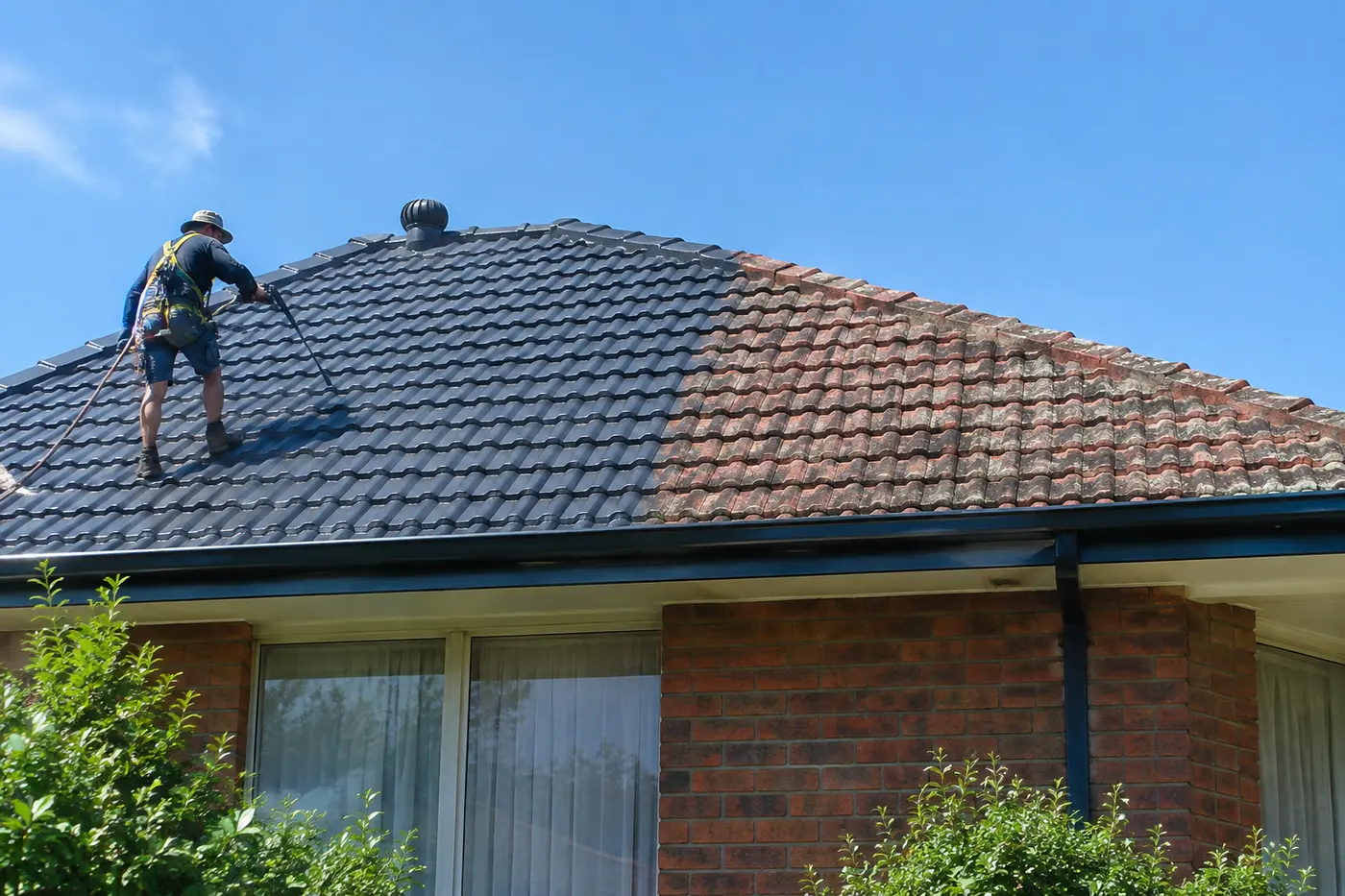
From there it is a treatment to kill the growth, then a clean at a pressure that suits the material. Older concrete tiles get a much gentler approach than a newer terracotta roof. Valleys and gutters are cleared as part of the job, not left full of whatever came off the roof. Our roof cleaning service for tile and metal roofs explains how we go about it in more detail.
When cleaning is only the first step
This one surprises people. On a roof that has been covered in lichen for years, taking the lichen off can make the roof look worse at first, because you can now see how worn the tile surface underneath has become. Bare, porous concrete tiles take on water and will grow lichen again faster than a sealed surface.
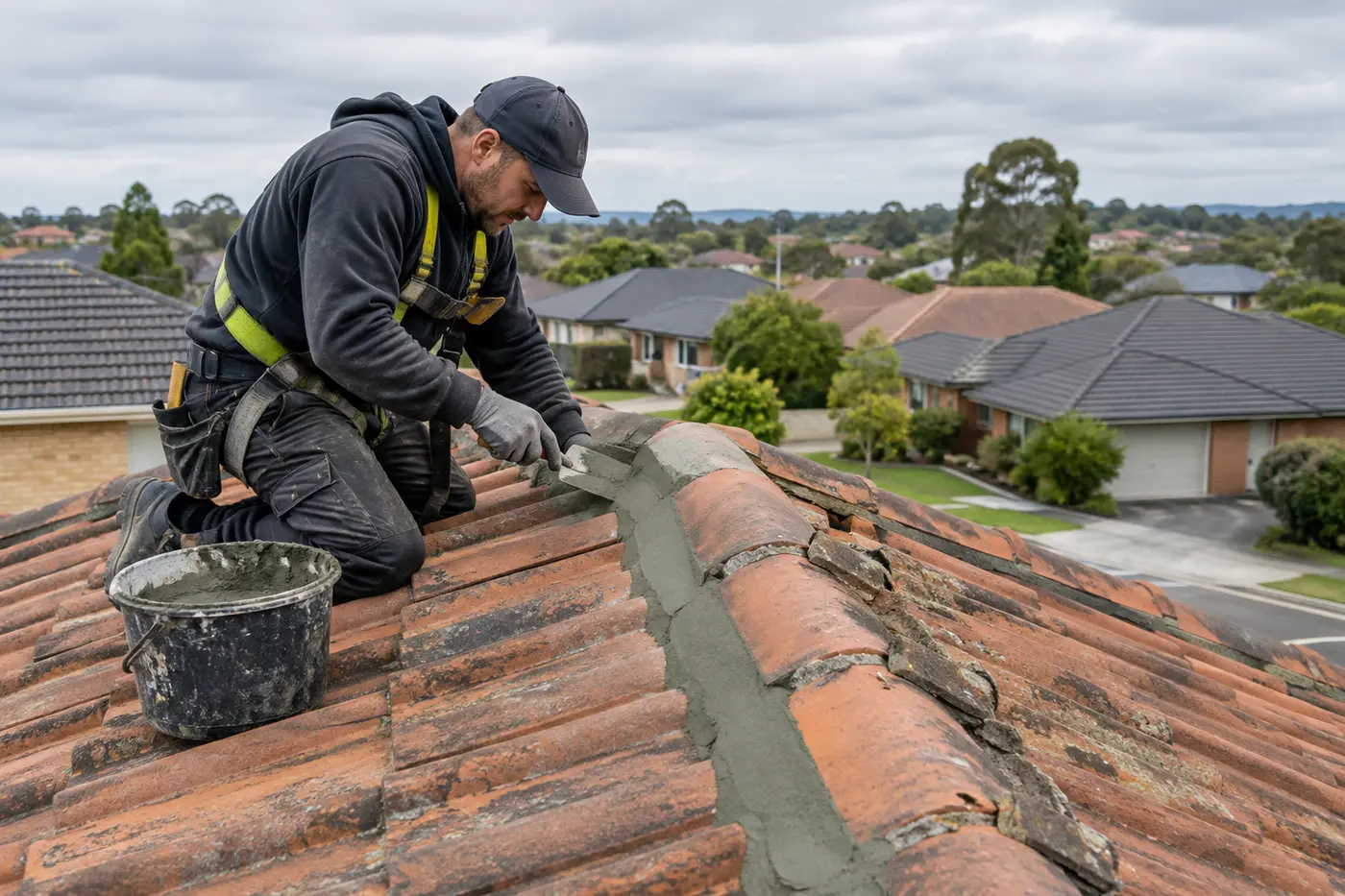
That is the point where we talk through options. For a roof in decent shape, a clean may be all it needs. For a tired concrete tile roof, cleaning is usually the first stage of a restoration: repairs, repointing where needed, then a sealer and coating to close up the surface again. Our work carries a 10 year warranty on workmanship and products, and we will tell you straight if a clean is all your roof needs.
You can slow it down, but not stop it forever
On a shaded south face, lichen will come back eventually. What you can do is slow it down. Trim branches back from the roof so it gets more sun and less leaf litter. Keep valleys and gutters clear so water moves off the roof quickly. And if the tile surface is worn, a proper coating makes it much harder for new growth to take hold. Most people who keep on top of those three things go a lot longer between cleans.
Common questions about lichen and moss on roofs
Why does lichen grow on my roof?
Lichen needs moisture, a bit of light and a surface it can grip. Shaded, south-facing roof faces stay damp longest, and older concrete tiles that have lost their surface coating are rough enough for it to anchor into. Nearby trees add shade and debris, which speeds it up.
Is it worth removing moss from a roof?
Usually, yes. Moss holds water against the tiles and breaks off into valleys and gutters, where it can block water flow and lead to leaks in heavy rain. Light lichen is less urgent, but thick moss is worth dealing with before winter.
Will spray and leave products like Wet and Forget get rid of lichen?
Products of this type can kill lichen, but they work slowly. Expect weeks to months before you see a change, and the dead lichen stays on the tile until weather wears it off. They suit light growth better than a roof that is heavily covered.
Will household bleach kill lichen?
Diluted bleach will kill lichen on tiles, but the runoff can harm garden beds and lawn below and runs straight through your gutters and downpipes. We would not use it on painted metal roofs such as Colorbond.
How do you get lichen off a roof safely?
Kill it first with a suitable treatment, then clean at a pressure that suits the roof material, working so water is not driven up under the tiles. Clear the valleys and gutters afterwards. If you are not confident on a roof, hand this job over, because tiles crack underfoot and wet moss is slippery.
What kills lichen naturally?
Sunlight and airflow are the most effective natural controls. Cutting back overhanging branches lets the roof dry out faster, and lichen struggles on a surface that does not stay damp. That will not remove established growth on its own, but it slows regrowth after a clean.
If the shady side of your roof has turned green and you are not sure whether it needs a clean, repairs or more, we offer free inspections and quotes across Narre Warren and the surrounding suburbs. Have a look at how our professional roof cleaning works, or get in touch and Cam will arrange a time to come and take a look.