The call usually goes something like this. A homeowner in Narre Warren has two quotes to repoint their tile roof, and the numbers are miles apart. One looks cheap, the other looks like a typo, and they want to know which one is telling the truth. That gap is the main reason people search for roof repointing cost, and it is a fair question. The honest answer is that the two quotes are often not pricing the same job.
This guide explains what actually goes into a repointing quote on a tile roof around Narre Warren and the south east, why prices swing so much, and how to compare quotes properly. We don’t publish a flat price, because we have never seen two roofs that need exactly the same work. What we can do is show you where the money goes.
Repointing is the top coat, not the whole ridge
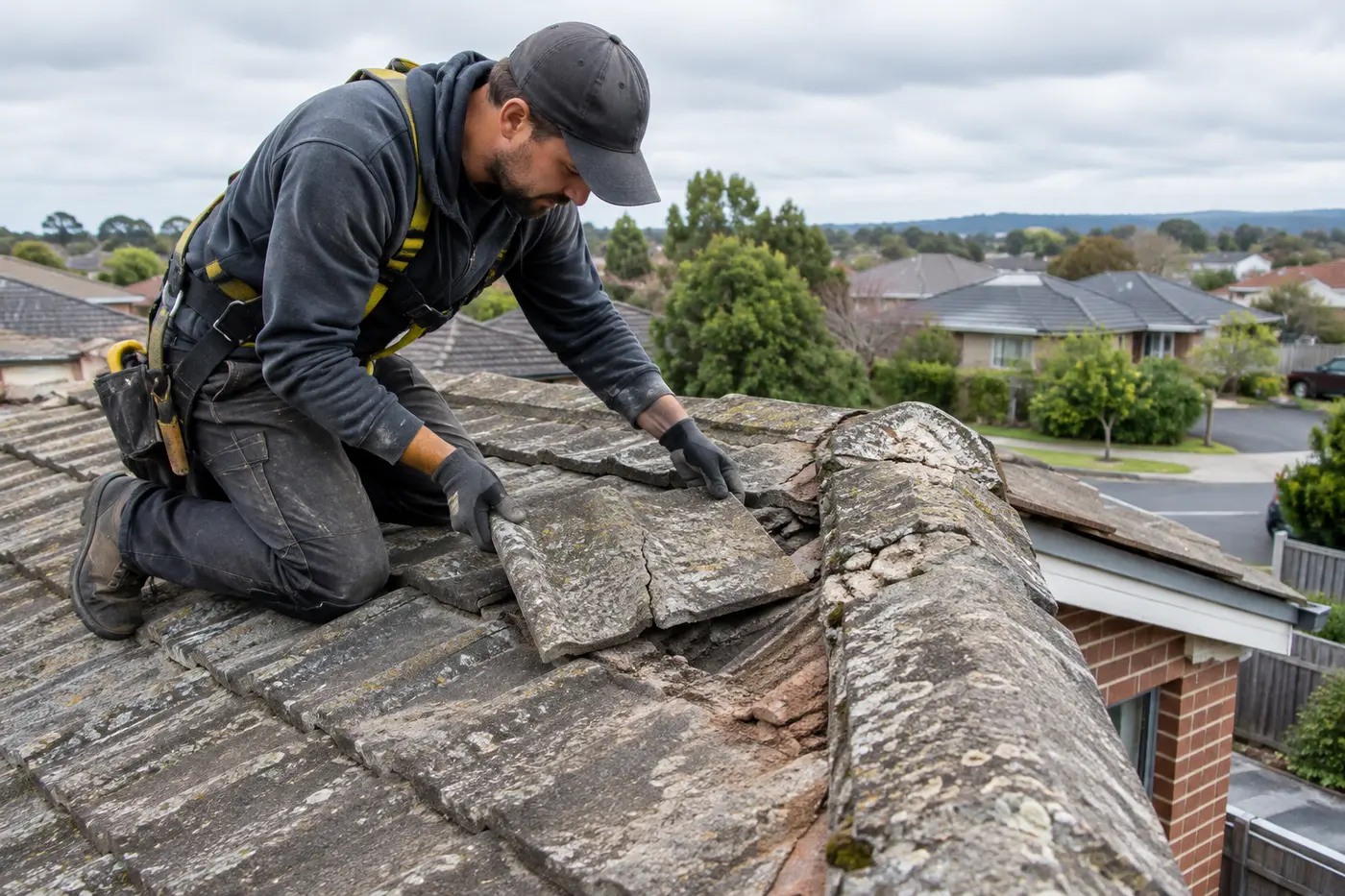
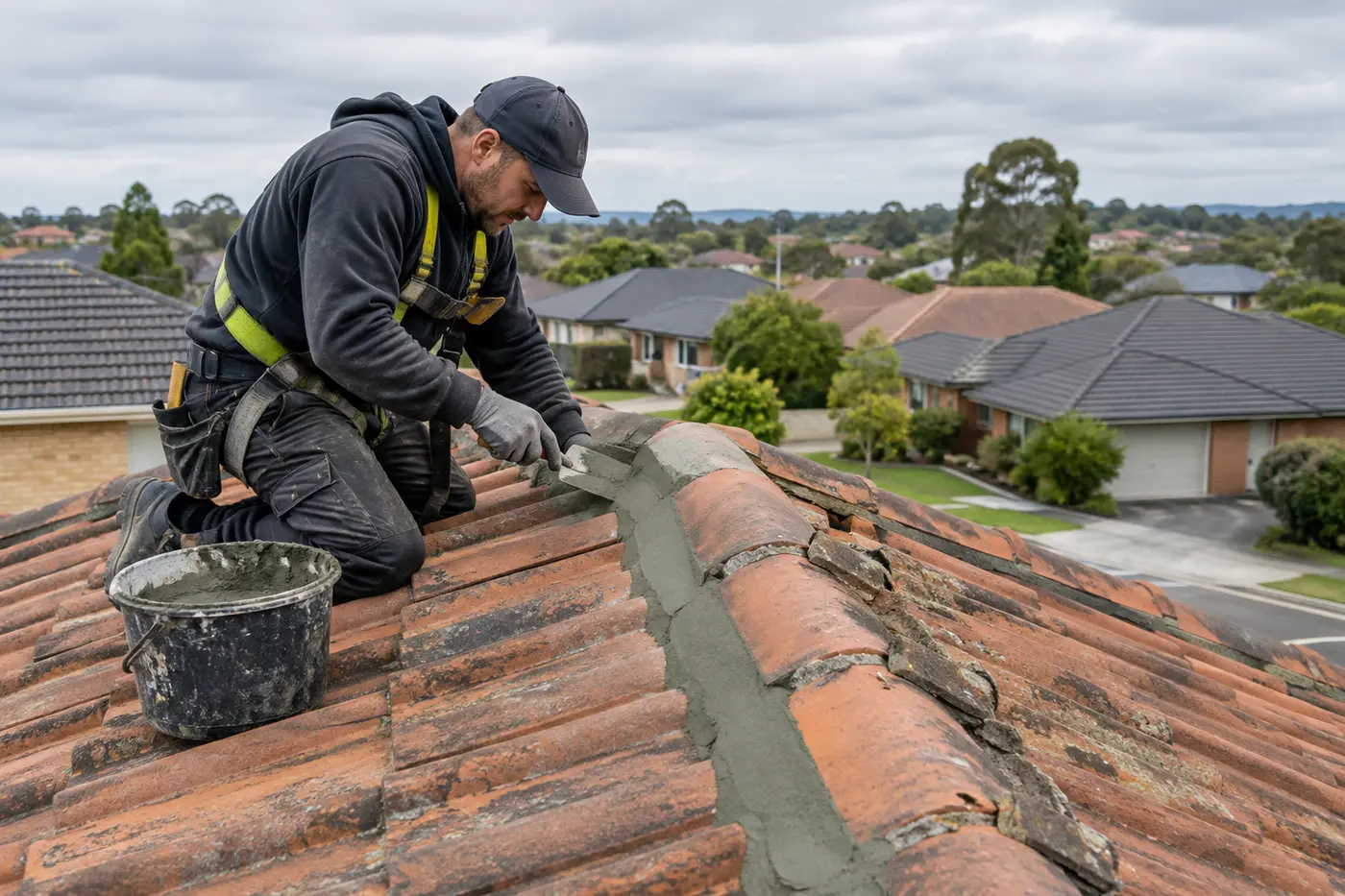
On a tiled roof, the ridge caps (the curved tiles running along the peaks and hips) sit on a bed of mortar called bedding. Over the bedding goes a thinner layer called pointing, which seals the joint and holds the caps in place. Repointing means stripping the old, cracked pointing and applying a fresh layer, these days usually a flexible pointing compound rather than straight cement mortar. If you want the longer explanation of how it works and when it falls due, our post on when a roof needs repointing covers it.
Here is why that matters for cost. Repointing alone is the lighter job. If the bedding underneath has crumbled, the caps have to come off, the old bedding is chipped out, new bedding is laid, and the caps are reset and then pointed. That is rebedding and repointing, and it is a lot more labour. A quote that says “repoint” and a quote that says “rebed and repoint” describe two different jobs. They will never be the same price.
Six things that move the number
When we quote repointing work, these are the things we are actually measuring and checking on the roof.
How many metres of ridge and hip you have
Repointing is priced on length, not on the floor area of the house. A simple gable roof on a single storey home has one ridge line and two ends. A hip roof, which is what most of the brick veneer homes around Narre Warren, Berwick and Hallam have, has a ridge plus four hips running down to the corners. Add an extension or an L shaped layout and the total length of capping climbs quickly. Two houses with the same number of bedrooms can have very different amounts of ridge to do.
Whether the bedding is still sound
This is the big one. We check the caps along every line. If they are firm and only the pointing is cracked, it is a repointing job. If caps rock when you press them, or the bedding comes away like sand, those sections need rebedding first. Plenty of roofs are a mix: solid along the main ridge, loose on the hip that cops the weather.
Broken caps and tiles
Caps that are cracked right through have to be replaced, and so do any broken tiles we find along the way. Older terracotta and concrete profiles can take some hunting to match. Our guide to dealing with cracked roof tiles explains what we look for and why one broken tile matters more than it looks.
Roof height, pitch and access
A double storey roof, a steep pitch or a tight side path all take more setup and more care. Edge protection and safe access are part of doing the job properly, and on some roofs they are a noticeable share of the cost. A single storey roof with easy access is simply quicker to work on.
Gable ends and other details
Ridges are not the only pointed joints. Gable ends (the sloped edges where the roof meets the wall on a gable house) also have bedded and pointed tiles along the barge line. Some quotes include them. Some quietly leave them out. If your roof has gable ends, check they are on the quote.
Whether it is part of a bigger job
Repointing on its own carries the full cost of getting set up on your roof. Done as part of a restoration, alongside cleaning, repairs and coating, that setup is shared across the whole job. If your tiles are also faded and porous, ask for both prices. Our roof restoration pricing guide walks through what a full restoration includes.
Why one quote can be double another
When we sit down with a customer and look at a competing quote, the difference nearly always comes down to scope. The usual culprits:
- Repoint only on one quote, rebedding of loose sections on the other
- Gable ends or hips missing from the cheaper one
- Broken caps allowed for on one, not mentioned on the other
- New pointing laid straight over old cracked pointing instead of stripping it first
- Different products: cement mortar versus flexible pointing compound
That fourth one deserves a second look. Laying new pointing over old, loose pointing is quicker and cheaper, but the new layer has nothing solid to grip. It tends to crack and drop away well before it should. A proper job removes the failing material first.
There is another side to this. Sometimes the expensive quote is padded. If someone recommends rebedding the entire roof, ask them to show you which caps are loose. On a lot of the roofs we inspect, only certain sections need rebedding and the rest just needs fresh pointing. You shouldn’t be paying to rebuild ridges that are holding firm.
Spot repairs make sense when the damage is contained
If the damage is limited to one hip, or a few caps have shifted after a storm, a targeted repair can be the right call. It costs less now. The catch is that pointing tends to age at a similar rate across the whole roof, so if one section has failed, others may not be far behind. We will tell you what we see, and if the rest of the ridge is in good shape we are happy to fix just the problem area.
Where most of the pointing is cracking, doing the lot in one visit is usually better value than paying for setup two or three times over a few years. It also puts the whole roof on the same clock.
A good quote tells you exactly what you are getting
You should be able to read a repointing quote and know precisely what will be done. Before you sign, check it covers:
- Which lines are included: ridges, hips, gable ends
- Repoint only, or rebed and repoint, and on which sections
- How many broken caps or tiles are allowed for
- Whether old pointing will be removed first
- The pointing product being used
- What the warranty covers, and for how long
Ours is a 10 Year Warranty on workmanship and products. Whoever you go with, get the terms in writing so you know where you stand if a cap moves later.
Waiting usually turns a repoint into a rebed
Cracked pointing doesn’t leak much at first. Water gets into the joint, the bedding underneath slowly washes out, and the caps start to loosen. Eventually rain tracks under the caps and into the roof space, and that is when stains show up on the ceiling. By then, a job that could have been a simple repoint has often become a rebed and repoint, plus repairs inside. Fixing pointing early is almost always the cheaper path.
You can often spot the warning signs from the ground: gaps under the caps, crumbs of mortar in the gutters, or caps that look out of line. Any of those is a good reason to get someone up there for a proper look.
Getting an accurate price for your roof
Every quote we give starts with a free inspection. We get up on the roof, check every line of capping, and tell you plainly whether you need repointing, rebedding or both, and on which sections. You get a written quote that spells out the scope, so comparing it with anyone else’s is straightforward. See how we handle tile roof repointing and rebedding, or get in touch with Cam and the crew to book a time.
Common questions about roof repointing cost
How much does roof repointing cost?
It depends on how many metres of ridge and hip your roof has, whether the bedding underneath needs replacing, and how easy the roof is to get onto. That is why we price every roof after an inspection rather than quoting a flat rate. A written quote should show exactly which sections are included.
What does repointing roof tiles mean?
It means removing the old, cracked pointing from the joints along your ridge caps and applying a new layer to seal them. Most roofers now use a flexible pointing compound, which copes with the roof’s movement better than rigid cement mortar. It keeps water out and holds the caps firmly in place.
Is rebedding more expensive than repointing?
Yes. Rebedding means lifting the ridge caps, chipping out the old mortar bed, laying fresh bedding and resetting the caps before they are pointed. That is a much bigger job than repointing alone. Often only some sections need it, so ask your roofer to show you exactly which caps are loose.
Can I rely on an online roof repointing cost calculator?
A calculator can give you a rough ballpark, but it can’t see whether your bedding is sound, how many caps are broken or how hard your roof is to access. Those are the things that move the price most. An inspection on the roof is the only way to get a number you can plan around.
Is repointing included in a roof restoration?
On a tile roof it usually is. A typical tile restoration includes cleaning, replacing broken tiles, rebedding where needed, repointing and then coating. If you are getting a restoration quote, check the repointing scope is spelled out just as clearly as it would be on a standalone quote.
Why do roof repointing quotes vary so much?
Usually because they are not quoting the same work. One might include rebedding, gable ends and broken caps while another covers repointing only. Line the quotes up side by side and compare the scope before you compare the price.