It usually gets spotted while someone is up a ladder clearing the gutters. A few orange freckles around the roof screws. A brown stain creeping along the bottom edge of a sheet. Sometimes it’s a neighbour who mentions it. Either way, the question we get next is always the same: is a rusty roof something you can fix, or does it mean the whole thing has to come off?
Most of the time it can be fixed. The trick is knowing what kind of rust you’re looking at, why it started, and whether it has gone past the point where treatment holds. Here is how we size it up on metal roofs around Narre Warren and the surrounding suburbs.
Rust almost always starts somewhere specific
Colorbond and older galvanised iron roofs are steel underneath. What stops them rusting is a metallic coating on the steel, plus a baked paint layer on Colorbond. Rust only gets going once something breaks through that protection, so it tends to show up in the same handful of places.
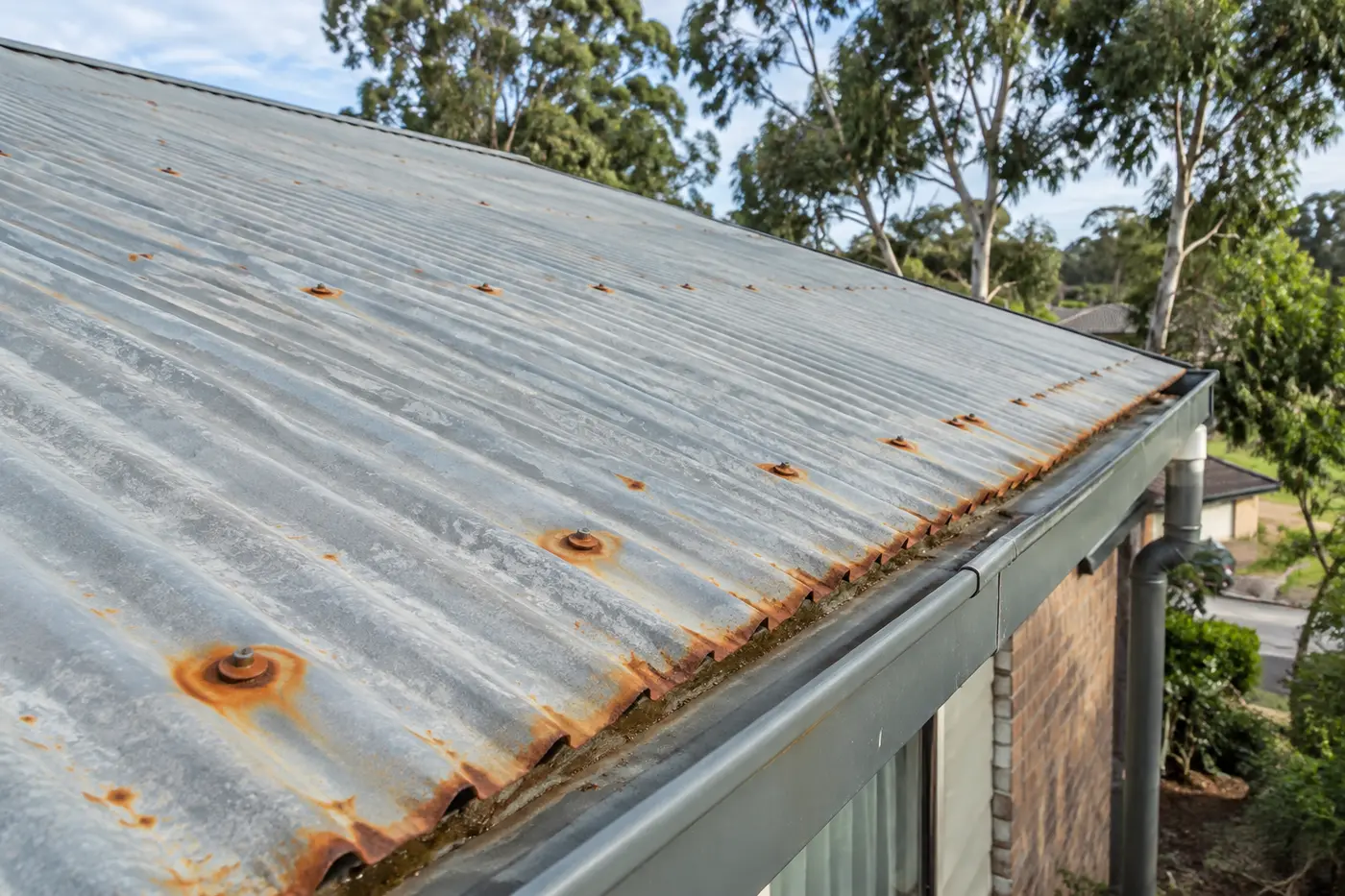
Around the screws. This is the most common spot by far. Old fasteners corrode, the rubber washers perish, and water sits in the dimple around each screw head. Before long you get a ring of rust on every one.
Cut edges and sheet laps. Wherever a sheet has been cut, or where two sheets overlap, the steel edge is more exposed and moisture gets trapped between the layers.
Under leaves and debris. Leaf litter that sits on a roof holds water against the metal for days. Homes under a mature tree canopy often show rust in bands that match where the leaves pile up.
Valleys and the bottom of sheets. Everything that lands on the roof drains through here, so these areas stay wet the longest. Overflowing gutters make it worse by holding water against the sheet ends.
Where the wrong metals meet. This one surprises people. Copper pipes, some flashing materials, and even the tiny steel filings (called swarf) left behind when a tradie drills or cuts on the roof can all set off corrosion on the sheets around them. A solar or air conditioning install can leave swarf behind, and a sprinkle of rust spots turns up a few months later.
Finding the cause matters as much as treating the rust. If the swarf is still sitting there, or the gutter still overflows, the new coating is fighting a losing battle.
Surface rust, flaking rust and holes are three different jobs
When we get up on a rusty roof, the first thing we work out is how deep it goes. Roughly speaking, it falls into three stages.
Surface rust
Light orange discolouration, usually in spots or rings, with solid metal underneath. The sheet still feels firm and the rust brushes back to sound steel. This is the easy stage and the one where treatment works best.
Flaking or scaling rust
The rust has started to lift in layers and the paint around it bubbles. You can often flick bits off with a fingernail. The steel is losing thickness here, but it can usually still be cleaned back, treated and coated if it’s caught now.
Rust holes
Once rust has eaten right through, you may see pinpricks of daylight from inside the roof space, or water stains on the ceiling below. A coating will not bridge a hole reliably. Those sections, or the whole sheet, need replacing.
A lot of roofs we inspect have all three in different places. Screws and sheet ends might be holed while the open runs of sheet only have light surface rust. That’s why a proper look up close beats guessing from the ground.
Proper rust treatment follows a set order
Painting straight over rust is the most common shortcut we see, and it doesn’t last. The rust keeps spreading under the new paint and pushes it off. Real treatment goes like this.
- Clean the roof to remove dirt, chalky old paint and any growth.
- Wire brush or grind the rusted areas back to sound, bright metal. Loose rust has to come off.
- Apply a rust treatment or inhibiting primer to stop corrosion restarting in what’s left.
- Replace corroded screws and perished washers with new fasteners.
- Swap out any sheets or sections that are holed through.
- Prime the bare metal, then apply the finish coats.
If only a few spots are affected, steps two to five may be the whole job. If the rust is spread across the roof, it makes more sense to treat it as part of a full coating, which we cover in our guide on repainting a Colorbond roof.
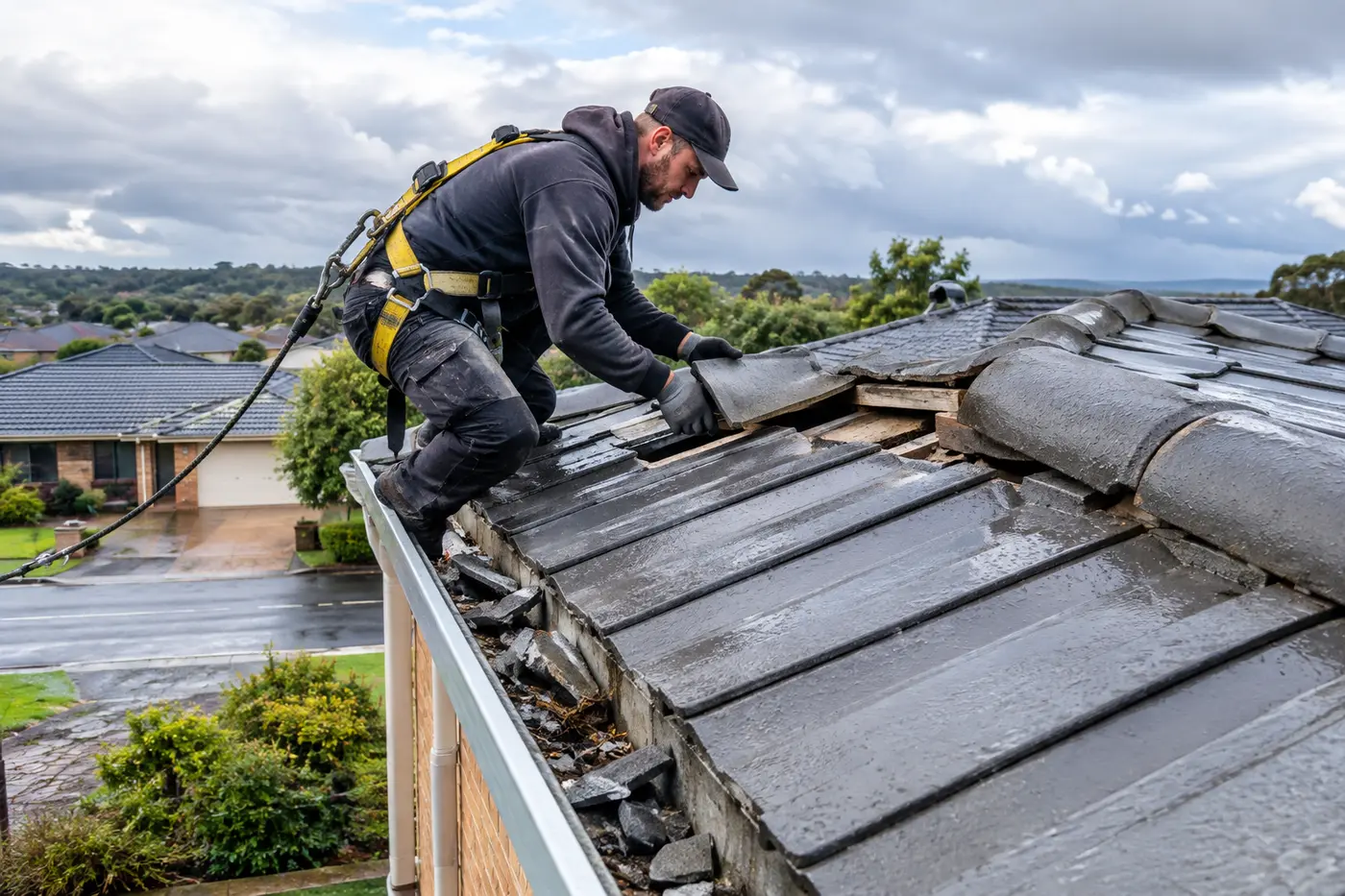
Either way, this is work for someone with the right gear and fall protection. Rusted sheets can be weaker than they look, and metal roofs get slippery with any moisture or dust on them. Our metal roof repair service covers the rust treatment, screw replacement and sheet swaps described above, and we’ll tell you honestly which stage your roof is at.
When treating it stops making sense
Rust treatment is good value when the sheets are mostly sound. It stops being good value when you’d be paying to coat metal that’s already failing. These are the signs we look for when deciding a roof is past saving:
- holes or heavy scaling across many sheets, not just a few spots
- rust working up from the laps and underside, visible from the roof space
- sheets that flex or feel thin underfoot
- repeated leaks in different places even after repairs
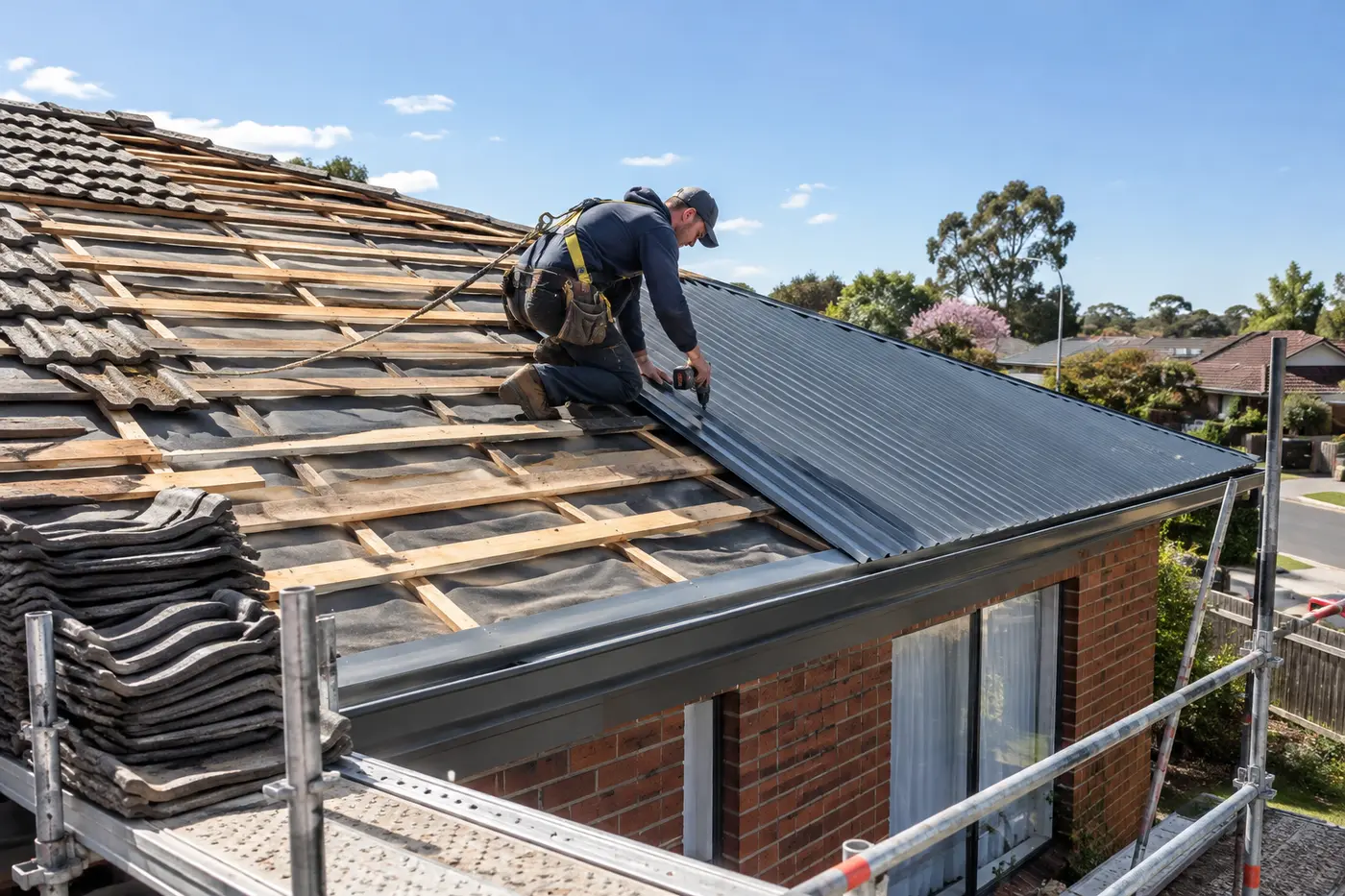
Replacing a handful of bad sheets and treating the rest is often the middle ground. If most of the roof is in that condition, though, a new roof is the better spend, and our breakdown of what drives Colorbond replacement pricing will help you plan for it.
What you can do before we get there
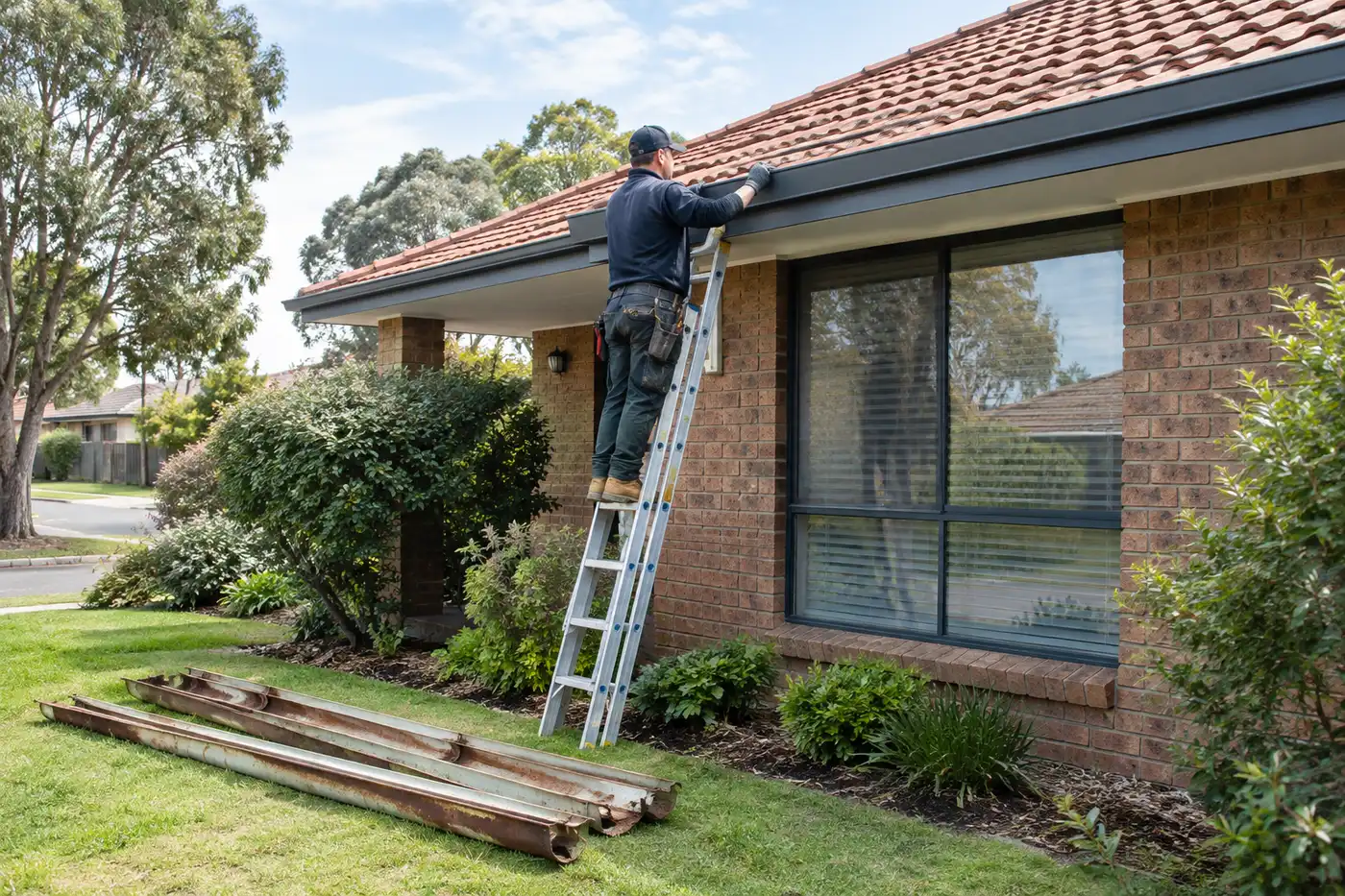
You don’t need to get on the roof, and we’d rather you didn’t. From the ground or a well secured ladder at the gutter line, there are a few useful things you can do.
Keep the gutters clear so water drains off the sheet ends instead of sitting against them. Trim back branches that drop leaves onto the roof. If you spot a water stain on a ceiling, put a bucket under it and take a photo, as it helps us find the matching spot outside. And if you’ve had any work done on the roof recently, mention it when you call, since swarf from that job could be the reason the rust appeared.
Avoid scrubbing rust with harsh cleaners or a high pressure washer yourself. Both can strip what’s left of the protective coating and make the problem spread faster.
Get a straight answer on your rusty roof
We offer free inspections and quotes across Narre Warren and nearby suburbs. Cam or one of the crew will get up close, photograph what we find, and tell you whether it’s a spot treatment, a full coating or a replacement job. Our work comes with a 10 year warranty on workmanship and products. To book, get in touch through our metal roof repairs page.
Common questions about rust on metal roofs
Does a Colorbond roof rust?
It can. Colorbond is steel with protective coatings, and once those coatings are scratched, cut or worn through, the steel underneath can rust. Screws, cut edges, laps and spots where debris or swarf sit are where it usually begins.
How do you clean rust off a roof?
Loose rust is removed with a wire brush or grinder until you reach sound metal, then the area is treated with a rust inhibiting primer before any paint goes on. Harsh chemicals and high pressure washing aren’t a good idea, as they can damage the coating around the rust.
Should you sand rust off metal before painting?
Yes. Any loose or flaking rust has to come off first, otherwise it keeps spreading under the new paint and lifts it. After cleaning back, the bare steel needs a rust treatment and primer before the topcoats.
Is it cheaper to paint or replace a metal roof?
Treating and coating a roof is usually cheaper than replacing it, as long as the sheets are mostly sound. Once rust has holed or thinned a large share of the sheets, coating them is money spent on metal that will fail anyway, and replacement becomes the better option.
How long will painting a metal roof last?
It depends mostly on the preparation underneath. A coating applied over properly cleaned, treated and primed metal holds up far longer than one rolled over rust. Keeping gutters clear and the roof free of debris afterwards helps it last.
Can rust cause a roof leak?
Yes, once it has eaten through the sheet or the screws. Rusted screws with perished washers are a very common leak source on metal roofs, and replacing them is often a quick fix if the sheet itself is still sound.