The storm rolls through around dinner time. Wind howls over the house, hail rattles the roof for ten minutes, and then it all goes quiet. The next morning you spot a broken tile on the lawn, or a brown patch on the hallway ceiling. Now you’re wondering how bad it is and who to call. This guide covers storm damage roof repair for homes around Narre Warren: what to do in the first few hours, what we look for once it’s safe to get up there, and how to deal with your insurer without making things harder.
Your first job is keeping people safe, not fixing the roof
Please don’t climb onto a wet roof after a storm. Wet tiles are slippery, wet Colorbond is worse, and a tile cracked by hail can give way under a boot. A rushed DIY fix before the roofer arrives is how a lot of homeowners end up hurt.
If water is coming through a ceiling, turn off the power to that area at the switchboard if you can do it safely. Water and light fittings don’t mix. If the ceiling is sagging or bulging, keep everyone out of that room. Plasterboard holding water can come down without warning.
If the roof is badly damaged and the house is open to the weather, or a tree has come down on it, the VIC SES takes storm calls on 132 500. Otherwise, these are the things that genuinely help while you wait:
- Buckets and towels under drips, and furniture moved out of the way
- Photos and video of every bit of damage, inside and out, before anything is moved or cleaned up
- Broken tiles and loose flashing left where you found them, since your insurer may want to see them
- A call to your insurer to open a claim early, even before you have a quote
Most storm damage is small, and that’s the problem
Some damage is obvious. A missing row of tiles or a sheet of roofing iron folded back on itself is hard to miss. The trouble is that a lot of storm damage is minor, and minor damage is what causes leaks for months afterwards.
On tile roofs
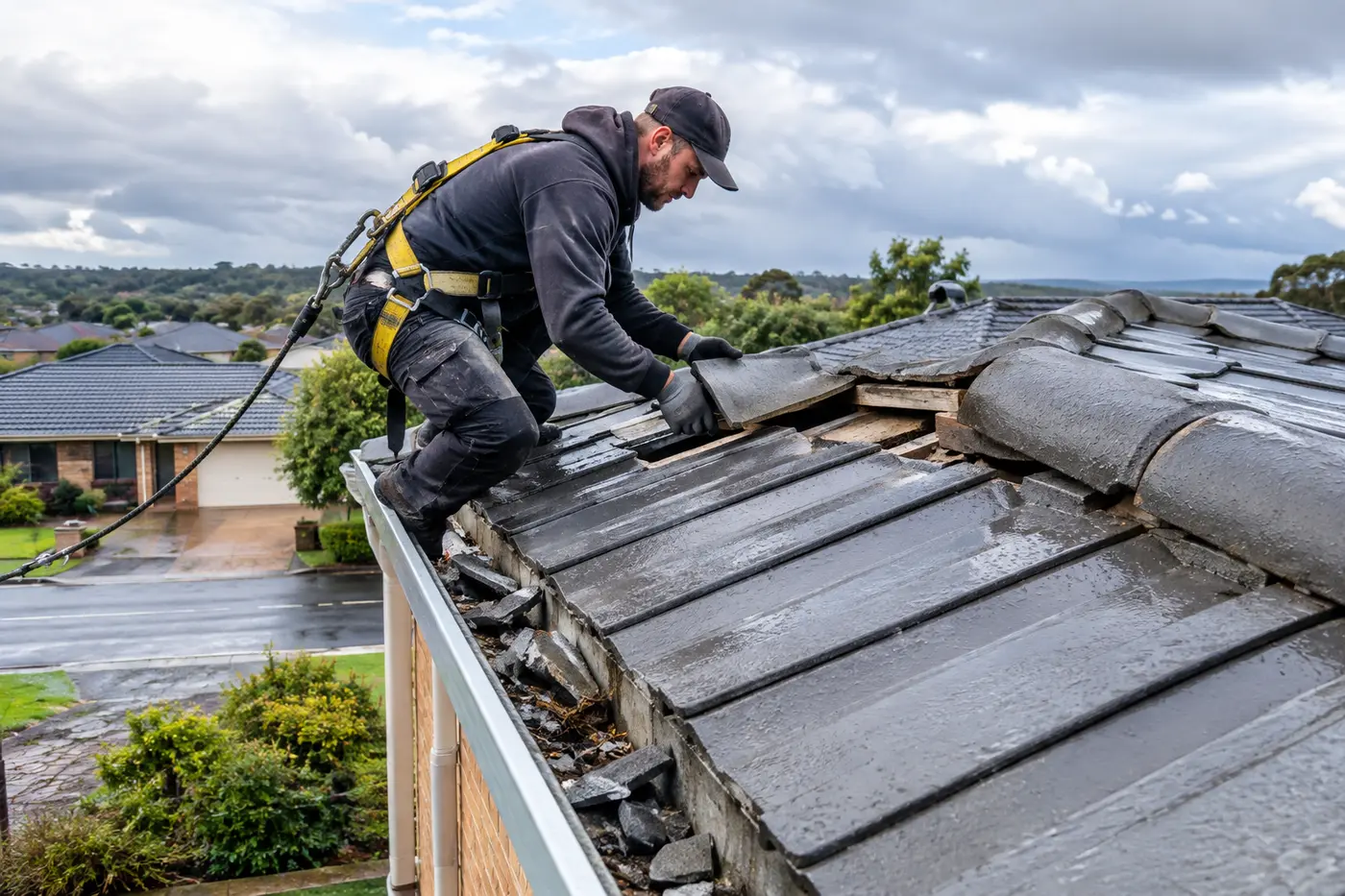
Hail tends to crack tiles rather than smash them, especially older concrete tiles that have lost their surface coating. The crack can be a hairline you would never see from the ground. Strong wind gets under the ridge capping (the row of curved tiles along the peaks of the roof) and lifts it, which breaks the mortar bedding underneath. Once that bedding cracks, rain gets in along the ridge line. We also check for tiles that have slipped, because wind can shift a tile just enough to open a gap without breaking anything. Our guide on what to do about cracked roof tiles goes into more detail on that side of things.
On metal roofs
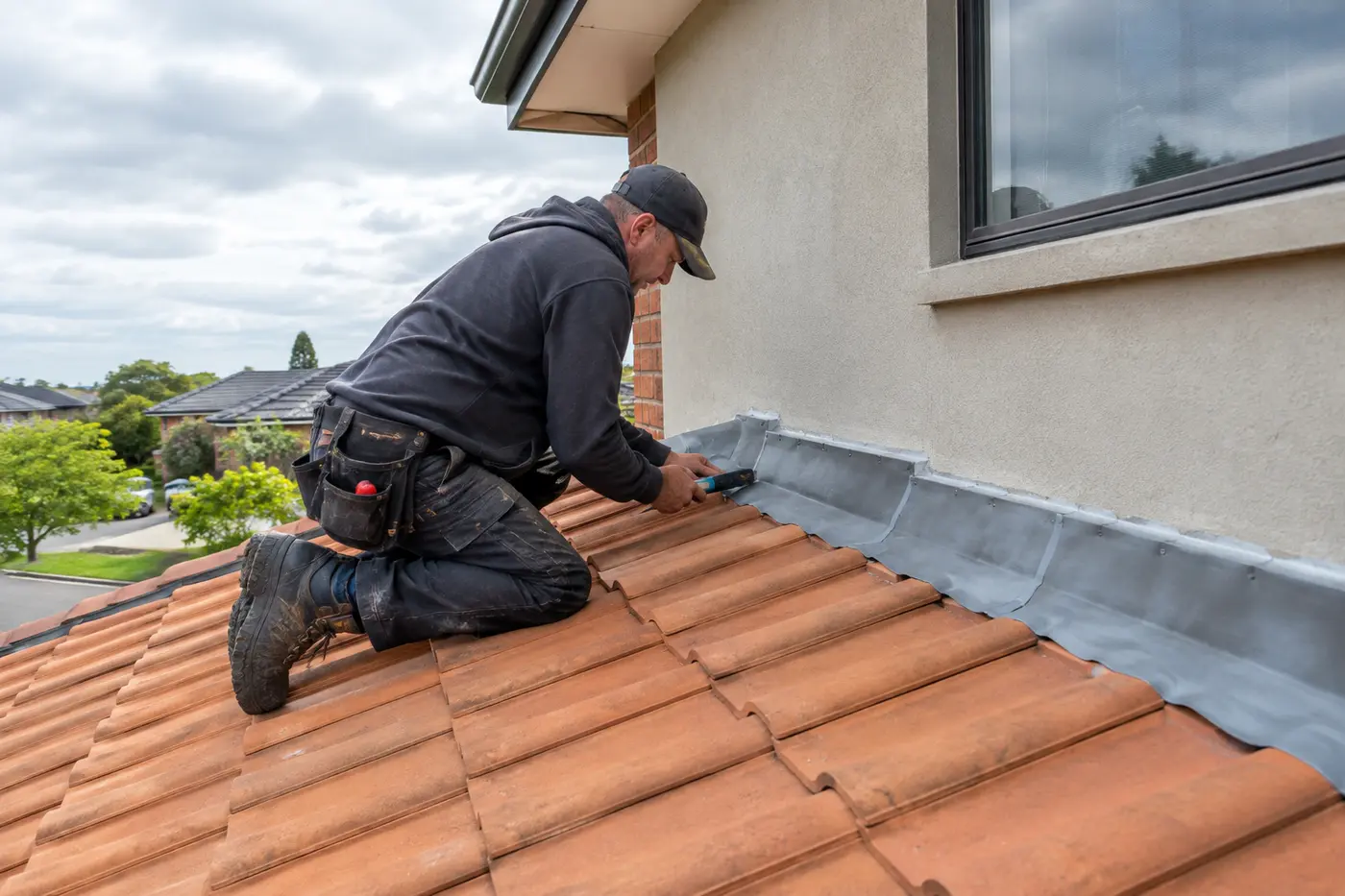
Colorbond and older galvanised iron handle hail better than tiles, but they’re not immune. Large hail leaves dents. Dents on their own are mostly cosmetic, though a heavy strike can crack the paint layer and give rust a place to start. Wind is the bigger worry on a metal roof. It works screws loose, lifts the edges of sheets and peels back flashing (the folded metal strips that seal joins around chimneys, walls and skylights). A sheet that lifts even slightly can let in a surprising amount of water in the next downpour.
Gutters, valleys and debris
Storms dump leaves, twigs and shredded bark into gutters and valleys (the channels where two roof slopes meet). When those block, water backs up under the tiles or spills over the fascia into the eaves. Around Narre Warren, Berwick and Narre Warren North, plenty of homes sit under big gum trees, and after a windy night those gutters can be full by morning. Sometimes the leak people blame on the storm is really a blocked valley that overflowed.
Temporary fix first, proper repair once it’s dry
Storm repairs usually happen in two stages, and it helps to know why.
The first stage is making the roof weathertight. That might mean replacing a handful of broken tiles straight away, refixing a lifted sheet, or covering a damaged section so the next rain doesn’t add to the problem. It’s a holding measure, not the final fix.
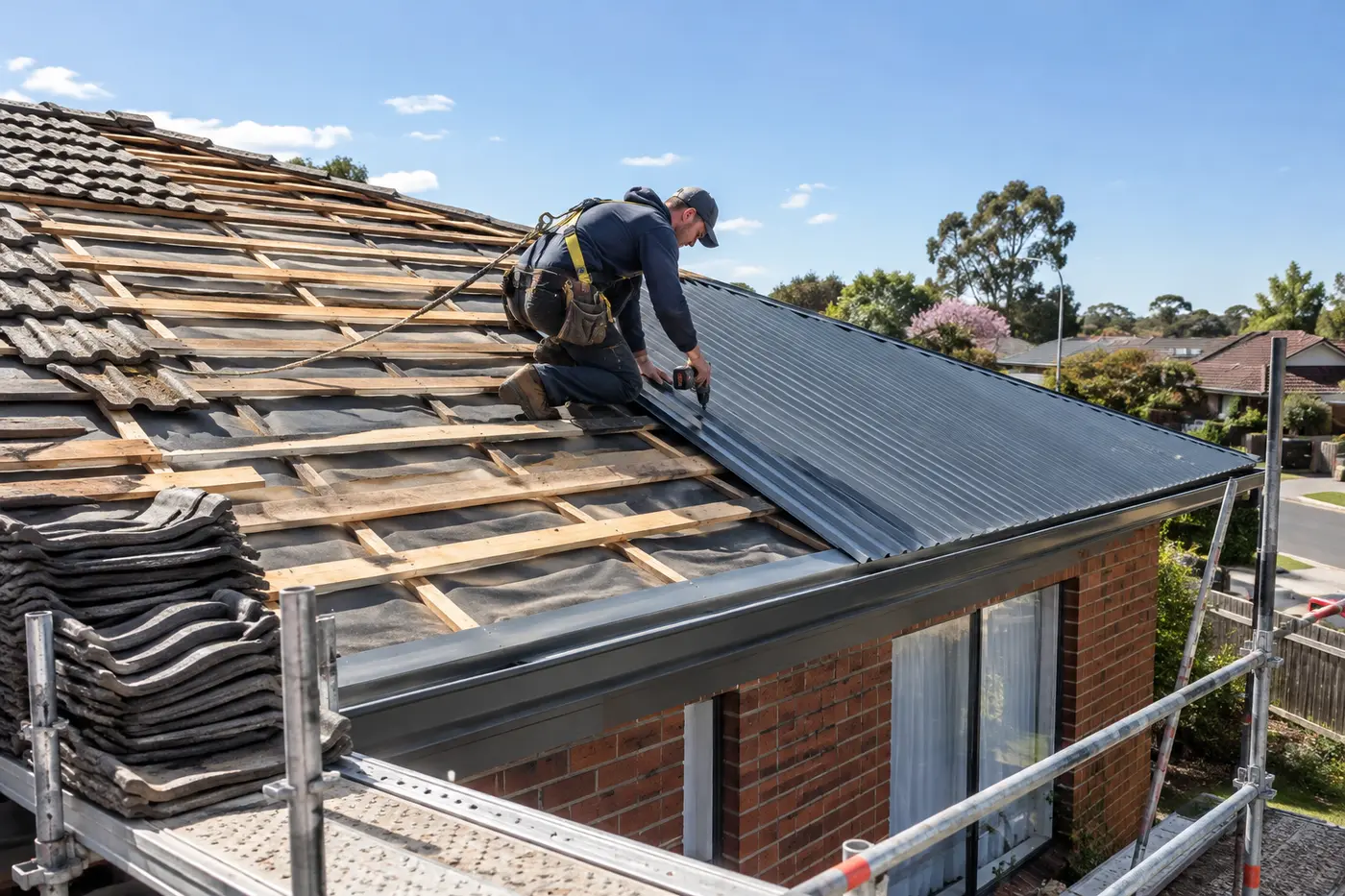
The second stage is the permanent repair, done when the roof is dry and we can inspect it properly. Mortar and coatings need dry conditions to bond, so rushing them in the rain just means doing them twice. On a tile roof this might be replacing cracked tiles, then rebedding and repointing the ridge capping. On a metal roof it could be new screws, a replacement sheet or new flashing. We walk the whole roof, not just the spot that leaked, because a storm rarely damages only one place.
If you’d like us to take a look, our roof repair team handles tile and metal roofs across Narre Warren and the surrounding suburbs. Inspections and quotes are free, and our workmanship and products carry a 10 year warranty.
Good photos make the insurance side much easier
Most home insurance policies cover sudden storm damage. Most also exclude wear and tear, and that’s where claims get complicated. If a ridge line was already cracked and the storm finished it off, the insurer may question how much of the damage is new.
That’s why evidence matters. When we inspect a storm damaged roof, we photograph what we find and explain which damage looks fresh and which was there before. One customer described it in a Google review: we got on the roof, did a full inspection and showed them photos of what needed to be fixed. That’s the same record an insurer wants to see.
A few habits make claims go more smoothly:
- Report the damage as soon as you can, and check your policy for any time limits
- Ask your insurer whether you can arrange urgent temporary repairs yourself, and keep the invoices
- Get a written quote that separates storm repairs from any other work
- Hold on to damaged materials until the insurer says you can throw them out
We can’t tell you what your policy covers. Your insurer has the final say on that. What we can do is give you an honest written account of the roof’s condition, so the conversation starts with facts.
Be wary of door knockers after a big storm
After a severe storm it’s common for people to turn up at the door offering to fix your roof that day, often for cash up front. Some are fine. Plenty aren’t. Before anyone goes up on your roof, ask for a business name, an ABN and a written quote, and check their reviews. A local business will still be around if something goes wrong later.
Sometimes a storm exposes a roof that was already worn out
A storm is often just the last push for a roof that was near the end of its life. If the tiles are porous and brittle, the bedding is crumbling along every ridge, or the iron is rusting through, patching the storm damage only buys a little time. We’ll tell you plainly whether a repair is enough or whether it’s time to think about a restoration or a new roof. And if the main symptom is water coming in but you can’t tell where from, our guide to tracking down why a roof leaks covers the usual suspects.
Common questions about storm damage roof repair
What should I do if my roof is leaking during a storm?
Stay off the roof. Catch the water with buckets, move valuables away, and switch off power to the affected area if water is near light fittings. If the leak is major or the roof is open to the weather, call the VIC SES on 132 500, then book a roofer once the storm has passed.
How long after a storm can I make an insurance claim?
That depends on your policy, so check the wording or call your insurer. As a rule, report damage as soon as you can. Waiting can make it harder to show the damage came from that particular storm and not from wear over time.
How urgent is a storm damaged roof?
If water is getting in, it’s urgent, because wet insulation and plaster get worse with every rain. A few cracked tiles with no leak can usually wait a few days for a proper inspection. A lifted metal sheet or loose ridge capping should be fixed before the next windy day, as it can come off completely.
Is it cheaper to repair or replace a roof after storm damage?
Repair is usually cheaper when the damage is limited to one area and the rest of the roof is sound. Replacement starts to make sense when the storm damage sits on top of an already worn roof. An inspection is the only honest way to tell which one you’re looking at.
Does hail damage a Colorbond roof?
Large hail can dent Colorbond, and a heavy strike can crack the paint finish. Dents alone rarely cause leaks. After a hail storm the bigger risks are usually blocked gutters and lifted flashing, so we check those at the same time.
Can I put a tarp on my roof myself?
We’d rather you didn’t. Tarping means working on a wet, damaged roof, often in wind, and a badly tied tarp can blow loose and do more damage. Leave it to a roofer or the SES.
Had a rough night of weather and not sure what it did to your roof? Get in touch for a free inspection. We’ll check the whole roof, photograph what we find and give you a clear written quote for any storm damage repairs it needs.